Feeds:
Posts
Comments

Music & Image in "The Artist," directed by Michel Hazanavicius

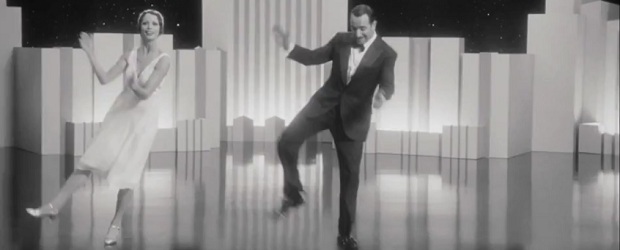
This year, Oscar talk is abuzz with the notion that a silent film – The Artist – could win the best picture award, which would mark the first time for a non-dialogue motion picture to win the award since 1927, when Wings, directed by William Wellman, won Best Picture (and Frank Borzage won for Best Dramatic Director).  Here is an interview with The Artist‘s director Michel Hazanavicius.  Not only that, but Martin Scorsese’s movie Hugo, a heartfelt homage to the work of silent film pioneer Georges Méliès, is one of The Artist‘s strongest competitors.  (I will return to Hugo in an upcoming blog; Scorsese’s movie is rich with personal significance for me and ties in magnificently with the themes of Moving Images.)  

One of the most interesting and surprising observations I have made during the years I have been teaching media literacy and production is the consistency with which students have been drawn to or challenged by certain assignments.  Year after year, without exception, the most eager response I have had from students is to the central project of Chapter 2 (Inventions and Origins) – a non-dialogue movie.  Yes, a silent film!  And the one that students typically struggle with the most, virtually without fail, is the project for Chapter 6 – a documentary (more on that in an upcoming entry).  This year was no exception, and a number of the finest projects from the class during this semester were made for the Inventions and Origins unit.

Expressing complex narrative and emotions through visuals in "Wall-E"

I think there are a number of reasons for this attraction.  One is the challenge.  Actually, as part of the assignment, students are allowed to have a small number of dialogue lines.  I had decided to do this because I did not want to force the students to mime lines or to corner them into stilted performances.  However, they virtually never put in any lines – they nearly always make it a completely silent movie!  They want to focus on the strength of the visuals to tell the story – along with music and sound effects, which they explore to varying success (usually linked to the amount of preparation and effort that went into their choices and work, of course).  I also think that stories of invention are inspiring for creators working in any medium, and this is one of the primary reasons for the existence of this unit and for its impact.  One can see evidence of it in the reactions to this year’s Oscars, and it was seen a few years ago with a movie that won an Oscar and appears on the list of movies one can study with Chapter 2: Wall-E.  The opening act of Wall-E is one of the most lyrical and brilliant examples of cinematic storytelling one could hope to find.  By the way, The Artist and Hugo will also be appearing on the list of movies that can be studied with Chapter 2 – the news is official right here!

Just as I was writing the last sentence, I got an e-mail telling me that my order for the DVD/CD combo of Le Voyage dans la Lune had shipped.  Pretty funny timing!  This is a new soundtrack by the French group Air for Georges Méliès’s seminal short science-fiction movie based on Jules Verne’s Trip to the Moon, and featured in Figure 2-17 of Moving Images.   A hand colored version of this silent classic was found in 1993, then painstakingly restored, and finally premiered at the 2011 Cannes festival with the score by Air.

There will be other posts on silent film to come this month: a discussion of the work of pioneer Alice Guy-Blaché, notes on Hugo, and more.

One of the innumerable lists of best Super Bowl Commercials

Next week is the arrival of one of the key American media events of the year: the Super Bowl.  Talking with people today in the halls of virtually any school or workplace across the nation, there typically seems to be as much excitement about the commercials as the game itself among the millions of people who will be watching the event (clearly, while they are also eating: the Super Bowl has become the second-largest day of food consumption in the U.S. after Thanksgiving and ahead of all the other holidays – so the advertisers are clearly doing something right!… or wrong, depending on your perspective from a health standpoint).

So, I will be updating my extended Close-Up Interview with Kevin Goff, which is featured in Chapter 3 of Moving Images: “Sound and Image.”  Check it out along with the links to some of his finest material.

Also, in celebration of the art of creative advertising, here is a link to an article from Paste magazine that features ads from some of the most celebrated filmmakers of the past few decades (Michel Gondry, Spikes Jonze and Lee, Sofia Coppola, Wes Anderson, and others).  Soon, the juries will be out on a new slate of “Super Bowl Commercials,” which sometimes seem to be more passionate debates than about the merits of the game itself!

Logo for the European Charter for Media Literacy

Earlier, I posted a link to an article by Cary Bazalgette in the British newspaper The Guardian about the need to teach media literacy and communications skills in the educational system.  Last week, an article appeared in The Telegraph about a government report that highlights a pressing need to integrate studies of motion picture media in British schools.  I would also encourage educators or anyone else to read the Preface to Moving Images as well.

One of many major websites protesting SOPA

At virtually every corner these days, teachers are exhorted to use technology – and media-driven technology in particular – to engage students; sometimes we educators might feel that unless we’re interfacing with students primarily with a screen or two between us, we’re not really “reaching them.”  Years from now, it will certainly be interesting to see how people look back at these transitional days for new media interfaces and the world of Internet culture.  To highlight the ongoing debate about SOPA and PIPA – which quite prevalently involve widespread trends in media use – I’ve found a sample page that presents common approaches by educators.  Here is a link to that article – “Free Social Media Tools for Teachers.”  It is notable that many of the uses of the Internet recommended in educational blogs and articles on current pedagogical trends (like the one above and countless others I have seen) involve, at least in part, what would fall under copyright infringement and thus would become fair game for shutdown under this legislation.  Of course, the variety of these platforms has increased since this posting but remains quite similar.

Some media outlets, such as the MPAA, see this legislation as a protection of their copyrights

On a personal note, I am very happy to report that one of the most prominent current voices in the national debate about legal issues dealing with digital news standards, social media, and related domains is a former student of mine (not in media studies or digital moviemaking but French class!), Trevor Timm, who is a lawyer currently writing for Electronic Frontier Foundation.

The Tenth Annual Northeast Media Literacy Conference at the University of Connecticut on March 16, 2012, will feature the theme of “News Literacy in a Digital Media Age.”  I will be making a presentation designed around that theme in which participants will investigate the development of integrated units that foster analytical and creative skills, project management, and media literacy through non-fiction and promotional platforms using classroom cases.   In particular, the work associated with documentary and news media units such as those featured in Chapter 6 of Moving Images (Recording and Presenting Reality), will be highlighted.