The second chapter of Moving Images is titled “Inventions and Origins,” and in this unit students learn about and explore the origins of motion pictures and the early developments of filmmaking and visual storytelling. For this chapter, it was particularly satisfying to feature an interview with a filmmaker whose career has been at the cutting edge of a contemporary revolution in moviemaking that serves as a mirror to the story forged by the initial moviemaking trailblazers. Digital visual effects have been in a state of a constant transformation throughout late 20th and early 21st centuries while they have been profoundly altering the ways in which we experience and create moving images. Greg Butler has been involved closely with this story for the past two decades. His credits include the Lord of the Rings series, Harry Potter and the Order of the Phoenix, Harry Potter and the Deathly Hallows (Part II), Charlie and the Chocolate Factory, Prince Caspian, G.I. Joe (here is a great interview he did at the Paris FX 2010 Expo for it), and many other movies. Currently, he works for The Moving Picture Company, which is one of the most active and innovative visual effects production houses in the world. Check out my following post for info and links for media about visual effects.

What were your early inspirations to use moving images to communicate?
I grew up in the 1970’s and 80’s. Between the ages of 7 and 12 alone, I saw some amazing films, many of them multiple times; Ralph Bakshi’s Lord of the Rings, the Star Wars trilogy, Superman and Superman II, Indiana Jones and the Temple of Doom, Close Encounters of the Third Kind, E.T., The Dark Crystal, just to name a few. Most of these films would now be called “special effects driven” films, but to me they were just amazing stories that completely drew me in. Of course, I wanted to find out anything I could about how the effects were created. In those days, there was not a lot of information available about how these films were made. There was the occasional TV special, but it usually consisted of interviews with the actors and other more general topics. Home VCR’s were still a few years away and DVD special features were a completely unknown concept. In fact, since the only way to see a film was on one of the three television networks or at the cinema, many popular films would be re-released every couple of years. Luckily, I grew up in a small town and our one theater often showed “second run” films for only 99 cents.
In what ways did you first become involved in making movies? At what point did you begin to become involved in CG?
I remember running around the second grade playground acting out scenes from Star Wars. A few years later, my brother and I teamed up with the two girls down the street and started making short Super 8mm films under the “Blossom Street Productions” banner. We did versions of The Dukes of Hazard, James Bond, and untitled monster and space movies. They weren’t very long, but we planned them first and occasionally built props and attempted basic special effects. After a gala screening for our parents, we would move on to the next project.
In 1989, I went to a small liberal arts college initially to study history and avoid math. In my first semester I applied to get into both film and video production courses, both of which were very popular. I didn’t get into either, but I did get a work study job in the engineering department. I quickly found that my combination of curiosity, technical aptitude, and a set of keys to all of the video production facilities was getting me all sorts of new connections and acquaintances in the film and video departments. I started helping older students and some of the professors with their productions.
In my third year, I was asked to be the director of photography for a friend’s final video project. After graduating, she got a job at Industrial Light and Magic. She helped me to get an internship and later my first job. I started at ILM in the commercials division and quickly transferred to an entry level job in the new computer graphics department.
What were some useful lessons you learned through your early experiences with motion pictures?
One of the most important things I learned about the filmmaking process is that it is incredibly interdisciplinary and requires a tremendous amount of planning and organization. As a result, films of any significant length can rarely be completed without a large number of people working closely together. A film can succeed or fail at so many different points. Everyone involved needs to keep focused on their job and work well with everyone else.
Motion picture history has been propelled many times by new generations of innovators, from the first filmmakers discussed in Chapter 2 of Moving Images to the pioneers of CG. How did you experience the evolution of digital effects in moviemaking?
I started in the film industry just at the moment that the transition to digital was occurring. While I was a camera engineering intern at ILM in 1992, they had just completed Hook and Death Becomes Her. Both films effects used some digital compositing, but were mostly created with traditional techniques such as hand inked rotoscoping and optical printing. At the same time, the small computer graphics department was doing tests of digital dinosaurs for Jurassic Park. When I returned a year later to start my first job, the company had almost completed its transition. The optical printers were being dismantled and a number of departments had disappeared or been computerized (fx camera, rotoscoping, opticals). Computer graphics in visual effects had graduated from one-off “gimmicks” like the water creature in The Abyss to become an integral part of the filmmaking process.

Starship Troopers
In 1996, I worked at Tippett Studio on Starship Troopers. Phil Tippett and many of my colleagues at the studio had worked in stop motion animation for years and were finding innovative ways of incorporating digital tools into their process. For example, Tippett Studio was awarded a technical Oscar for the “Dinosaur Input Device” (DID), first used on Jurassic Park to animate digital dinosaurs using stop motion techniques.
Working for Phil Tippett was a great experience. It’s where I really learned about visual effects and animation. I was constantly surrounded by reminders that computer graphics are just a new way of working in a much older craft. The same rules still apply.
How does your role in the visual effects department fit into the entire process of film production?
These days, very few films don’t include some level of visual effects. Sometimes, it’s simply to save money on locations or big sets, to increase the safety of actors or stunt people, or just to save time during the shoot. And of course, there’s still a lot of demand for us to create what doesn’t exist, like dinosaurs or space battles. The visual effects department is now part of the process from the very beginning: creating a budget, then planning the shoot, and finally working on all the vfx shots in post-production.

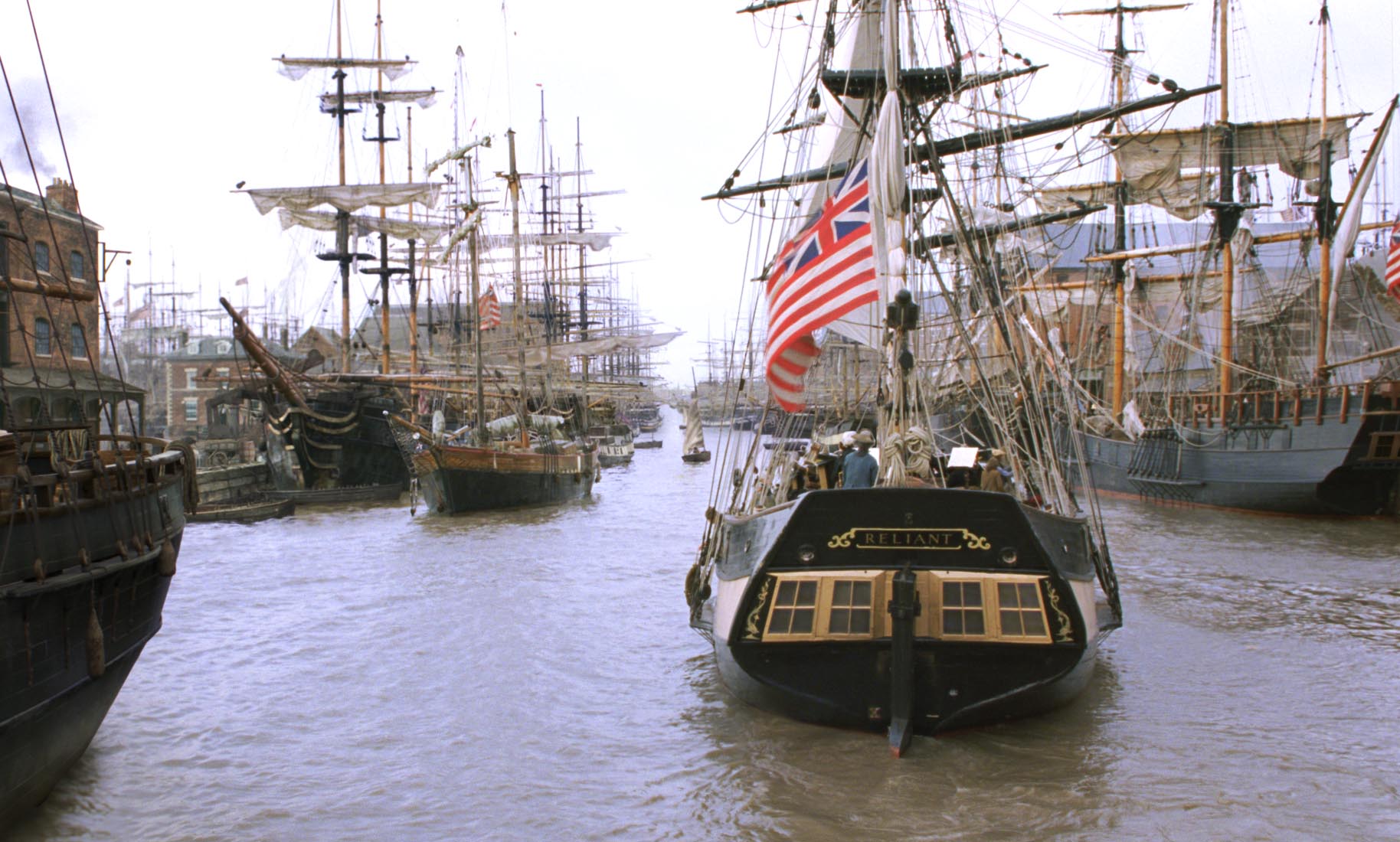
An example of an “invisible effect” in which the visual effects artists take the initial photographed image, at left, and use digital fx to transform the scene into the intended setting. These images are from “Amazing Grace,” about abolitionist William Wilberforce (directed by Michael Apted, 2006). Courtesy Walden Media

 Filmmaking has always been an expensive and time consuming “group project”. Visual effects and computer graphics have only increased the time and amount of people needed to make a film. With more people involved, there are many more decisions needed, both creative and technical. My collaborations are mainly with the film’s overall vfx supervisor and the senior artists on my vfx team, such as an Animation Director or CG Supervisor. The film’s director is always involved of course, in setting the overall goals, in terms of the story, style and the look of the film.
What have been some of the greatest challenges you have faced during your filmmaking endeavors?
It can be challenging to maintain the focus, commitment and enthusiasm necessary to make it through a project, while at the same time not having it completely take over the rest of my life. The hours can be very long, with no weekends off during peak periods of the production. I usually spend about 8 – 18 months working on a film, although I was on The Lord of the Rings films for over 5 years.
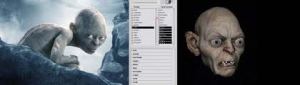
Creating Gollum for The Lord of the Rings
What have been among your most fulfilling experiences in moviemaking?
In early 1999, I joined a group of around 20 digital artists in New Zealand for The Lord of the Rings. I had never been to the Southern hemisphere or spent more then a few weeks outside of the US. All of us knew we were at the beginning of something special. The Weta vfx crew grew much larger as the years went by the work we did got bigger and better too. Playing a significant part in something that will last is certainly among my most fulfilling experiences.
Read Full Post »



 mediateacherdotnet