 In a sly ad that played during this year’s Super Bowl, one commercial messed around with our media literacy backgrounds through the familiar context of the local pharmacy: Bryan Cranston made a new appearance in the Walter White persona from Breaking Bad to advertise issues of trust and authenticity related to an insurance company. This piece was penned by Kevin Goff, copywriter and creative director for advertising agency Leo Burnett of Chicago. Yes, that Kevin Goff — our interviewee for Chapter 3 (Sound and Image) of Moving Images. For those wishing to pursue further explorations of principles of communication linked to short-form pieces and advertising, you might want to check out the earlier post What Exactly is that Movie? As a matter of fact, I will be using it for the next couple of weeks in my own classes. You will find lots of fun material to learn from, debate, and play with.
Posts Tagged ‘media literacy’
Playing with Media Literacy: Walter White at the Super Bowl
Posted in Chapter 3, tagged Bryan Cranston, Esurance, Kevin Goff, Leo Burnett, media literacy, Sorta commercial, Super Bowl Ad, Walter White on February 2, 2015| 1 Comment »
Media Literacy, Free Speech, and Violence (and perspectives for French teachers)
Posted in Media Literacy, tagged AP French, Cabu, Charb, Charlie Hebdo, Dorothee, French Lesson, Jerome Lambert, media literacy, Patrick Chappatte, Philippe Picard, Recre A2, The Book of Mormon on January 8, 2015| Leave a Comment »

Cartoon by Patrick Chappatte of New York Times
This blog has addressed issues related to violence and its relationship to media communications and visual literacy in contemporary culture on a number of occasions. As media educators – indeed, as citizens – issues related to the freedom that we have to communicate through public media platforms and to the rules and norms associated with how and what we express are at the core of understanding and utilizing media. This week, in France, the world witnessed a horribly violent reprisal directed towards these rights to expression when terrorists murdered a number of people at the Paris headquarters of the weekly satirical newspaper Charlie Hebdo.
Writing from America, I would like to add a few additional points that I have not seen satisfactorily or widely expressed and that could be useful in discussions related to these events and issues. First, in order for those outside of France to understand the full impact of this event, it is important to grasp the familiarity that French people have with these cartoonists and writers. A number of those killed (including editor Charb, Wolinski, Cabu, and Tignous) were very important cultural figures who have enjoyed wide recognition and popularity for many years. Among them, the cartoonist Cabu (pen name of Jean Cabut), has been one of the most important practitioners of caricature and political cartooning in France for many decades and whose face is a familiar one in French media.

Cabu © Radio France – 2013 / Vincent Josse
Cabu even regularly appeared on French television in the 1980’s on the children’s show “Récré A2” with the host Dorothée. For those who understand French or for French classes, here is an excerpt from a circus-themed episode. Incredibly, one of the topics raised is that of censorship! When encouraging young people to send in their own cartoon ideas for original, new conceptions of circus performers – he shares his own, such as one who is able to jump back into “his mother’s stomach” (in this case through the mouth) – he specifically tells young viewers to send in what they think of, “we don’t censor here on this show.” (And Dorothée quickly turns the page on a couple of his racier drawings!) In another available video of more recent vintage, Cabu talks about the theme of “Can one still laugh about anything (or everything)?” In that piece from 2012, he discusses the very issues for which he was assassinated along with his colleagues at Charlie Hebdo; his humanity, intelligence, humility, and convictions are quite apparent throughout this talk.
Before this attack, general opinions in America – expressed in editorials and by leaders – were that the illustrators at Charlie Hebdo had indeed gone a bit too far, and that they should respect the desires of those who say that they should not critique or offend islamic leaders or fundamentalists in this way. Has there been a similar debate in the United States about The Book of Mormon? Are there those who say that many of the scenes of that musical or lyrical content of those songs should not have been produced? They are, after all, highly critical, even quite scatological in lampooning specific religious figures and beliefs and may be deeply offensive to members of certain religious groups. I have not seen anywhere any reference to this cultural comparison used in discussions of the material produced by the creators at Charlie Hebdo. Why is this not the case here in the United States? For educators who teach in a field in which these issues or discussions might be raised — such as Advanced Placement French classes (with the theme “Défis Mondiaux”), international studies, journalism, or others — it is important to use representative cases from a variety of media angles. In French classes, vigorous debates about these matters have been part of advanced level curricula and hotly debated for some time, such as with the interdiction of the wearing of the niqab or burka or similar full-face or -body coverings by women in France and Belgium. These most recent developments add new levels of intensity to important discourse about the roles and challenges of media communicators in our society.
P.S.: I will add to this post a link to a video that was uploaded a short time ago (only about 100 hits so far; I’m guessing it will go up a lot) by a French high schooler who recorded a speech given by a teacher of the Lycée Lavoisier in the school courtyard during a moment of national mourning for those who were murdered on January 7. A very powerful speech and a striking media document. This 5-minute movie concludes with a minute of silence that becomes powerfully visual as well. For those who understand French in particular, this is highly recommended.
 P.P.S.: On Friday, November 9, I will add another link to a New York Times article and short film by Jerôme Lambert and Philippe Picard — “Charlie Hebdo Before the Massacre” — that features part of a documentary about the work of Cabu and shows the journalists of Charlie Hebdo at work. To understand the issues of this blog post, this short film is invaluable. It is an astonishingly pertinent document of the creative process in action and the cultural issues inherent to this story.
Media Business and Criminology
Posted in Chapter 5, tagged Fair Use Streaming Video, Intellectual Property, media literacy, NinjaVideo, The Unrepentant Blogger on November 30, 2014| Leave a Comment »
 As noted in earlier blog posts on mediateacher.net, one of the the most popular veins of cross-curricular planning is between business and media literacy studies. The effect of economics on movies, television, gaming, and other media-related activities (even visual effects, such as in this visit with VFX supervisor Greg Butler) is discussed in Chapter 5 and other areas of Moving Images. An important area to explore with students is that of legal use of media and understanding and respect for copyrights, intellectual property, and fair use standards. This article from the New York Times – The Unrepentant Blogger – concerning both a specific case involving streaming pirated movies (“NinjaVideo”) and the pursuit of illegal activity by various American criminal investigation agencies can be an interesting starting point or reference for discussion. Some might be surprised to learn that jail time has been seen by some bloggers and uploaders of pirated materials.
And meanwhile from another spot on the Business pages, to attract more young viewers some theaters find they need to move past even 3D to explore further dimensions in the moviegoing experience…
Media Violence and New Debates
Posted in Media Literacy, tagged aggressive behavior, media literacy, Ohio State University, Psychology of Popular Media Culture, Violence on October 20, 2014| 3 Comments »
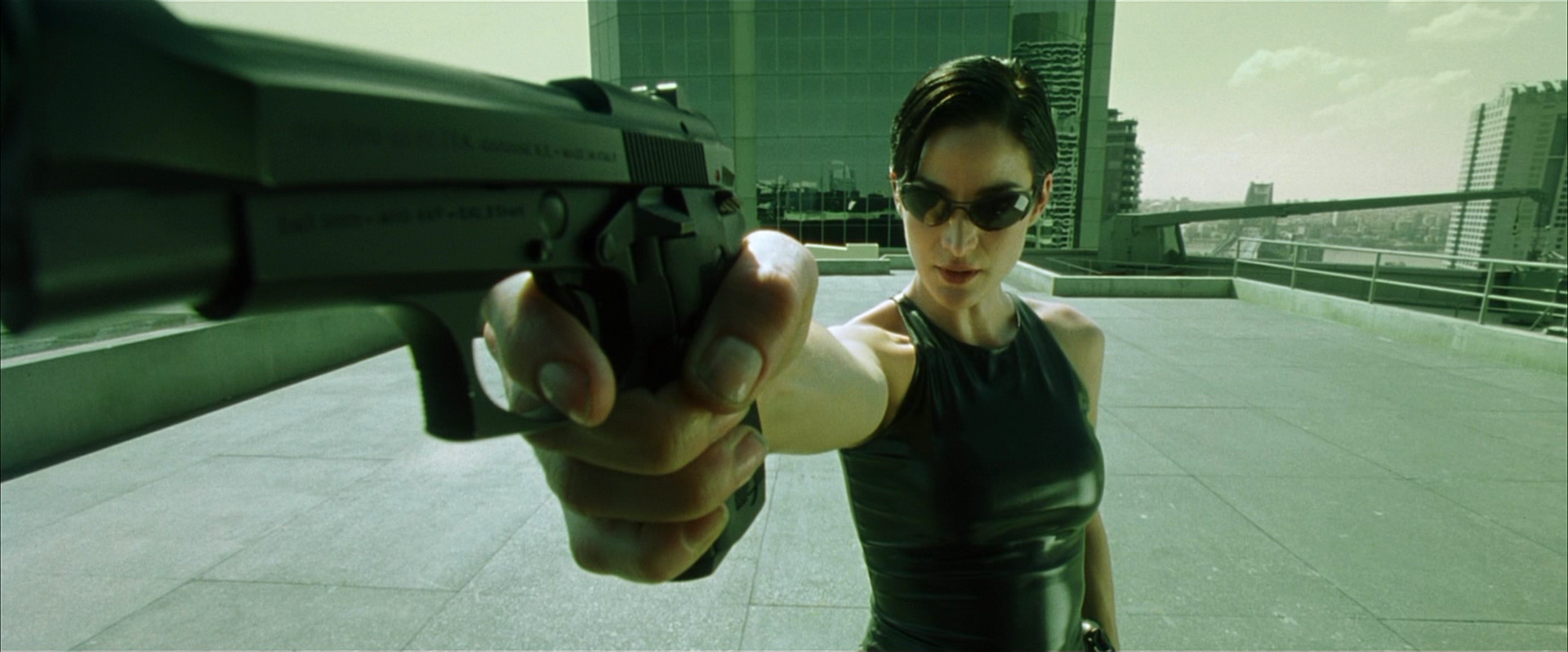 A year ago, I wrote a post addressing new research and developments in ongoing analyses of the effects of media violence – from motion pictures to games and more – on young people (and everyone else too!). Since then, an important new study has emerged that provides a new snapshot of attitudes from a variety of groups regarding the effects of media violence in its many forms. Check out this article describing the Ohio State University study published in Psychology of Popular Media Culture that indicates “there is a broad consensus that violent media increases child aggression.”
Opening Day!
Posted in Chapter 1, Media Literacy, Resources, tagged I Forgot My Phone, iMovie Instructions, Mandatory Fun, media literacy, PowerPoint, Resources, Video Production, Weird Al on September 1, 2014| 1 Comment »
 Here is a copy of the opening day presentation – Media Literacy and Production Opening – for a course I teach that utilizes the first half of Moving Images. Check it out! (In addition, here is a fresh copy of iMovie Instructions if that may be of use.)
A few words on some of the links: Boxes is a movie made by one of my former students; it provides an exceptional example of visual storytelling and can be great for opening discussions. I Forgot my Phone is used less for its storytelling and more about its thematic content. I also added a few links to media literacy stories from this past summer, including ones that were discussed in posts on this blog. I also linked to one of the most fun media events from this past summer: the week-long release of Weird Al’s videos in support of his album Mandatory Fun. What are music videos – advertisements? Artistic creations in their own right? In this case, each song and video has been created not only as a parody or reflection of a musical style, but also in reference to a particular approach in visual communication, from the one-shot lip dub to stop-motion to white board animation and more. And what do teens think?
 mediateacherdotnet