Feeds:
Posts
Comments
Dee Rees, director of "Pariah" (Chad Batka, NYTimes)

Dee Rees, director of “Pariah” (Chad Batka, NYTimes)

One investigative project that I often assign in Introductory Media Literacy courses is to have students present the work of a contemporary filmmaker, including thematic, biographical, and artistic analyses.  Here’s a useful article by critics Manohla Dargis and A.O. Scott of the New York Times in which they offer a list of 20 young filmmakers singled out for the value of their recent work and the promise of more movies to come, including Dee Rees, Sarah Polley, Andrew Bujalski, J.C. Chandor, and others.  It can be very informative for teachers and students (great for college students, but with caution in regards to high school classes where editorial oversight for content is advised) and can bring fresh perspectives to most average viewers.  The point is that there are many great movies out there, even if they are not getting to your local megaplex.  And for those of us who are teachers, bringing a little bit of the big, enlightening, provoking, questioning, enriching world into our students’ lives is cause for exploration.  Check it out.

(Note to Ms. Dargis and Mr. Scott: many of these directors are 40-ish years old.  For us educators, we can tell you that for our students that’s not even close to being young.)

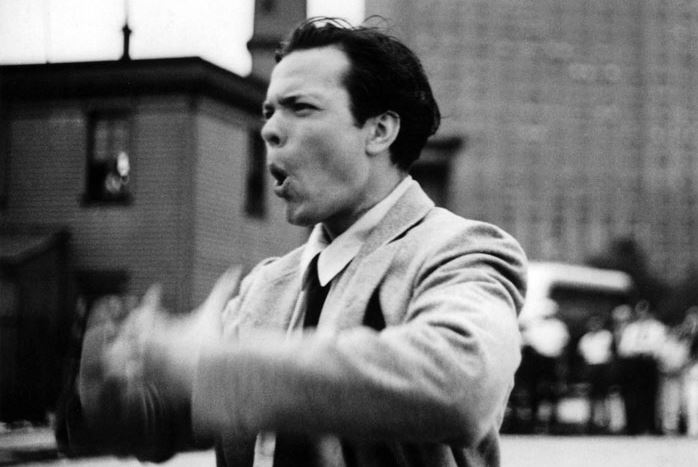
Orson Welles directing Too Much Johnson

Orson Welles directing Too Much Johnson

One of the most motivating and fruitful areas of inquiry for learners can be to investigate the early paths of diverse individuals as they navigate their ways into professional, creative, and adult lives.  I was very satisfied to have been able to document some compelling stories in the interviews done for Moving Imagessuch as those with Greg Butler, David Riker, and Hiro Narita.  In relation to filmmaking professionals, particularly directors, there are many books published in recent years that document perspectives about how these creators started their careers, such as Breaking In by Nicholas Jarecki, The Mind of the Modern Moviemaker by Josh Horowitz, My First Movie (1 and 2) by Stephen Lowenstein, and Moviemakers’ Master Class by Laurent Tirard.  For me, good places to start are with Doug Liman or Michel Gondry in Horowitz’s book.  And from this summer, a great early-in-the-directing-career story emerged with the discovery and restoration of Orson Welles’s film Too Much Johnson.     

Early Inspirations (photo Carl Casinghino)

Early Inspirations (photo Carl Casinghino)

The New York Times just wrapped up an excellent series in this vein: They asked a variety of creative and critical professionals about  first inspirations that may have begun them on their journey to a professional life in their artistically-oriented field of endeavor.  The series, titled First Crush, features many great short pieces, including TV critic Alessandra Stanley’s essay on the perils of keeping your children from watching television.  There is a nicely diverse selection of narratives here, and featured articles are available about television, theater, video games, dance, and more.  One of the most refreshing aspects of the article “Remembering the Spark that Ignited a Creative Fire” is that the people interviewed here are not famous celebrities (at least to our students); they are professionals who have found fulfillment and success in a career of their choice.  Of particular note for media literacy are the pieces by Katie Chironis (a game designer for Microsoft Studios) and actor Evan Handler.    

Opening Day Movie

charstarleneJust saw this short movie, I Forgot My Phonedirected by Miles Crawford  and written by and starring Charlene deGuzman that was posted yesterday (according to the YouTube channel) and has nearly 4 million hits.  I will definitely be using it on my first day lesson in Media Literacy and Production this week.  Quite brilliantly put together.

cell phone teenI should add that I was in Disney World recently, so the content of this short and another one that remains to be made on rental mobility scooters are certain to hit home with particular force for me right now.  I was constantly seeing entire families with young kids all sitting at a dinner table with every person on a device; in one instance, there was a baby in a high chair staring into space with her two siblings, about four to seven, on their phones or tablets as well as their young mom and dad.

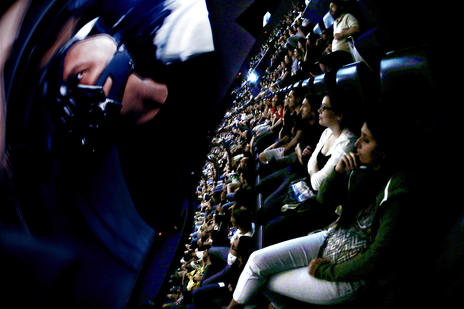
dark knight baneFor decades, debates have raged about the relationships of media and violence.  For discussion in media literacy or psychology classrooms, I would like to point out a highly useful and relevant new op-ed in the New York Times by a group of physicians who established an initiative titled Broadcast Thought to provide expertise on depictions of mental health matters in entertainment and news media.  Doctors H. Eric Bender, Praveen Kambam, and Vasilis Pozios highlight recent scholarship that indicates that the most common popular opinions on violence and media – essentially, that watching lots of violence in entertainment does not lead to being violent in real life, as reflected in recent comments by Mark Millar, creator of the Kick-Ass franchise, about the widely scrutinized movie Kick-Ass 2 – are not supported by research or sound reasoning.  The authors state, “There is now consensus that exposure to media violence is linked to actual violent behavior,” and they provide examples of case studies that show exposure to violent imagery to be a strong risk factor in demonstrating violent behavior.  Meanwhile, much of the critical reaction to Kick-Ass 2 can be summed up in the opening quote from Manohla Dargis’s review of the movie: “There isn’t anything good to say about Kick-Ass 2, the even more witless, mirthless follow-up to Kick-Ass.”  Or listen to Cinefantastique.

Earlier, I wrote about Tackling Difficult Topics Through the Lens of Media Literacy, and this new op-ed piece also made me think of a unit in one of my media literacy and production classes, linked to Chapter 5 of Moving Images, in which students investigate questions of who creates media? / why do they create media? / how is media created? and how do messages reach audiences?  For this investigative unit, we look at the FrontLine pieces Digital Nation and The Merchants of Cool, as well as other sources.  As one component of their work, students have a task that implicates them more fully in the learning objective: They must work in collaborative groups to develop a proposal for a documentary, television series, or interactive moving image-based website that explores a selected theme or issues from one of these research pieces.  Each student must individually develop one part of the portfolio that will be presented to the class in a pitch session.  Among topics explored have been ones including issues related to teens (societal roles, driving, peer pressures, etc.), various impacts of digital communications, and violence and the media.
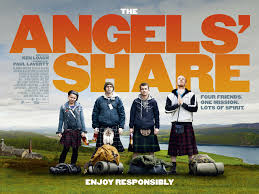
Media antidotes to glorified or flippant depiction of the impact of violence: recent Ken Loach films such as "The Angel's Share" and "Sweet Sixteen"

Media antidotes to glorified or flippant depiction of violence: contemporary Ken Loach films such as “The Angel’s Share” and “Sweet Sixteen”

In one example of a pitch related to media depictions of violence, four students presented examples of how there is “violence in the media” and the presentation initiated by the first two students generally consisted of showing YouTube links to “Jackass”-type viral videos.  In the second half of the pitch by the other two members, the concept itself became less vague and unconvincing to their peers as one group member showed a prezi with research and graphs depicting the influence and pervasiveness of violence in the media, as well as a resource list including the documentaries The Mean World Syndrome and The Bro Code.  The last group member showed a storyboard for the opening of their proposed piece in which they would dramatize a violent incident in a school linked to various popular media, including a current hit song.  Meanwhile, it is what can happen next that is vital to consider: The most important parts of the learning experience can be the follow-up discussions and further inquiry from research and the investigation of reliable, competent resources such as those presented in the “Does Media Violence Lead to the Real Thing?” op-ed.

att_icw_lgt_rgb_grd_posThrough It Can Wait and other initiatives, AT&T has dedicated a great deal of effort in public awareness campaigns about the dangers of texting and driving.  Recently, they released From One Second to the Nexta half-hour documentary by Werner Herzog that will be used as a public service announcement throughout schools in the United States.  “What AT&T proposed immediately clicked and connected inside of me,” Herzog has said. “There’s a completely new culture out there. I’m not a participant of texting and driving—or texting at all—but I see there’s something going on in civilization which is coming with great vehemence at us.”

itcanwait-documentaryWerner Herzog has created some of the most challenging and engrossing movies of the past half-century and his career is one of the strongest examples of a director whose work crosses many boundaries between fiction and documentary and across genres, like other directors featured in Chapters 5 and 6 of Moving Images, such as Agnès Varda, Michael Apted, and Bertrand Tavernier.   Among Herzog’s most celebrated non-fiction films are Cave of Forgotten Dreams, Grizzly Manand Little Dieter Needs to Fly, while his fiction features include Aguirre, The Wrath of God and Nosferatu, The Vampyre.  In addition, his production of Fitzcarraldo is the subject of the highly acclaimed documentary Burden of Dreams by filmmaker Les Blank and is available on a deluxe Criterion edition.

From One Second to the Next is a powerful public service announcement and a striking piece of filmmaking, and it can provide good examples of cross-curricular work in the classroom, particularly as students work on issues related to safety and decision making, constant technology use, and communications.  It can also serve as a strong reference point as students work on their own documentaries or PSAs; here is a page that gives information on the type of team needed to put together a project like this.  And here is an excellent NPR Morning Edition interview with Herzog about this project.

For schools, there is a shorter 12-minute version of the PSA available.  (The full length version is 35 minutes.)