 If you are looking to review media literacy analytical resources that might be useful for the upcoming school year, this hour-long Frontline piece from this past semester can provide useful perspectives on the generation in our classrooms today, christened “Generation Like” in the title to this PBS documentary. Hosted by author and mediamaker Douglas Rushkoff who writes, “Generation Like explores how the perennial teen quest for identity and connection has migrated to social media — and exposes the game of cat-and-mouse that corporations are playing with these young consumers.” Also take a look at my earlier post which includes a lesson plan created for the Frontline exposés Merchants of Cool and Digital Nation and may provide guidance or ideas for similar lessons with Generation Like.
 The relationship between movies and time is integral to the medium’s essence: film itself is a succession of still images moving so quickly that we feel they are existing in front of us like our experience of the world and of time itself. In fact, the great Russian director Andrei Tarkovsky used the description of “Sculpting in Time” to distill the nature of what filmmaking was to him.
This month, Richard Linklater’s groundbreaking movie Boyhood, starring Ellar Coltrane, is released in theaters. In this film, director Linklater has taken a bold approach in the depiction of a boy growing to manhood: He recorded the feature over a number of years as Ellar Coltrane ages from 6 to 18 over the course of the story. There have been movies that deal in a variety of ways with aging characters, such as the Up documentary series by director Michael Apted, or fiction series such as François Truffaut’s Antoine Doisnel movies or Linklater’s own Before… movies with Ethan Hawke and Julie Delpy, but none have adapted as determined, lengthy, and particular approach to periodically filming the development of a young person and crafting it into a fictional world.
 This article in the New York Times features a slide show titled “12 Years a Boy” in which one can view the physical transformations of actor Ellar Coltrane over the years during which this movie was made. This article and topics discussed in Moving Images related to time and the relationships of reality to fiction in chapters 5 and 6 can be useful starting points in examining this movie. Boyhood‘s content, moviemaking techniques, and media literacy-related discussion points can be a natural topical fit for students who are at the edge of adulthood, like the main character of Boyhood at the end of the movie (while it is important to note that this movie is rated R for language and teen alcohol and drug use).
As a final point, I find particular delight in one detail to this story: one of the links between father and son in the movie Boyhood concerns the ties that can be shared through music and time, and this manifests itself in the compilation of a Black Album of the Beatles (related to their “White Album” of 1968, actually titled simply The Beatles) made up of songs from after the group’s breakup and created by the father of the movie for his son (Ethan Hawke plays the father to Ellar Coltrane’s Mason). The father writes, “Mason, I wanted to give you something for your birthday that money couldn’t buy, something that only a father could give a son, like a family heirloom. This is the best I could do. Apologies in advance. I present to you: THE BEATLES’ BLACK ALBUM.” Linklater and Hawke shared the 3-CD track list that they came up with (and which had originated as a real gift from Hawke to his oldest daughter). Since every time my family and I get in the car my kids ask to put a Beatles CD on (and I can’t believe that I’m the one saying “could we try something else for a change”), I think it’s time that I made up our own family version of The Black Album, and I think I’ll have to make it a 4-CD package.
Posted in Chapter 5, Chapter 6 | Tagged Andrei Tarkovsky, Antoine Doisnel, Black Album, Boyhood, Ellar Coltrane, Ethan Hawke, Francois Truffaut, Michael Apted, Richard Linklater, Sculpting in Time, The Beatles | 1 Comment »
A few days ago, my daughter, who just finished 5th grade, called me over to the computer to show me “something neat.” “Look at this animal, isn’t it amazing? I hope they can save it,” she said. I scratched my head at the pictures and descriptions of the tree octopus on this sharp, very official and scientific looking site, and responded to her, “Ummm, Lucie, who made this site? It looks pretty cool and all, but I’m not so sure about this. I think we should check on this.”
“Oh, yeah, I know,” she answered with a smile. “Mrs. P showed us all about this stuff and how you need to really check on sources you find, like these other three…” She was testing me. Very deadpan, very funny. Good job, elementary school teachers and kids! I should add that I am looking forward to sharing this post with my daughter (and sons too) because she used my mediateacher.net site this year for a research project she did on stop-motion animation, which led to me sharing a number of books, other resources, and my input with her.
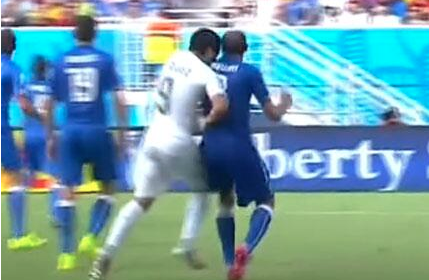 So as we review our previous school year’s work and look to the next cycle, it is imperative to look back at media literacy developments that might inform our ongoing work in the classroom and beyond. Right now, the enormous media event known as the World Cup is going on, and what we quickly interpret as “reality” is often the one that is selected by the camera angles and lenses chosen for us. Did we really see that? Who was editing? Did they cut out part of the whole story? What might seem like a clear witnessing of an event could just be part of the story, and a distorted one at that. Or not.
 From this past year, there was a media story that should enter right into any educator’s playbook: the viral event generated by the “twerking gone bad” clip with a woman in her room who falls over and catches fire. As it turns out, this YouTube phenomenon was orchestrated by Jimmy Kimmel with a professional stunt woman (Daphne Avalon, using a pseudonym in the video) for his late-night show. The piece from Jimmy Kimmel Live is really quite exceptional and can be used quite well in investigating authenticity and other issues associated with moving images and their role in society today. In particular, the degree to which television shows reported the phenomenon as real, as shown in the clip from the show.
Posted in Media Literacy | Tagged Daphne Avalon, Jimmy Kimmel Live, media literacy, Tree Octopus, Twerking, World Cup | Leave a Comment »
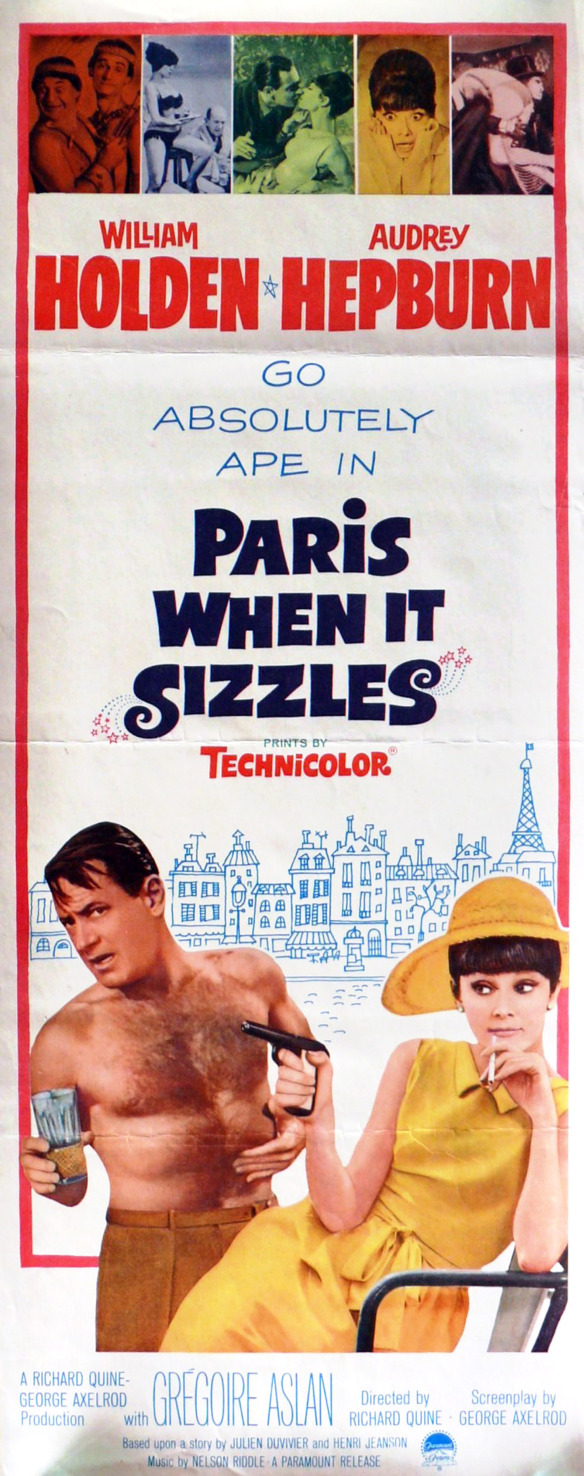
Summer Movie about Screenwriting: Sizzle in Paris with Hepburn and Holden as they work to get the creative juices flowing
Chapters 3 and 7 (Sound and Image and From Page to Screen) are the sections of Moving Images that deal most explicitly and directly with screenwriting. One of the topics introduced in Chapter 3 and pursued further in Chapter 7 is that of screenplay format. Currently, there are many programs available to set up writing for proper screenplay format, such as Celtx (which offers a freeware version), Final Draft, Adobe Story, and many others. Educators or students may wish to invest in any of these or access freeware versions, but here is another easily accessible option. Microsoft Word can be programmed so that through the style settings the basic components of a script are ready to go.
Would you like a copy that is prepared for you? Here it is: Screenplay template. The titles for screenplay components in this document are those that I have used in Moving Images and are described in the definitions and descriptions in Chapter 3 (p. 101-106) and Chapter 7 (268-271). This Word doc template has been set for Courier; you may have to change the font settings to Courier New depending on your version of Word. Please review the style settings, because they can be problematic between software versions and they might need review or updating. In addition, here is a template for a two-column script.
Posted in Chapter 3, Chapter 7, Resources | Tagged Adobe Story, Celtx, Final Draft, Paris When It Sizzles, Screenplay format, Screenplay Template Microsoft Word | 2 Comments »
 Today, the The National Coalition for Core Arts Standards, in partnership with Americans for the Arts, released a set of national standards for the arts, including Media Arts. Here is a link to pages that provides documents and resources for these standards. In reviewing these standards, it is clear that they are well aligned with national media literacy standards highlighted in the pages of this blog and that formulate the core principles of Moving Images and the coursework provided with this textbook.
Posted in Resources | Tagged Americans for the Arts, media literacy, National Coalition for Core Arts Standards, National Core Arts Standards | Leave a Comment »
 mediateacherdotnet