Feeds:
Posts
Comments

kreosansachaOr, “what exactly is that movie?”  – which was the title to an earlier mediateacher.net post, so we’ll be returning to that phrase again today to explore the ever-evolving 21st century media creation landscape.  (At least that’s what Google translate gave me, so it’s probably a ludicrous translation.  If appropriate, Russian readers can send along a good translation and I’ll add it to this post.  See: that will be 21st century collaborative media in action.) (O.K., here’s the P.S.: О чём этот фильм is a better translation, I am told.  I’ll take your word for it, Marta — Thanks!)

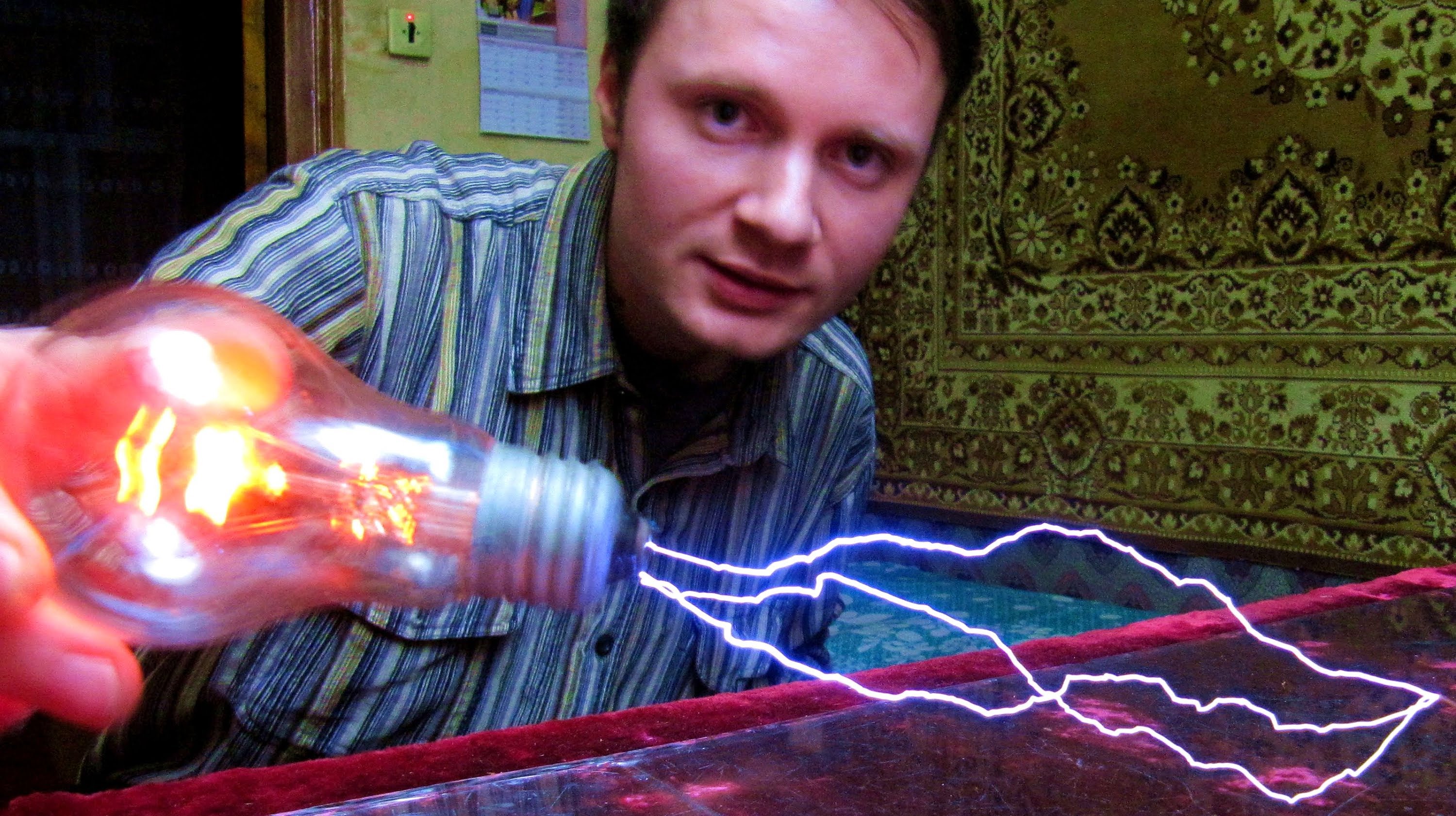
Today, we will be visiting the groundbreaking media event known as Kreosan.  Two young men from war-torn Luhansk, Ukraine, Pavel Pavlov and Aleksandr Kryukov, began conducting home science experiments and posting them to their YouTube channel.  They started to attract a following, and the political and historical contexts of their work provide powerful examples of the ways in which the creation and dissemination of media messages produce new outlets for communication and expression as well as the sharing of information, discoveries, and perspectives across cultures.  A part of that process is also the written expression of ideas through comments by followers and responses by the creators themselves, who have acknowledged the effect of feedback on their output.

kreosanFor an introduction to their work, please check out this Saturday Profile piece by Andrew Roth for the New York Times.  There is a video to watch as well as a print article.  Like many media literacy stories today, this is a richly cross-curricular tale, from the geopolitical situation between Ukraine and Russia for social studies classes to their experiments (such as with the magnetron or with lightning) for science and tech ed coursework.  Watch out for that ray gun!

copyright-culpritIf you a learner or educator looking for thorough information on guidelines for fair use of media in educational contexts, this page on the Center for Media & Social Impact site has a wide range of resources to explore, including copyright and legal permissions.  You can also go directly to Code of Best Practices in Fair Use for the Visual Arts (funded by the Mellon Foundation for the College Art Association).

By Andrew Rae for The New York Times

By Andrew Rae for The New York Times

Chapter 8 of Moving Images — The Production Process presents ways in which people need to work together effectively to make movies.  In fact, students learn this throughout the book, by investigating media, studying film- making processes, writing for different contexts and platforms, and creating movies of all kinds.  Of course, this process is also a business, which is discussed at various junctures in the book and has been addressed in earlier blog posts here.

A recent article by Adam Davidson (a host of NPR’s Planet Moneyfor the New York Times highlights the tremendous value of examining the intricate processes of moviemaking, which reveals ways in which The Production Process can help us to figure out how a successful workplace functions.  In particular, Davidson highlights how lessons from the world of moviemaking can be instructive in enhancing new trends in the contemporary workplace.  I highly recommend “What Hollywood Can Teach Us About the Future of Work.”

House of Beal

Jeff Beal conducting string ensemble for House of Cards

Jeff Beal conducting House of Cards string ensemble

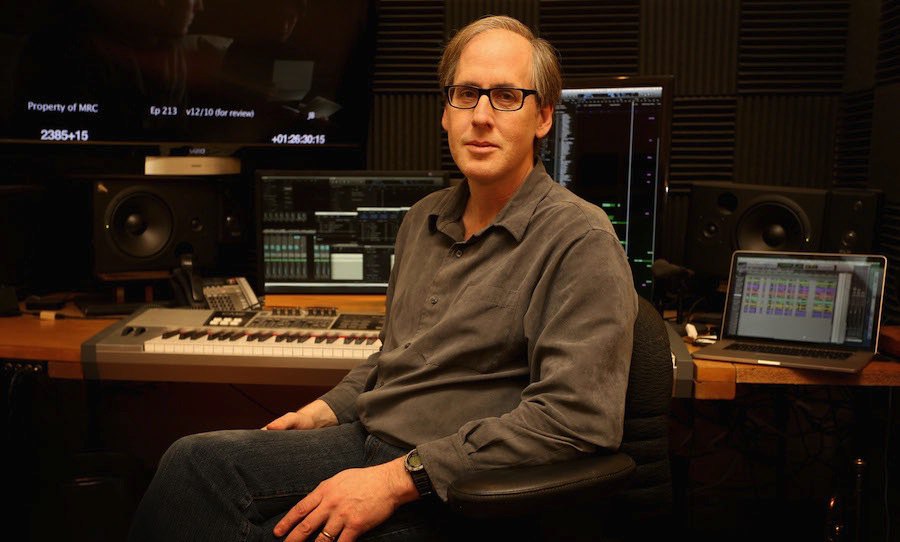
In earlier posts, mediateacher.net has shared profiles of such classic composers as Henry Mancini and contemporary masters like Cliff Martinez.  One of the most interesting current examples of an extremely successful and acclaimed musician and composer making the transition to scoring music for television and film is Emmy Award winner Jeff Beal.  At the outset of his career, he began forging an identity as one of the most talented young trumpeters in contemporary jazz who could also compose in a wide range of idioms for projects ranging from solo piano to orchestral suites.

Like many musical artists with his range of talents and interests, Beal began composing for motion pictures, and as part of a trend with some of the most acclaimed composers of the past decade or so, his primary source of exposure has been through composing for television.  In series such as Monk, Carnivàle, Ugly Betty, Rome, and The Newsroom, and movies like Blackfish and Appaloosa, he has established himself as one of the most expressive and compelling creators of music for motion pictures.  Most recently, his work on Netflix’s House of Cards has brought him even further into the spotlight.  This recent article on Jeff Beal (and family members) at work on the musical accompaniment to the most recent season of House of Cards is highly informative both for its artistic insights as well as for practical details on the work of contemporary composers, such as how contracting works.

Jeff Beal StudioI also highly recommend Jeff Beal’s recently redesigned personal web site, which includes his own selections of movie sequences that highlight the importance of his work on the outcome of dramatic scenes.  It is no surprise that there are two examples from his lauded score for Ed Harris’s feature Pollock about painter Jackson Pollock.  These clips can be very useful in media literacy, music technology, and video production courses.

Finally, for those with further interest in the work of Jeff Beal as a composer, I highly recommend his albums Alternate Route and Red Shift which both feature large ensembles as well as the more intimate Contemplations.  

2017 Update: Here is an excellent news report featuring an interview with Jeff Beal as he discusses the powerfully autobiographical elements of his recent piece “The Salvage Men” and his work for film and television.

stromae tous les memesPerhaps your school year has already wound down or maybe you’re just about there.  Here’s a brief post to share an artist with whom you may already be familiar — and if not, I think you are in for a treat because I believe he is one of the most dynamic multi-media presences of the past few years: Stromae.  He is first and foremost a musical artist, but the place of visual expression in his output is key to his message and to his success, like many performers today.  I recommend these videos because of their extremely high degree of thematic force and visual impact.  There is a total command of motion picture language throughout the work he creates with his collaborators, from the animation of Carmen (by Triplettes de Belleville director Sylvain Chomet) to the art direction of Papaoutai to the cinéma vérité tour-de-force of Formidable (with a song that is profoundly reminiscent of Belgian icon Jacques Brel, who was also a multi-media giant) to Tous les Mêmeswhich brings most of thèse qualities together in its eye-popping, thought-provoking glory.  And like many artists today, Stromae needs to be pretty good at self-deprecation, which is quite apparent in his very funny (for those who understand French) video alongside French comic Jamel demonstrating the mock creation of his first mega-hit Alors on Danse.  And the original video to that one too — Alors on Danse — is stunningly original, particularly alongside standard music videos, rap or otherwise.