Feeds:
Posts
Comments

The second chapter of Moving Images is titled “Inventions and Origins,” and in this unit students learn about and explore the origins of motion pictures and the early developments of filmmaking and visual storytelling.  For this chapter, it was particularly satisfying to feature an interview with a filmmaker whose career has been at the cutting edge of a contemporary revolution in moviemaking that serves as a mirror to the story forged by the initial moviemaking trailblazers.  Digital visual effects have been in a state of a constant transformation throughout late 20th and early 21st centuries while they have been profoundly altering the ways in which we experience and create moving images.  Greg Butler has been involved closely with this story for the past two decades.  His credits include the Lord of the Rings series, Harry Potter and the Order of the Phoenix, Harry Potter and the Deathly Hallows (Part II), Charlie and the Chocolate Factory, Prince Caspian, G.I. Joe (here is a great interview he did at the Paris FX 2010 Expo for it), and many other movies.  Currently, he works for The Moving Picture Company, which is one of the most active and innovative visual effects production houses in the world.  Check out my following post for info and links for media about visual effects.  

What were your early inspirations to use moving images to communicate?

I grew up in the 1970’s and 80’s. Between the ages of 7 and 12 alone, I saw some amazing films, many of them multiple times; Ralph Bakshi’s Lord of the Rings, the Star Wars trilogy, Superman and Superman II, Indiana Jones and the Temple of Doom, Close Encounters of the Third Kind, E.T., The Dark Crystal, just to name a few. Most of these films would now be called “special effects driven” films, but to me they were just amazing stories that completely drew me in. Of course, I wanted to find out anything I could about how the effects were created. In those days, there was not a lot of information available about how these films were made. There was the occasional TV special, but it usually consisted of interviews with the actors and other more general topics. Home VCR’s were still a few years away and DVD special features were a completely unknown concept. In fact, since the only way to see a film was on one of the three television networks or at the cinema, many popular films would be re-released every couple of years. Luckily, I grew up in a small town and our one theater often showed “second run” films for only 99 cents.


In what ways did you first become involved in making movies?  At what point did you begin to become involved in CG? 

I remember running around the second grade playground acting out scenes from Star Wars.  A few years later, my brother and I teamed up with the two girls down the street and started making short Super 8mm films under the “Blossom Street Productions” banner. We did versions of The Dukes of Hazard, James Bond, and untitled monster and space movies. They weren’t very long, but we planned them first and occasionally built props and attempted basic special effects. After a gala screening for our parents, we would move on to the next project.

In 1989, I went to a small liberal arts college initially to study history and avoid math. In my first semester I applied to get into both film and video production courses, both of which were very popular. I didn’t get into either, but I did get a work study job in the engineering department. I quickly found that my combination of curiosity, technical aptitude, and a set of keys to all of the video production facilities was getting me all sorts of new connections and acquaintances in the film and video departments. I started helping older students and some of the professors with their productions.

In my third year, I was asked to be the director of photography for a friend’s final video project. After graduating, she got a job at Industrial Light and Magic.  She helped me to get an internship and later my first job. I started at ILM in the commercials division and quickly transferred to an entry level job in the new computer graphics department.

What were some useful lessons you learned through your early experiences with motion pictures?

One of the most important things I learned about the filmmaking process is that it is incredibly interdisciplinary and requires a tremendous amount of planning and organization. As a result, films of any significant length can rarely be completed without a large number of people working closely together. A film can succeed or fail at so many different points. Everyone involved needs to keep focused on their job and work well with everyone else.

Motion picture history has been propelled many times by new generations of innovators, from the first filmmakers discussed in Chapter 2 of Moving Images to the pioneers of CG.  How did you experience the evolution of digital effects in moviemaking?

I started in the film industry just at the moment that the transition to digital was occurring. While I was a camera engineering intern at ILM in 1992, they had just completed Hook and Death Becomes Her. Both films effects used some digital compositing, but were mostly created with traditional techniques such as hand inked rotoscoping and optical printing. At the same time, the small computer graphics department was doing tests of digital dinosaurs for Jurassic Park. When I returned a year later to start my first job, the company had almost completed its transition. The optical printers were being dismantled and a number of departments had disappeared or been computerized (fx camera, rotoscoping, opticals). Computer graphics in visual effects had graduated from one-off “gimmicks” like the water creature in The Abyss to become an integral part of the filmmaking process.

Starship Troopers

In 1996, I worked at Tippett Studio on Starship Troopers. Phil Tippett and many of my colleagues at the studio had worked in stop motion animation for years and were finding innovative ways of incorporating digital tools into their process. For example, Tippett Studio was awarded a technical Oscar for the “Dinosaur Input Device” (DID), first used on Jurassic Park to animate digital dinosaurs using stop motion techniques.

Working for Phil Tippett was a great experience. It’s where I really learned about visual effects and animation. I was constantly surrounded by reminders that computer graphics are just a new way of working in a much older craft. The same rules still apply.


How does your role in the visual effects department fit into the entire process of film production?

These days, very few films don’t include some level of visual effects. Sometimes, it’s simply to save money on locations or big sets, to increase the safety of actors or stunt people, or just to save time during the shoot. And of course, there’s still a lot of demand for us to create what doesn’t exist, like dinosaurs or space battles. The visual effects department is now part of the process from the very beginning: creating a budget, then planning the shoot,  and finally working on all the vfx shots in post-production.


An example of an “invisible effect” in which the visual effects artists take the initial photographed image, at left, and use digital fx to transform the scene into the intended setting. These images are from “Amazing Grace,” about abolitionist William Wilberforce (directed by Michael Apted, 2006). Courtesy Walden Media

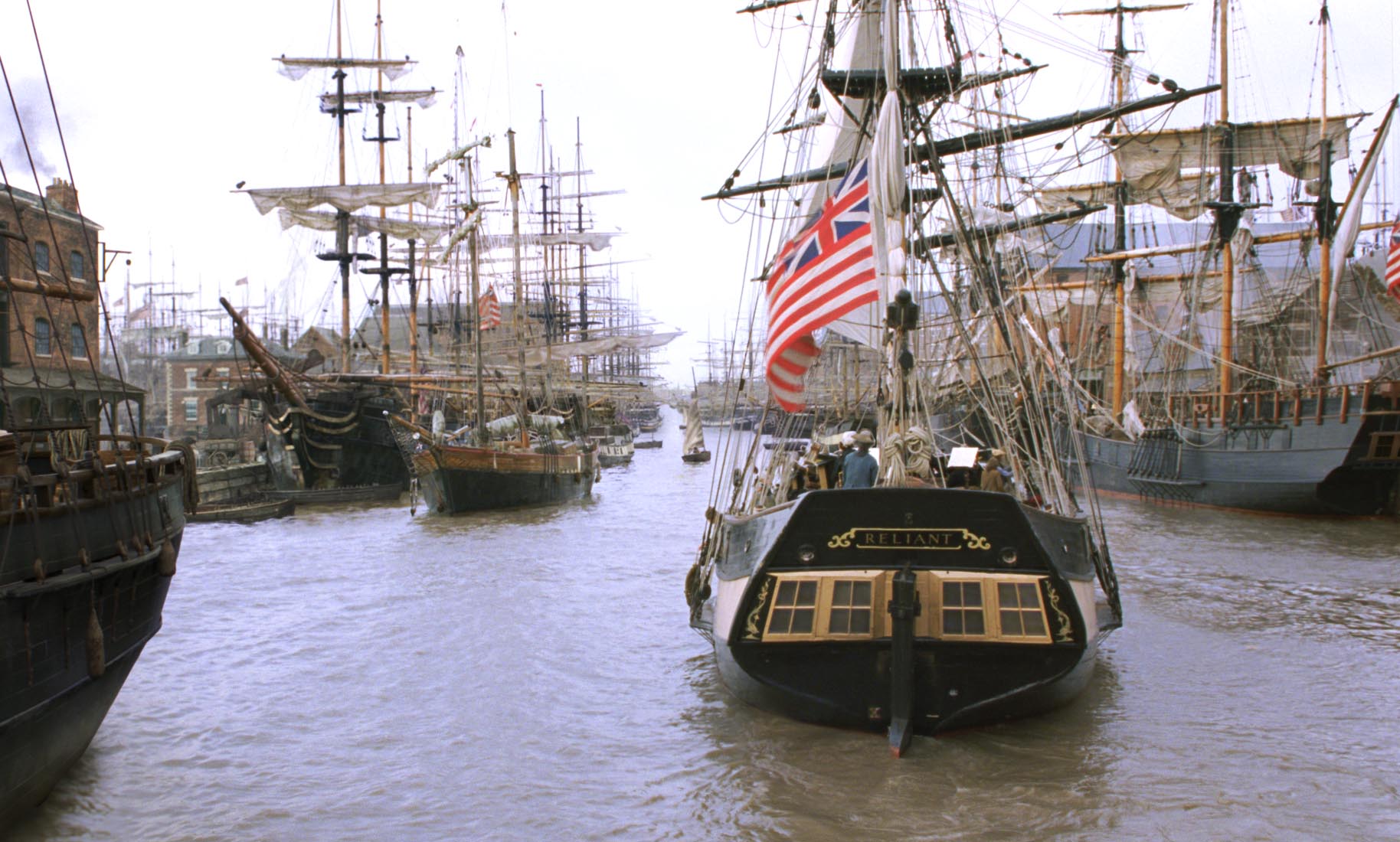
Filmmaking has always been an expensive and time consuming “group project”. Visual effects and computer graphics have only increased the time and amount of people needed to make a film. With more people involved, there are many more decisions needed, both creative and technical. My collaborations are mainly with the film’s overall vfx supervisor and the senior artists on my vfx team, such as an Animation Director or CG Supervisor. The film’s director is always involved of course, in setting the overall goals, in terms of the story, style and the look of the film.


What have been some of the greatest challenges you have faced during your filmmaking endeavors? 

It can be challenging to maintain the focus, commitment and enthusiasm necessary to make it through a project, while at the same time not having it completely take over the rest of my life. The hours can be very long, with no weekends off during peak periods of the production. I usually spend about 8 – 18 months working on a film, although I was on The Lord of the Rings films for over 5 years.

Creating Gollum for The Lord of the Rings

What have been among your most fulfilling experiences in moviemaking? 

In early 1999, I joined a group of around 20 digital artists in New Zealand for The Lord of the Rings. I had never been to the Southern hemisphere or spent more then a few weeks outside of the US. All of us knew we were at the beginning of something special. The Weta vfx crew grew much larger as the years went by the work we did got bigger and better too.  Playing a significant part in something that will last is certainly among my most fulfilling experiences.

This weekend is the bi-annual NAMLE conference in Philadelphia.  At the conference, I will be delivering a presentation titled “Contexts, Connections, Collaboration: Integrating Critical Thinking and Creative Problem Solving in Media Literacy Education.”

One particularly exciting aspect of the event is that one of the keynote speakers is Douglas Rushkoff, who is a leading figure in media studies.  In fact, a documentary that he hosted for PBS is one I have used many times: “The Merchants of Cool.”  I highly recommend this piece for secondary school media teachers or communications professors.

Welcome

Moving Images: Making Movies, Understanding Media by Carl Casinghino

Hi, I’m Carl Casinghino and welcome to my blog!  This is the official blog by the author of Moving Images: Making Movies, Understanding Media, so its first purpose is to function in tandem with the textbook.  Through this blog, I will be offering further information and resources in support of my textbook published by Cengage Learning.  In addition, the blog will offer perspectives and information on media literacy education, movie production in and out of the classroom, and current trends and developments in digital media and the world of moving images.

I will be working to maximize the usefulness and ease of this blog as I create posts and organize categories.  I look forward to your comments and viewpoints on the topics that will be addressed through this blog and the ongoing project of Moving Images.  

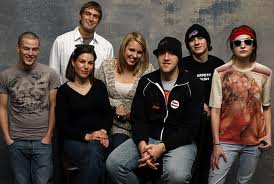
Nanette Burstein (2nd from left, seated) with American Teen Cast

At the end of each chapter of Moving Images, there is an interview with a filmmaker whose work reflects the professional domains, topics, and themes of that unit.  Chapter 1, titled “Motion Picture Language,” features an interview that I conducted with Nanette Burstein, one of the most dynamic and compelling directors working today.  Her productions have consistently remained on the cutting edge of the current revolution in content and form between non-fiction moviemaking and storytelling techniques.  

In fact, her recent movie “American Teen” is a new addition to the list of feature films suggested for possible use with Chapter 1.*   This film raises many pertinent issues for class discussion and writing, including relationships between documentary source material and narrative structure, a wide variety of communicative techniques, and many familiar themes of teen life today: bullying, financial pressures, college and professional life, and dating (among others!).   

CC: Did you have any early inspirations to use moving images to communicate?

NB: For me it was a combination of different experiences.  I was a cinephile growing up and had the great fortune of growing up in the 1970s – well, I was pretty young in the seventies – so I got to see such great cinema and then I did a lot of theater in high school.  In high school I also went to Nicaragua and there was a war going on and it was very political.  I started to realize you could use cinema for social change.  At the time I thought “I’d love to tell stories” and I didn’t know if it was going to be journalism or if it was going to be movies but I was interested in that whole world so I got into film school.  And pursued all aspects.

CC: In what ways did you first become involved in making movies?

NB:  I went to NYU film school and started making short fiction films and during that time I started my junior year interning in the edit room for a documentary series.  I got hired as an assistant editor, and then they ran out of funding and I offered to edit the last movie in the series for very little money, which they let me do.  So I was pretty young, I was 21 when I had my start at a professional documentary, and it was an interesting experience because the directors weren’t involved in the editing room, they were just hired to go out and shoot the film and then it was left to the editor to figure out the story line, so there was a lot of freedom which made me really excited about documentary.

CC: How did you move on from those initial steps?  What were some useful lessons you learned through your first experiences with motion pictures?

NB: Through having made my own short fiction films I had to do a lot of jobs myself.  It’s very hands on.  And then following that up with editing non-fiction films, when I went to make my first feature-length documentary, I had both of those experiences in fiction and non-fiction and I decided to meld the two and shoot a non-fiction film, to film real people but have in mind a story that has a narrative and can be shown in a three-act structure and not be a meandering story.  Something that would appeal to me thematically would be compelling to me as well, and I could develop a style that is appropriate for that subject.  At the time of this project, that warranted being very gritty because I didn’t have any money, so it had to be gritty.  So all of these experiences led up to shooting my first film.

CC: During your career, you have worked on documentary and fiction films and television production. What has led you to make decisions about the types of movies you have made?

NB: I have had equal interest in both from the beginning.  At the time, non-fiction seemed more feasible: I could shoot it for no money, I could use school equipment, I could shoot it on video before digital video existed.  So, it seemed a more practical way to try to tell a more compelling, dramatic story that interested me.  I would have needed more money to do it on a fictional level.  So that’s kind of what dictated the path I chose.  But because my interests were in both, it was fine by me.  I was anxious to make a movie that I was proud of, and could put my heart and soul into and whether it was with real people or actors, it wasn’t as important to me.

CC: In a number of your films, you use motion picture form to create unique viewing experiences.  In what ways have you used visual storytelling to structure your movies and communicate distinctively to viewers?

NB: For me, the style is always dictated by the subject matter.  If I have a subject matter that I’m interested in telling, I try to find the most appropriate style to communicate that cinematically.  And if you move between varied projects, the style can change quite a bit too.  And so, my first film, On the Ropes, was about boxers in Bed-Stuy, a very poor neighborhood, and it was very important that the film not be heavily stylized or glossy, that it be real and gritty and that the soundtrack came from those streets.

Documentary about movie producer Robert Evans

My next film, The Kid Stays in the Picture, was about a Hollywood producer who’s completely larger than life, so I felt like the cinematic style needed to reflect that.  It needed to be kind of surreal and everything’s big – you know, the visuals were big.  There wasn’t a lot of subtlety there because there wasn’t any in his character, so it was almost like the character could direct the film; it was how he would do it.

Then the next film, American Teen, was about high school kids and I really tried to embody the kinds of feelings and emotions that they were going through and how they saw the world and how they viewed their own culture in a fish bowl.  I wanted to show their fantasy life, which is such an important part of that time in your life.  I felt that doing a re-enactment would be too bizarre and take the audience out of the story.  I also interviewed them, but just showing them talking about it, you don’t really get a sense of their fantasy.  So I thought the best way to express this was to really visualize that fantasy, and it should be animation.  It could be that larger than life imagination that you have, so I just try to use cinema to illustrate characters’ – and people’s – emotions.

CC:  Have you been inspired by any particular filmmaking traditions to make certain choices in your work?  How do you think these decisions helped to establish effective stylistic approaches and storytelling values in your movies?

NB:  Again, I think looking at a certain subject matter, I try to find their inspiration for that particular movie.  Of course, there are certain filmmakers that I greatly admire across the board.  For On the Ropes, I watched everything from Hoop Dreams, which is a great sports documentary, to Scorsese’s Raging Bull to Spike Lee’s films.   Films that have dealt with that culture before.

The Kid Stays in the Picture is very influenced by the movies that Robert Evans was making all through the 1970s, and that actually is some of my favorite cinema.  So everything from The Godfather to Harold and Maude, those kinds of storytelling devices, were influences.

And then American Teen was heavily influenced by great teen movies, John Hughes films, and borrowed from that genre and used it in a way to comment on it.  But there are certain things like there are shots in the film where you can see the characters alone, reflective, and I decided to use a voice-over where you hear what they are thinking, which isn’t that revolutionary, but I was struck by Alexander Payne’s Election where he does it in a far slicker way than I did because it’s a fiction film.  He does a series of dolly shots as you’re getting to the election, and I borrowed from that technique.

CC: A number of your projects have dealt with creative and collaborative processes.  What are some of the most important decisions you made to communicate to viewers about these processes?

NB: Any kind of “making of” story has endless conflict because to arrive at a final product there’s just so much fighting and heartache that happens along the way.  So Film School is about showing the conflict that’s happening in trying to collaborate which invariably appears.  And then we also chose to come up with animation to show the fruit of their idea, the idea at the beginning that described what their movie is.  We wanted to use animation to show a storyboard of the film in their head.

CC: Among your many projects, what have been key experiences in regards to the collaborative nature of filmmaking?  Are there particular relationships that have been fruitful to you in your career?

NB: For the first couple of films I collaborated with Brett Morgen, and I think we had very similar sensibilities.  We complemented each other.  I think I was a little more focused on story and he was a little more focused on style, and we learned a lot from each other that way.  When you are just starting out and you don’t have the money to hire a lot of people to help you make the movie it can be absolutely critical that you have a partner to share the load.  For documentary, it can be necessary to make a film with a really small crew, or just you and another person as it was with our first film On the Ropes, and I couldn’t have done it without him.  So, I’m very grateful to have had a partner at the beginning.  I think we’re both stubborn and opinionated so it came to the point where we did have financing to go off on our own and we had slightly different visions so it was the point for us to go different routes, but I think in the beginning it was very critical that we work together.

Also I think your editor is so critical whether it’s fiction or non-fiction film.  Sharing the same sensibility and helping you really mold the story and the tone is really, really important.  I’ve been incredibly fortunate to work with amazing editors on every project.  Once I can sit down and cut a scene and they can cut a scene and we just help each other and learn together and really work together as a team rather than just sitting in a room and pointing and snapping – just giving directions.  It’s a real collaboration.

CC: As has been mentioned in our discussion, you have worked in both fiction and non-fiction.  What are some of your observations of comparisons and contrasts between working in these different formats?

NB: Ultimately, you’re trying to arrive at the same goal, to tell a really honest, compelling story and use the same sort of dramatic structure for either medium.  The route to get there is rather different though.  For a fiction film it’s so important for your script to be as good as can be, because you’re going to shoot your script.  You’re going to be limited with your choices in the edit room.

Whereas, in a non-fiction film you have a very high shooting ratio but you also have little control, comparatively.  You’re in the hands of reality, unless you’re doing an archival film, but if you’re doing a cinéma vérité documentary, you’re trying to come up with your characters and context to mold your story, but you might miss something or people doing the unexpected.  You’re not production designing what their house will look like or you’re not able to do a crane or dolly shot to evoke certain emotions.  In a fiction film you control every single aspect that doesn’t exist without exerting your control and you have to think about every tiny detail beforehand – and hope that you get it right because that’s what you end up with in the edit room!  Obviously, there are still moments where you don’t have the same degree of freedom that you have with documentary.

In a fiction film that I made, I directed performances to make them feel as honest as possible, and as real as possible, like in a documentary where you try to get your subjects to feel as honest and real on camera, because they have a camera in their face and you are sort of altering reality.  In a way, you are trying to figure out “how can they be themselves?  How can they be most natural?”  The difference is they are that person rather than embodying a character through lines they’re supposed to say.

CC: What have been some of the greatest challenges you have faced during your filmmaking endeavors?

NB: In non-fiction films – and cinéma vérité documentary – the great challenge is “how do I capture every important moment?” – without literally moving in with the subjects!  Sometimes the anxiety of that is overwhelming.  You really want to do justice to their story and not just have it recounted in interviews, these dramatic moments.  In my feature On the Ropes, when the main character is having a trial – it’s a big part of her story – I had been filming pre-trial hearings without any problem and then we showed up for the trial and the judge just said “No.  You can’t.”  The trial hadn’t started, they were still having to complete jury selection, so we very quickly had to hire a lawyer who specialized in this.  We contested it, and questioned whether the judge was really allowed to say no, whether it was for a specific reason, such as if this were a minor or involved sexual violations, and they got it overturned.  That was a very frightening period.  It involves so many issues in relation to what the subject is going through, having to film this very sensitive issue and worrying can I film this or not film it.  It was a very difficult time.

With The Kid Stays in the Picture, one of the big challenges was that we had a big disagreement with the studio that was financing the picture over the structure of the movie, and we had to go on a hiatus for several months and thought the film was never going to get finished.

On American Teen – and I knew this going into the project – it was dealing with teenagers who have a Lord of the Flies culture, they do not trust adults.  They know adults will not approve us, so in order to gain their trust and get the kind of access I needed was very challenging.  We’d go up and down all year long, what they would allow and not allow in developing relationships and that was very hard.

With fiction filmmaking, it was a unique experience for me to work with actors, but I think I rose to the occasion and really enjoyed it.  It was a learning curve, and some of the scenes we would clearly be writing them as we were shooting.  It’s such a tight schedule and there’s so much money on the line, you can feel that stress and pressure every day.  That can be very hard.

In documentary filmmaking, you are asking people to open up their lives to you, and you have to gain their trust, and with actors – even though they’re a trained professional playing a part – you are guiding them into how they should appear on screen and they equally need to trust you in a different way. They need to trust that they’re in good hands and that when you ask them to do something in a certain way they won’t end up looking like fools but they will actually be complimented by that process.  When you’re a first-timer, you have to earn their trust.  You can’t say “Oh, look at such-and-such movie that I did.”

CC: What have been among your most fulfilling experiences in moviemaking?

NB: For me, it’s always been the first time I’ve premiered a movie, and watching the audience respond to it.  That’s always a great experience.

I think that non-fiction is a really interesting arena to explore because a lot of what’s been done has stayed fairly conventional.  Obviously, there has been experimentation, but there is so much more experimentation that can be had in non-fiction that hasn’t been done before.  It seems like a wider arena to be more groundbreaking, whereas with fiction it’s been around longer and it doesn’t seem as open a playing field to try new things, even if of course there are always new ways of communicating in fiction movies.  I don’t know if audiences are open to it, because there are distinct conventions in what people expect in non-fiction and how they expect it to be presented.  But facing this challenge can be very fulfilling.

*Teachers use the “Critical Notebook 1c” exercise from Instructor Resources for questions about “American Teen” in order to develop students’ analytical skills and understanding of media messages.