October 31, 2020 by carlcasinghino
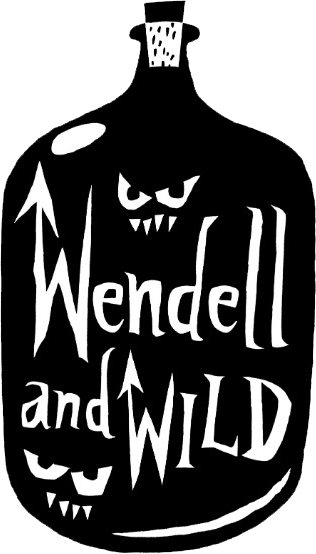 In the “year without a (real) Halloween,” what more appropriate news could be posted than this “in case you haven’t heard” piece: Henry Selick is director for Wendell and Wild in collaboration with Jordan Peele and Keegan Michael Key, along with composer Bruno Coulais (who scored Selick’s classic Coraline). Let’s keep hoping for a release date that’s not too far off: we need this one!
Earlier this year, Selick received a highly deserved Winsor McKay award from the International Animated Film Society. Check out this link which features Selick’s induction with a moving introduction from animator Jorge Gutierrez.
Posted in Animation, Chapter 5, Directors | Tagged Bruno Coulais, Henry Selick, Jordan Peele, Jorge Gutierrez, Keegan Michael Key, Wendell and Wild, Winsor McKay Award | Leave a Comment »
August 24, 2020 by carlcasinghino
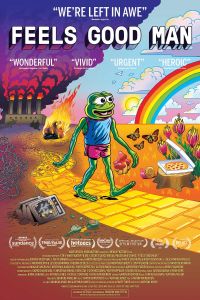 How did a character from Matt Furie’s comic Boy’s Club become one of the mega-memes to end all viral meme characters? Yup, it’s Pepe the Frog. Do you even know where Pepe comes from? How he became a symbol of powerful forces of provocation and extremist alt-right political views today? And what does its creator have to say about how this came to be and what he can do about it?
If interested, check out more info on the Sundance Award-winning documentary Feels Good Man. Director by Arthur Jones leads us on an investigation of the webverse that many of us, particularly today’s students, inhabit here and now.
Posted in Chapter 1, Chapter 5, Chapter 6, Media Literacy, Social Studies | Tagged Arthur Jones, Boys' Club, documentary, Feels Good Man, Graphic Novel, Matt Furie, Pepe the Frog, Sundance Awards | Leave a Comment »
June 20, 2020 by carlcasinghino
 Numerous mediateacher posts have explored media literacy and its integral relationship to social studies in contemporary education, including Media Manipulation: An Ongoing Story, Media Literacy and Social Studies: Clash at Lincoln Memorial, Media Literacy and Social Studies: Portraits of America, and Infekted Minds. Currently, our tumultuous times bring us what seem to be daily examples of media messages intersecting with how events are actually playing out and the ways in which we process them. Here is a striking example of a video essay from the op-ed pages of the New York Times: The Bill of Rights, Revised. This can serve as a resource for classroom debate along with linked viewpoints and journalistic reporting from a range of online, print, video, and audio media resources.
Posted in Chapter 6, Media Literacy, Social Studies | Tagged Civics, Emily Holzknecht, Kristopher Knight, New York Times, The Bill of Rights, Video Essay | Leave a Comment »
April 20, 2020 by carlcasinghino
Students involved in producing media projects are telling their own stories, and at times these creations become historical artifacts. With the first pandemic in over a century spreading throughout the world, students are connecting to teachers, other students, and their learning through virtual interactions. By depicting a particular moment in time as it develops, we may end up capturing pieces of history and creating artifacts that becomes primary source documents. Here is one example of a project made recently by Hannah Schweitzer, one of my high school students. It is an example of the Portrait Project that is the primary video production exercise in Chapter 5 of Moving Images.
Posted in Chapter 5, Social Studies | Leave a Comment »
February 24, 2020 by carlcasinghino
 In earlier posts, mediateacher.net has featured posts that highlight lessons that can be learned from study of movies from the Star Wars franchise, particularly with Rogue One and innovative work in sound design. Along with the superbly detailed book The Making of Star Wars: The Definitive Story Behind the Original Film by J.W. Rinzler, there is this YouTube video that explores how George Lucas arrived at his final cut of Star Wars through the work of his editors Paul Hirsch, Richard Chew, and Marcia Lucas) and which can be very eye-opening to students about the development of story and the power of the editing process (and all of the stages of movie production) in arriving at the definitive version of a film.
Posted in Chapter 1, Chapter 8, Directors, Resources | Tagged Biggs, Editing, George Lucas, J.W. Rinzler, Marcia Lucas, Paul Hirsch, Star Wars | Leave a Comment »
« Newer Posts - Older Posts »
 mediateacherdotnet