 This year’s Academy Award winning shorts are featured on this page from the Film Shortage site, which is based out of Montreal (and to share with French teachers, Film Shortage has a Films de Chez Nous section featuring some Québecois shorts). There are interviews with Kim Magnusson and Anders Walter, who won for the live action short Helium, and I also recommend checking out the other winners, the animated French movie Mr. Hublot and the documentary short The Lady in Number 6 (directed by Malcolm Clarke about 109-year old Alice Herz Sommer, who was the oldest living Holocaust survivor and pianist). Many shorts are featured on the Film Shortage site and filmmakers can submit movies as well.
Posted in Resources | Tagged Alice Herz Sommer, Anders Walter, Film Shortage, Helium, Kim Magnusson, Malcolm Clarke, Mr. Hublot, The Lady in Number 6 | Leave a Comment »
 Just a quick announcement that I will be leading a conversation with award-winning VFX artist Greg Butler in Suffield, Connecticut on April 26, 2014. Greg will be sharing clips and talking about his groundbreaking career, from earlier days of apprenticeship on such films as Forrest Gump, Jurassic Park, and Starship Troopers, to his lead role in the creation of Gollum for Lord of the Rings and on to work as a supervisor of visual effects, including his nomination for the Academy Award on the final installment of Harry Potter. If you are in the area, I would recommend checking out this evening hosted by the Suffield Public Library Foundation for a fun discussion of moviemaking (see also a classroom visit and my Close-Up interview with him).
Posted in Chapter 3, Visual Effects | Tagged Forrest Gump, Greg Butler, Harry Potter and the Deathly Hallows VFX, Jurassic Park, Lord of the Rings Gollum, Starship Troopers | 1 Comment »
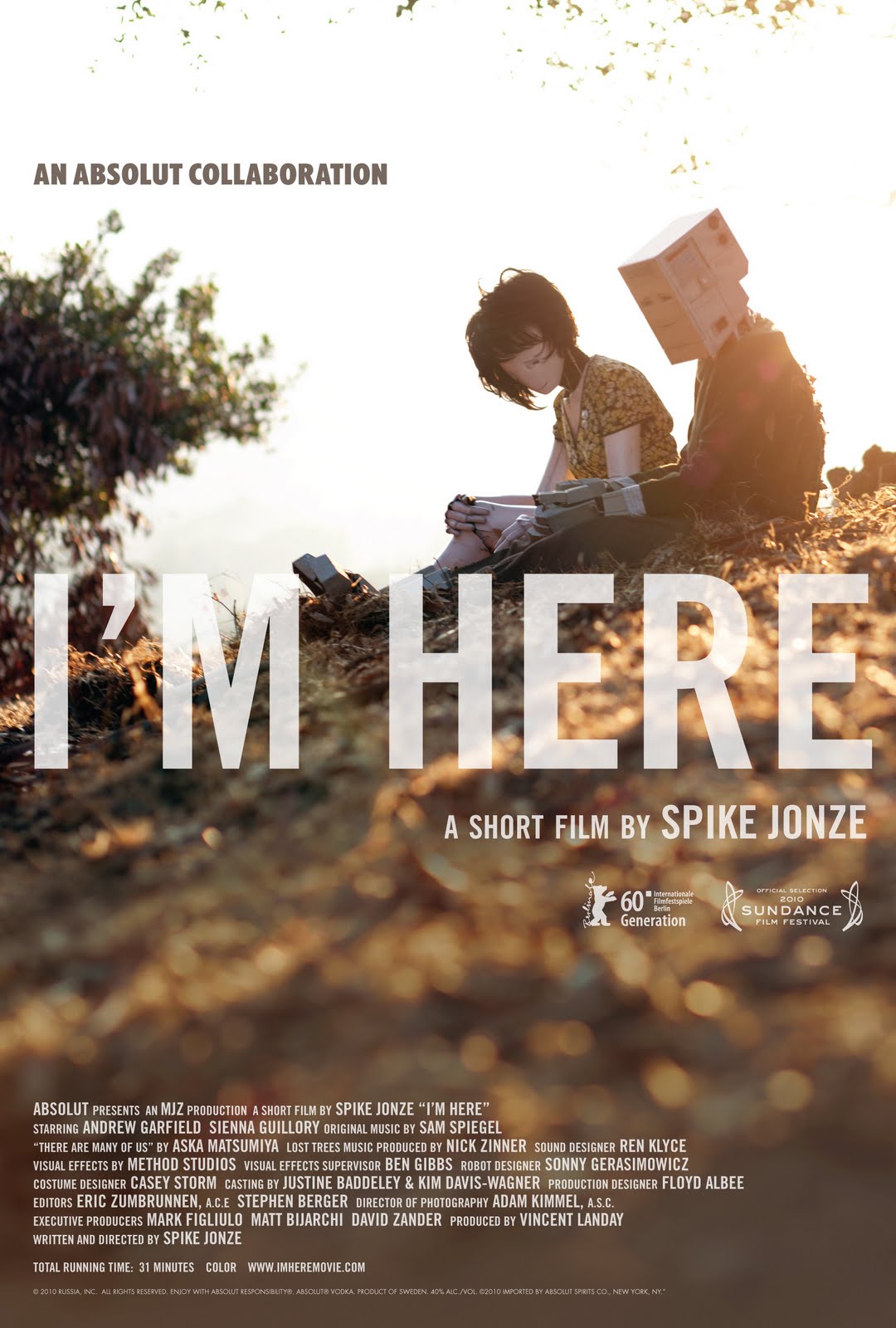 After directing scripts by Charlie Kaufman for Being John Malkovich and Adaptation and then collaborating with Dave Eggers to write Where the Wild Things Are, Spike Jonze went solo to pen the script for his most recent feature Her and promptly won numerous awards for his effort, including the Oscar for original screenplay. Aside from studying the script for Her, I also recommend checking out this far less known short that Jonze made in 2010, I’m Here, which is a bit of a thematic and stylistic warmup for issues explored in Her. Also, you can check out the links with each movie above for screenwriting perspectives and discussions with Kaufman, Eggers, and Jonze.
Besides the clear applications to Chapter 7 of Moving Images (From Page to Screen), I’m Here also prompts topics explored in Chapter 5 — Personal Expression and Studio Production — by provoking questions of “Who made this? / Why did they make it?” and related inquiries. In this case, Jonze, who has worked on music videos and commercials throughout his career, creates here a “commercial” that is 30 minutes instead of 30 seconds. And that is not truly a commercial. Well, it’s really a (long-ish) short funded by Absolut for production studio credit and some cachet, it appears. “Merchants of Cool,” indeed.
Posted in Chapter 5, Chapter 7, Directors | Tagged Adaptation, Being John Malkovich, Charlie Kaufman, Dave Eggers, Her, I'm Here, Merchants of Cool, Spike Jonze, Where the Wild Things Are | 1 Comment »

Michel Gondry and Ellen Kuras on set of Be Kind Rewind
The Oscars are just over an hour away, so here’s a quick post featuring some articles that appeared today. First, cinematographer and director Ellen Kuras, who is a featured voice in Chapters 4 and 6 of Moving Images, wrote a piece about the art of cinematography in a discussion of the tricky art of collaboration and the difficulty of determining awards for everything that happens in the creation of movies. Her work for many directors, including Michel Gondry (with brilliant photography for Eternal Sunshine of the Spotless Mind and Be Kind Rewind, among others), Martin Scorsese, Spike Lee, and Jonathan Demme, marks her as one of the foremost pioneers in the relatively recent arrival of women into camera crews in Hollywood. She also directed the acclaimed documentary The Betrayal (featured in Recording and Presenting Reality in Moving Images).

Marion Dougherty and director George Roy Hill
Another piece in this series about people or crafts that can fall through the cracks in moviemaking awards is about the role of the casting director, written by Vickie Thomas. In particular, it points out a story about the production process that can be quite enlightening: The unawarded, but highly respected and quite astonishing career of Marion Dougherty, whose work is featured in the documentary Casting By.
And pretty soon we’ll see who tonight’s big winners will be…
Posted in Chapter 8, Women Mediamakers | Tagged Ellen Kuras, Marion Dougherty, Michel Gondry, The Betrayal, Vickie Thomas | 1 Comment »

Director Francis Lawrence measures up a shot with Jennifer Lawrence on Catching Fire
This week, there was a post on Yahoo News comparing the Hunger Games movies and offering an explanation as to “why Catching Fire is superior to the first Hunger Games movie”— which is that it was shot in 35mm. with “old lenses!” (I have to add that I have been astonished at the degree to which it has become a meme that the second Hunger Games movie is infinitely superior; literally every adolescent that I’ve heard talk about the movies says this, and some then go on to describe the first movie as if it were shot by a detoxing wedding videographer with a Fisher-Price handycam.)
 Since issues concerning evolving platforms for image capture (both digital and celluloid-based) are addressed in Chapter 4 of Moving Images and a few of my mediateacher.net blog posts, I had to laugh when I read this article and thought, “It’s nice to see this much passion about cinematography in a Yahoo article!” At the same time, I remarked, “Hmmm, the writer needs a few lessons — after all, the first Hunger Games movie was shot in 35 as well!” This is why an understanding of Storytelling with Light from Moving Images can be so beneficial: One must look at all the decisions being made by director, cinematographer, and the lighting and art direction personnel on the movie that craft its look (and vfx too!). It’s how you create and work with the light and all of the things that it’s bouncing off of. In the meantime, I highly recommend checking out the clip from the Catching Fire Blu-Ray: it includes many interesting observations by cinematographer Jo Willems and director Francis Lawrence about visual communication, including selecting aspect ratio, working with film negative, devising approaches to shot selection through choice of lenses (such as the effect of using wider lenses on a project), and going “old school” in general.
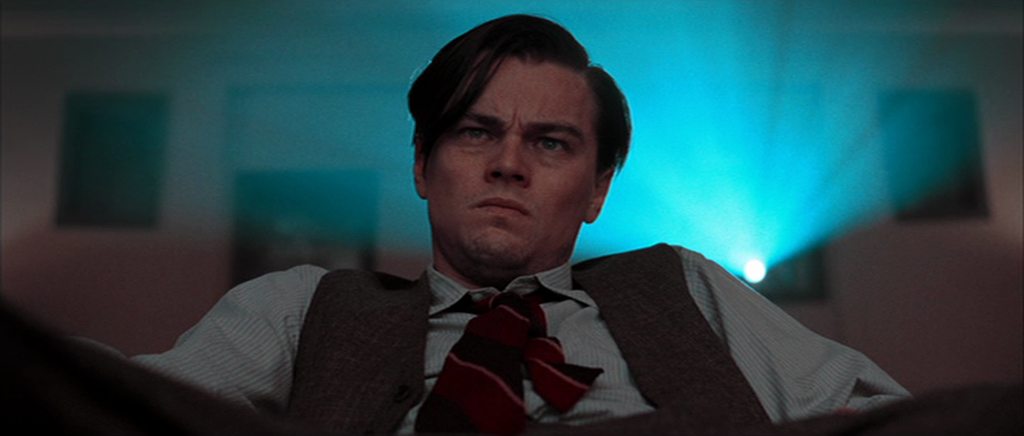 As an additional note, for those interested in the craft of acting, there was a superb piece on Hunger Games star Jennifer Lawrence by Manohla Dargis in this past Sunday’s New York Times, while for fans of Leonardo DiCaprio, a paired article by A.O. Scott was just as compelling. Both essays from the Times “Awards Season” series provide excellent discussion points for thoughtful debates about contemporary movies and American culture.
Posted in Chapter 4 | Tagged A.O. Scott, Breanne L. Heldman, Cinematography, Francis Lawrence, Hunger Games: Catching Fire, Jennifer Lawrence, Jo Willems, Leonardo DiCaprio, Manohla Dargis | Leave a Comment »
 mediateacherdotnet