 In the Journal for Media Literacy Education, I published a piece titled The Role of Collaboration and Feedback in Advancing Student Learning in Media Literacy and Video Production, in which I discuss the importance of implementing effective collaborative project strategies and managing appropriate feedback at all stages of production work. In the article, I examine case studies and learning outcomes from courses I have taught, and I have followed up this work in presentations at Media Literacy conferences and professional development sessions by adding more examples of this work in action.
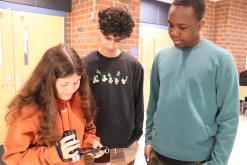 A regular component of the work in video production courses that I teach has been the completion of projects that respond to actual needs of our school community. An obvious recent example was the need for public service announcements related to protocols and phases of the management of the Covid pandemic. Another example is through Student News pieces that have depicted community events or initiatives, such as with our agriscience program or town Land Conservancy.
 At the end of this past semester, my Advanced Video Production class engaged in a complex production that involved the entire class in an extensive collaborative task. This project required intricate planning and organization through all phases from development through post-production. The genesis of the project came about as a result of a request by our school system central administration for pictures or videos of various school activities in order to share with the school board and community during the budget adoption process.
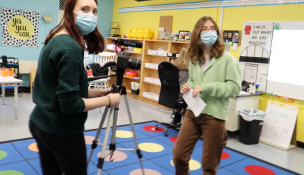 Following that request, I proposed that our media production students work to create a cohesive statement about some of the exceptional learning taking place throughout our schools. The pitch was greenlit, and work was immediately underway. (We had to move fast to make the deadline.)
 This project was the last in-class exercise (before the final course project, which are shorts made independently by each student and turned in as part of the final exam), so students had already completed several motion pictures in which they employ collaborative techniques to set objectives, evaluate effective approaches related to the contexts or demands of the project, and implement a team-based structure to complete the work through production and post-production. Here is the assignment that they received. (Please note: in terms of brainstorming and other aspects of pre-production in which the team members determine their approach and goals for the project, an important phase is when the class examines and assesses a number of examples from in-house work, as well as a variety of student and professional references.)
 And here is the video that they produced. Keep in mind that, yes, it was entirely planned, written, directed, produced, and edited by the students. As a final note about this project, it must be pointed out that one of the most distinctive challenges that students can face in terms of topics for the creation of media messages is when the subject is abstract in nature (as opposed to the type of challenge when depicting an actual event or initiative, or a person or group or place), such as when facing a concept such as “education” or “the leaning process.” Here, the students had to face questions such as “what exactly do our schools do?” and “what is learning all about?” These types of inquiries can provide strong challenges for any media creators.
 In the earlier post
  Several years ago, the Journal of Media Literacy Education published my article
  For this particular initiative, a strong range of messages were created. One project was created by a two-person team; theirs, titled
 A NYTimes OpDoc piece was published recently and it concerns a topic close to the hearts of generations of movie viewers, each with their own reference points related to the genesis and evolution of this storytelling universe: Star Wars. In this case, the issue being explored is the impact of media on a particular group of people sometimes involved in its creation and subsequent life in culture: child actors.
 mediateacherdotnet