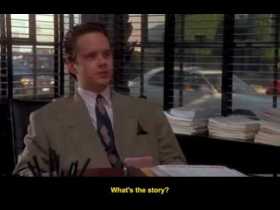
 This Sunday Review piece from the New York Times by Jesse Armstrong (writer for The Thick of It and Veep) is great food for thought for current events / screenwriting discussions this week. A very funny and interesting perspective on both today’s political news and the pitch and development process. Call this Case Study T (or The D) in Screenwriting 101.
Archive for the ‘Chapter 7’ Category
Pitch Notes 101
Posted in Chapter 7, tagged Jesse Armstrong, Notes on Your "Rise of the Donald" Pitch, The Thick of It, Veep on May 21, 2016| 1 Comment »
The Loss of a Beloved Screenwriter
Posted in Chapter 7, tagged Big Hero 6, Daniel Gerson, Disney, Monsters Inc., Monsters University, Pixar, Robert L. Baird on February 8, 2016| Leave a Comment »
 I am deeply saddened to receive the news that Daniel Gerson, one of the screenwriters of Monsters, Inc., Monsters University, Big Hero 6, and others, has passed away at 49. Dan was one of my classmates in the NYU Graduate Film & TV program, and he was always such a friendly, profoundly funny man. All those who worked with him share many fond memories of fun times and very memorable shoots and hilarious writing by Dan right from the start.
I highly recommend checking out this video of Dan and frequent collaborator Robert L. Baird discussing their writing for Monsters University and the process of developing a screenplay with Pixar from the red carpet premiere of the movie. Also, here is another piece in which Gerson and Baird discuss story specifics of Monsters University including the overall theme of the movie, character development, and writing a prequel.
He was always such a stellar person in a sometimes not-so-nice business. Our condolences from my family to his.
Don’t Forget the Writers
Posted in Chapter 7, tagged Alejandro González Iñárritu, Amy Schumer, Cara Buckley, Cary Fukunaga, Dalton Trumbo, Phyllis Nagy on December 31, 2015| 1 Comment »

DiCaprio and Iñárritu discussing a parenthetical.
Hollywood Studios and television networks are notorious for their thorny relationships with screenwriters throughout movie history. Things change. And some things don’t.
Here are some recent end-of-the-year pieces of interest for screenwriting-related issues. The New York Times recently visited with a number of the top writers from feature films this year in this piece on Alejandro González Iñárritu, Amy Schumer, Aaron Sorkin, Paolo Sorrentino (Youth), Cary Fukunaga (Beasts of No Nation), and Phyllis Nagy (Carol).
For fans of media literacy inquiry, here’s a question for your students: “What’s fishy about this article related to the movie Trumbo (about legendary screenwriter Dalton Trumbo, as played by actor Bryan Cranston) in the Times?” (See answer 1 below.)
And here’s another: “What’s odd about the journalism — and lack of media literacy expertise — in this article by Cara Buckley about the new movie Joy, directed and written by David O. Russell and starring Jennifer Lawrence.” (See answer 2 below.)
Happy New Year and be back soon!
1: It’s not journalism. It’s a paid piece posted amidst the online articles of the Times. See also: irony. [RE: Dalton Trumbo]
2: When the director and actors of a movie compare themselves to Cassavetes‘s or Bergman‘s collaborative “troupes” and it’s only their second movie together, please call them on it. See also: puff piece.
Heroes for America! (And now the world.)
Posted in Chapter 7, tagged Daredevil, Drew Goddard, Foggy Nelson, Karen Page, Matt Murdock, screenwriting, Steven DeKnight, The Frame, Wally Wood on April 30, 2015| Leave a Comment »
Leaping at you!
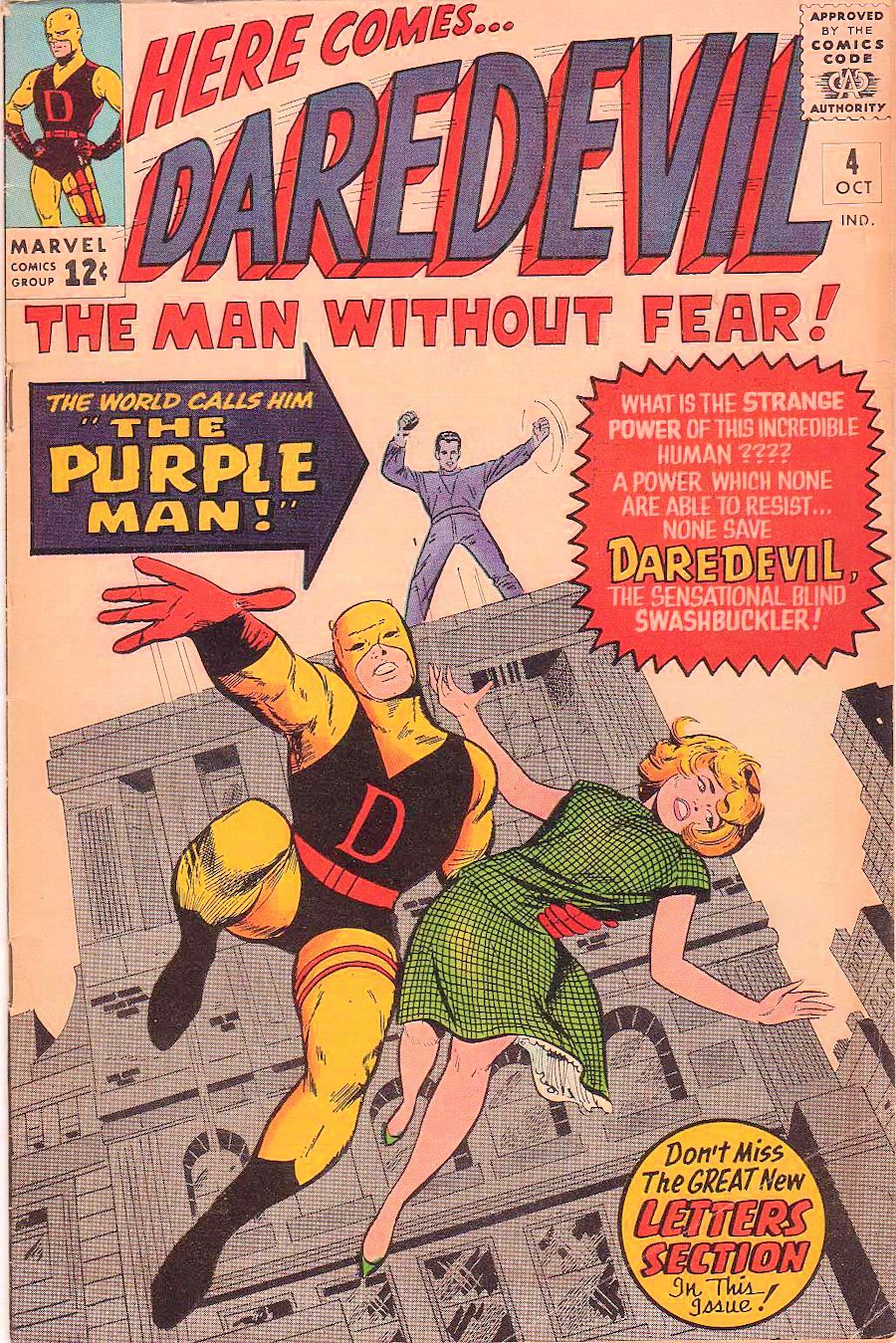
This weekend, free comic book day is arriving and we are about to be hit with the Age of Ultron juggernaut. Meanwhile, for some time now, superhero tales have been popping inventively through the channels of television as well, including the current franchises of DC’s The Arrow and The Flash, among others. Recently, Marvel’s Daredevil has joined the fray courtesy of Netflix, ready for being devoured in hours of bingeing. (One student in a class discussion about sports asked if among winter sports in which he takes part one could consider binge-watching because it’s a sort of competition and includes a variety of skills in order to master its intricacies and emerge a victor from among friends.) The Daredevil TV series, created by Drew Goddard, has garnered quite a strong fan reaction for its clever retelling of the comic’s 1960’s origin story and successive development by writer Stan Lee and artists including Bill Everett and influential maverick creator Wally Wood.

Karen Page, Matt Murdock, Foggy Nelson: you make it with your characters
For those interested in an interesting screenwriting lesson, this recent podcast on The Frame with show runner Steven DeKnight features many compelling discussion points and revealing commentary about scripting television series, including story structure and character development — and how they are dependent on episode length, platform, and target audiences. DeKnight also discusses details about the content of the show and how tone and violence were key issues for the show’s creators to consider.
Poet and Story
Posted in Chapter 7, Chapter 8, Media Literacy, tagged Charles Keating, Dead Poets Society, media literacy, Moscow on the Hudson, Moving Images, Paul Mazursky, Robin Williams, Screenplay, The Fool and the Flying Ship on August 15, 2014| 3 Comments »
 This week’s incredible journey of virtual mourning for millions over the tragic death of Robin Williams (and personal, private mourning for his family and friends) has been quite powerful in its breadth and is anchored by this still recent ability to share media – like going down the cellar to take out the boxes of home movies and prepare them for family reminiscing – so quickly, so widely, and so interactively by both professionals and the general public.
One of the movies selected for study with Moving Images is Dead Poets Society, and a picture of Robin Williams as Charles Keating is featured on page 296 in a discussion of casting in the production process. Interestingly, the first time I personally used the film in a media literacy course – because it is generally used in a sophomore English class at my school – was this past spring. I had not seen it in a while, and I was struck in particular by Robin Williams’s performance, along with the entire cast. If one is looking for lessons in directing of actors in a film from the past few decades, the work that Peter Weir did in this movie was extraordinary. I have found that people tend to focus on the “antics” of Robin Williams’s performance in this role, but if that is the case, they aren’t looking very closely or with an open critical eye. While general perception of this role has tended to focus on his behavior as a “teacher on stage,” Williams is able to convey the care that his character takes in trying to understand his students and pay attention to them as appropriate to the context of a private academy of the 1950’s. His is a supporting role – and another great lesson for students learning from this film is to investigate and discuss the core dramatic issues of the screenplay: who is the main character? when are the turning points of the story? what are the objectives of all of the characters and where are the conflicts? – and it is one that is quite subtle and honest; it is often best in the quiet moments, even ones without words. This is not often enough said of Robin Williams performances, but I find it true here. I highly recommend giving this movie a fresh viewing and doing it with an open critical mind; the poetry is in more than the book Williams is holding in this picture.
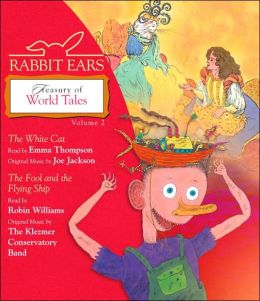 On the solely verbal side, I would like to recommend another Robin Williams performance that is not among his most famous: his narration of The Fool and the Flying Ship, a children’s story for Rabbit Ears Records back in the 1980’s. All of his voice gifts are there, along with the one-liners, the accents, the infectious energy, but as opposed to the ping-ponging, zipping here and there qualities of his stand-up work, here he is grounded by story. And since he is narrating, the voices of individual characters have time to stay with us, come back into view, and form a distinct presence in the life of a narrative, which is a bit different than the quick blips of caricature that he would use in comedy performances, talk shows, and similar work. He also narrated Pecos Bill, which is more well-known and is excellent as well in different ways, but I would encourage anyone interested to seek out the brilliant creation The Fool and the Flying Ship. I must add a personal note that was rather unbelievable to my family and I: we listened to this story precisely four days ago. This past Monday morning, the day of Robin Williams’s death, we had to drive to Boston for a medical appointment for two of our children. On a whim, I grabbed a CD that we hadn’t listened to in many years, The Fool and the Flying Ship. It was the first thing we listened to during our drive, and I remarked to my wife, “I think this is one of the best things Robin Williams has ever done. It really brings together so many of his best qualities and he is just so on here. It’s right up there with his most distinctive, natural performances.” We just couldn’t believe it when we got the news that evening when we arrived home, which is clearly still the case across the globe.
As one final comment, in discussions of Williams’s work this week, I have not heard mention of Moscow on the Hudson, directed by Paul Mazursky. It was his most acclaimed performance of his early feature film work and one that appeared to be very important to him. It should certainly be listed among the defining titles of his filmography along with some of the later more famous, and perhaps not as distinctive, performances.
 mediateacherdotnet