
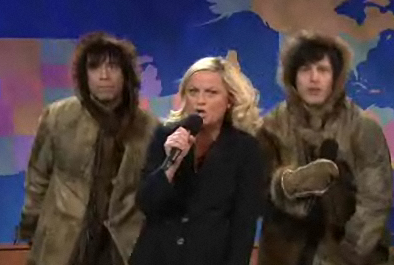
Political satire with Amy Poehler on SNL
In an earlier post, I highlighted an interview of Neal Gabler by Bill Moyers about politics and movies. As the American presidential elections heat up, it is a good time to return to this topic with a few interesting links and ideas.
One of the most interesting sites concerning politics and the media available for students and educators is on the Museum of the Moving Image site: the Living Room Candidate. These pages that contain presidential ads from their first appearance on television are a treasure trove for Media Literacy and Social Studies teachers and can serve as an invaluable resource for curriculum development. A good place to start is to have students work in collaborative teams – which can combine media and history classes – to develop analyses of media messages seen through historical and communicative contexts and to create their own politically-oriented media messages.

How do young people get their news? How do they interpret media messages?
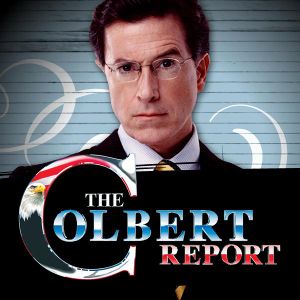
One of the most prevalent manners in which media addresses young people is through satire (often, it’s the only way that youth have any connection to current events). Here is an example of a Learning Blog lesson plan from the nytimes.com website. For this series of lessons, students can develop analyses of satire in which they compare and contrast news pieces from mainstream text media and parallel satiric pieces from motion picture media. Chris Kennedy, a journalism teacher and colleague at my high school, shared with me the following two examples he has used: (1) the debate on Paul Revere’s ride initiated by the comments of Sarah Palin, as viewed on The Colbert Report and through interviews with Palin; and (2) satiric commentary on the role of the vice presidency and contemporary issues such as gay rights. The Saturday Night Live piece on Vice-President Biden works very well, and can be used with a number of other historic SNL pieces, such as the infamous Amy Poehler rap delivered during the news segment with then-candidate Sarah Palin.
It is also very interesting to note that, in my experience, unless required to produce a piece that deals with political issues, students tend to avoid “serious topics” completely in their media creations. I can also add that it has been noted that students in our school tend to use a satiric approach in virtually all of the commercials they produce for school events. At the end of the 2011-2012 school year, a report was produced by students for this unit in which they demonstrated that 100% of the short commercials and PSAs produced by students and shown during the morning announcements at school that year were of a mocking or satiric nature in regards to the event or topic.
Thanks also to my Social Studies department colleagues Katie McGurn and Tim Shea for sharing ideas and working together on lessons.
For some final thoughts about politics and media, check out this interview with media literacy guru Frank W. Baker, who is the author of Political Campaigns and Political Advertising: A Media Literacy Guide, among other titles.
Read Full Post »
 This year’s Oscar winning live action short film, Curfew, has all the earmarks of 21st century media artistry: it was edited on a Macbook Pro by its director and star who is also the frontman for an indie band. Shawn Christensen also wrote its script; moreover, aspiring screenwriters are encouraged to check out this year’s highly lauded group of nominated shorts, which offer many lessons in screenwriting and directing, particularly Asad by Brian Buckley and Buzkashi Boys, directed by Sam French and written by Martin Roe.
 In the animated category, the winner was the Disney short Paperman, directed by John Kahrs and released along with Wreck-It Ralph. In this case, the most surprising aspect of the victory for this non-dialogue short created through a new in-house technology called Meander is that this is the first win for a Disney short in this category since 1969! That short was It’s Tough to be a Bird, directed by legendary animator Ward Kimball.


 mediateacherdotnet