Feeds:
Posts
Comments

Archive for the ‘Chapter 5’ Category

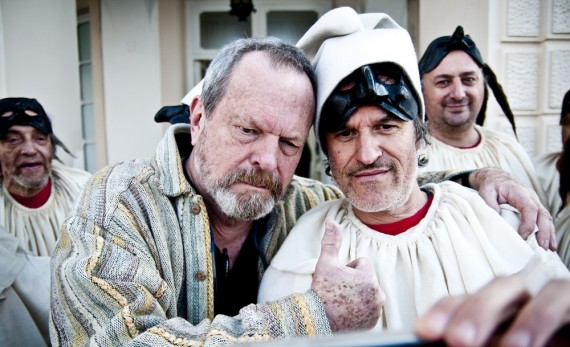
Terry Gilliam making The Wholly Family in Italy

Who funds independently produced movies?  What makes them truly “independent?”  Outside of feature films and television shows, how do filmmakers reach audiences besides posting their streaming videos for free online?  For his recent short The Wholly Family, filmmaker Terry Gilliam – renowned for his work with Monty Python, such classics as Time Bandits and The Fisher King, and my two favorites, Brazil and The Adventures of Baron Munchausenwas entirely funded by Italian pasta maker Garofolo Pasta, and the twenty-minute movie is going to be available streaming by the British newspaper The Guardian.  And here is another good interview with Gilliam about making The Wholly Family; included are comments about shooting digitally and working in short forms.  And these days he is even talking about making The Defective Detective again…

Read Full Post »

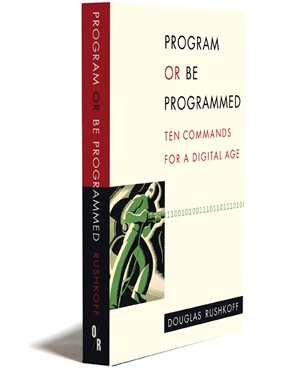
Program or Be Programmed by Douglas Rushkoff

Douglas Rushkoff, primarily known as the media theorist who has written some of the most important books on digital media and the Internet, and who coined phrases such as “viral media,” “digital native,” and “social currency,” has created some of the most interesting and thought-provoking materials for classroom lessons about contemporary media, including the documentaries The Merchants of Cool (which I have used many times in conjunction with my teaching with Moving Images) and Digital Nation: Life on the Virtual Frontier, and his most recent book Program or Be Programmed (this Laughing Squid blog page features videos and an excellent intro to the book).  Last summer, Rushkoff was a keynote speaker at the 2011 NAMLE conference in Philadelphia at which I presented a workshop on integrating media literacy and digital production in the classroom.  Rushkoff’s speech was engrossing and quite funny; moreover, I was impressed by his participation in the conference – he paid close attention to the people and events over the course of the weekend and was clearly connected to what others had to say and do.

A.D.D.: by Rushkoff and illustrator Goran Sudzuka

At the end of this month, a graphic novel he has written with illustrator Goran Sudzuka, A.D.D.: Adolescent Demo Division, is being released by Vertigo.  What a perfect concept for Rushkoff – a cyber-driven story composed of text and visuals about adolescent gamers who are being manipulated by a future society and must uncover the secret agendas and codes of their world!  Graphic novels continue to be one of the most dynamic media around – one of the nice surprises that as the world goes digital, drawing continues to make a comeback in innovation and inspiration – and the relationship between comics and moving images offers boundless potential for visual storytellers and learning scenarios.  There is an excellent interview with Rushkoff  about the book on his website.

Read Full Post »

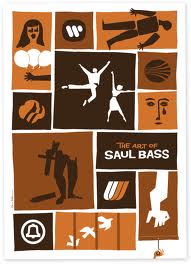
Poster created from iconic images by artist Saul Bass

Just recently a definitive, in-depth book on the design work of artist Saul Bass has been released: Saul Bass: A Life in Film & Design (by Jennifer Bass and Pat Kirkham).  Bass was a true media innovator and through his work one can observe the synergy between text, composition, color, movement, and other visual elements at the core of effective communication.

Bass’s work has provided inspiration for generations of design professionals, advertisers, and filmmakers.  The dynamism of his designs were key as filmmakers invigorated the function and importance of title sequences in movies, and his work helped to usher in the mid-century modern style that has seen a renaissance in recent years, from advertising to graphic novels to animation.

Bass’s storyboard for the infamous and extremely influential shower murder scene from Psycho is highlighted in Chapter 1 of Moving Images (see Figure 1-36).  The half-hour movie Bass on Titles provides a good overview of his work and viewpoints on the craft of movie titles, such as his groundbreaking work for a number of Alfred Hitchcock films (such as Psycho, Vertigo, and North by Northwest), Scorsese movies (including Goodfellas, Cape Fearand The Age of Innocence), and many others including The Man with the Golden Arm and Cowboy.  His work can provide examples for many aspects of the essential questions in Moving Images, including motion picture forms in Chapter 5 and the full production process in Chapter 8.

As a final point, Saul Bass: A Life in Film & Design features a superb foreword by Martin Scorsese – to add to the list of his exceptional work in this vein, including the moving piece he wrote for the DVD release of the Beatles’ movie Help, directed by Richard Lester.

Read Full Post »
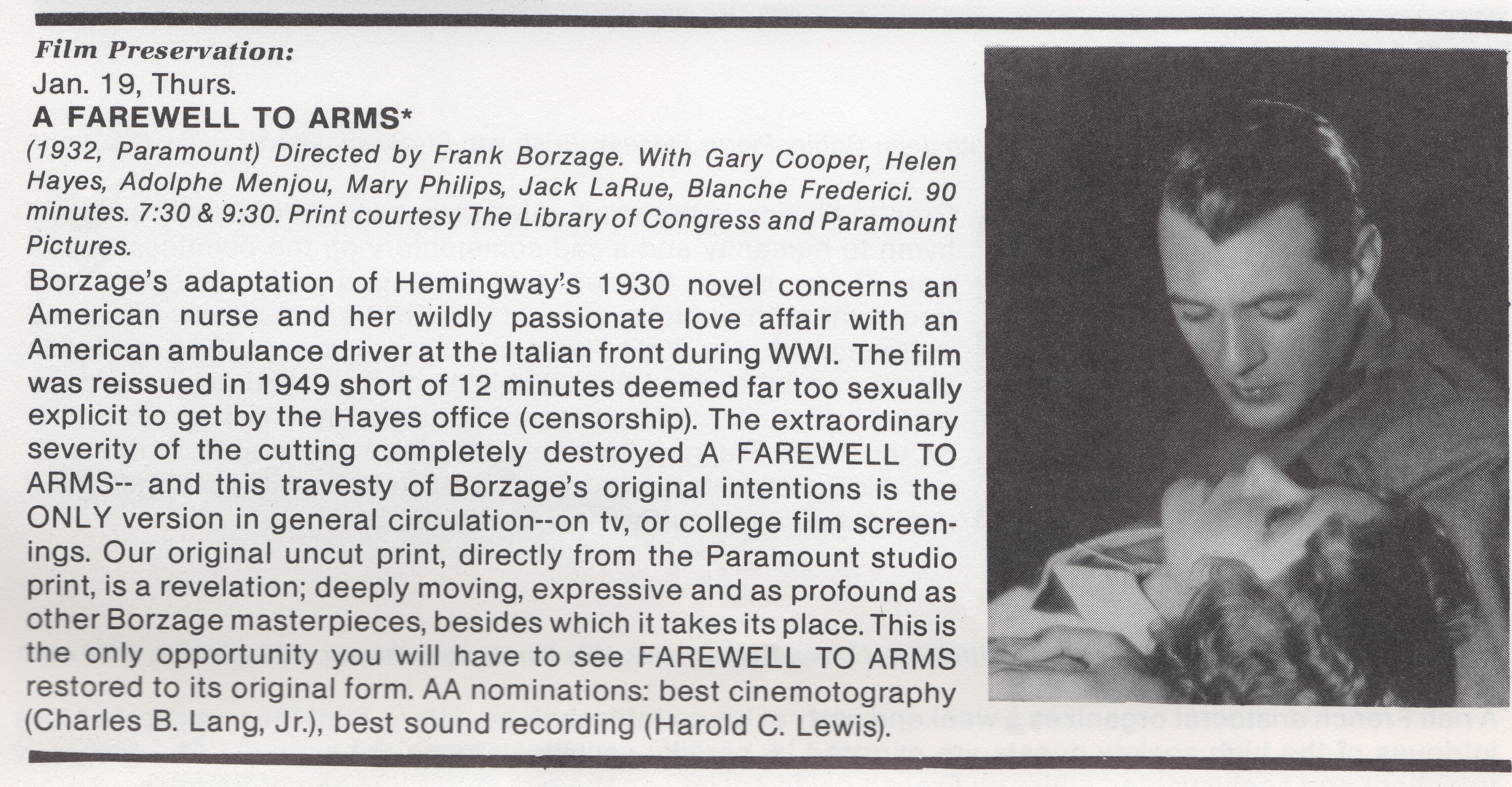
This fall, I was overjoyed to see the news that Frank Borzage’s 1932 film A Farewell to Arms would be released by Kino in a full, restored version on DVD and BluRay.  For me, this release holds special significance because it was during an amazing run of movies shown at the Wadsworth Atheneum in the 1980’s that I discovered the films of Borzage — relatively forgotten to the moviegoing public at that time, even cinephiles — along with so many other classics in programs curated by University of Connecticut lecturer Robert Smith.  Below is a excerpt of the program — Smith’s preface is a perfect introduction to the story of this version of A Farewell to Arms in the context of film preservation. Borzage films are highlighted in figures 4-21 and 4-22 of Moving Images  (“Storytelling with Light”) and I use A Farewell to Arms as an example in Chapter 5: Personal Expression and Studio Production.  Frank Borzage was a member of a large, close-knit Italian immigrant family and his films show consistent dedication to the ties that bind couples together and to roots in family and place. He began working in Hollywood as an actor and throughout his directorial career actors lauded his passionate support of their craft and his attention to their interaction.  Borzage was one of the most highly regarded directors of early Hollywood, and his works offer some of the richest examples of visual storytelling in the period of transition from late silent films to early sound.   While Borzage is certainly known for the deep romanticism of his films, I have found that the weaving of his tales of passionate love through finely detailed places and amidst contexts of everyday life and economic or familial struggles gives his stories more depth and grounding than they are generally given credit for.  In the 1990’s, the discovery and subsequent release of the silent film Lucky Star was a particular revelation (currently available in the beautiful box set Murnau, Borzage, and Fox); I was fortunate enough to see it at the Film Forum with live music and an enthusiastic audience.  Among Borzage’s sound films, I would highly recommend his movies Three ComradesThe Mortal Storm, and Moonriseand Joe McElheney’s article on Borzage is the finest recent scholarship on the director I have read.  Or perhaps some time before or after going to see the new 3-D release of Titanic, it would be a revelation to see Borzage’s History is Made at Night from 1937 — now that’s a movie about the Titanic that really gets the heart stirred! Here are the program notes from 1984, written by Robert Smith, for a double bill with Little Man, What Now? :  History is Made at Night is the Borzage film for everyone, with enough material for three ordinary movies.  Jean Arthur is absolutely radiant, transfigured by Borzage’s genius and his commitment to a redemptive vision of the world.  Mad love, insane jealousy, murder, and a giant ocean liner racing through the ice-bound darkness provide the mortal trial through which Jean and Charles (like all great Borzagian protagonists) demonstrate their spiritual and moral greatness.  Soon after their first meeting, Jean Arthur and Charles Boyer dance the Tango of the Roses in a deserted Parisian nightclub.  Arthur is dressed in a lace nightgown, and the image of Arthur’s exquisite naked feet peeking out from that swirling lace nighty as they tango in the darkness will haunt you the rest of your days – now that’s romance!”  … okay, does this sound familiar to anyone?  James Cameron, eat your heart out!

Read Full Post »

This recent column in The Guardian by Cary Bazalgette, former head of education at the British Film Institute, points out the need to establish media literacy in our schools, and, just as importantly, to put in place the tools for educators and students to develop abilities as media creators.  The quotes in the article are from Don Boyd, a British producer (including Derek Jarman’s War Requiem, featured in Moving Images Chapter 5) and director (mostly documentaries and made-for-TV projects), who has also been part of a panel that has reviewed curricular approaches to media teaching in Britain.

British Film Institute: see Moving Images Chapter 5, Personal Expression and Studio Production, p. 172

According to Boyd,  “the study of film is as important as literature and science,” and he calls for “a system to empower schools to teach film” as “one vital responsibility.”  The article also tells us that “Boyd cites ‘the intellectual heritage’ of film, saying ‘kids can benefit from its history in the way they might study the Renaissance in art.'”  Author Cary Bazalgette adds, “He’s right: but most teachers don’t know how to teach film in its own right.”


Well, let’s get these people copies of Moving Images: Making Movies, Understanding Media!  

Read Full Post »

« Newer Posts - Older Posts »