An important theme in the study of motion pictures, from the long gestation that led to the first projected movies to today’s dazzling array of effects and sensory enveloping platforms, is the preservation and restoration of lost classics of the cinema. In earlier posts, such as Treasure Troves from a few months ago, new discoveries by film preservationists and scholars were highlighted in these pages. Now it appears that, in addition to Too Much Johnson, another of Orson Welles’s lost or unreleased works may see the light of day: The Other Side of the Wind. The complex tale of its fate is discussed in a new article in the New York Times, involving family members of the shah of Iran, 1083 hidden reels of film in storage, an artist drawing on decades of life for inspiration, a director stealing movie prints and escaping in an unmarked van, and much more. Producer Frank Marshall (a cofounder of Amblin Entertainment with Steven Spielberg) and director Peter Bogdanovich (The Last Picture Show, Paper Moon, What’s Up Doc and a great supporting role on The Sopranos) are working on completing the unfinished edit of the movie. Among the movies highlighted for study with Moving Images are Touch of Evil and Citizen Kane; whether The Other Side of the Wind will be or not, in whole or part, remains to be seen, while the full cut of The Magnificent Ambersons can remain the lost treasure that will always be lost…
Archive for the ‘Chapter 5’ Category
More Lost Treasures
Posted in Chapter 5, Directors, tagged Film Restoration, Frank Marshall, Orson Welles, Peter Bogdanovich, The Other Side of the Wind on October 29, 2014| 1 Comment »
Sculpting in Time
Posted in Chapter 5, Chapter 6, tagged Andrei Tarkovsky, Antoine Doisnel, Black Album, Boyhood, Ellar Coltrane, Ethan Hawke, Francois Truffaut, Michael Apted, Richard Linklater, Sculpting in Time, The Beatles on July 23, 2014| 1 Comment »
The relationship between movies and time is integral to the medium’s essence: film itself is a succession of still images moving so quickly that we feel they are existing in front of us like our experience of the world and of time itself. In fact, the great Russian director Andrei Tarkovsky used the description of “Sculpting in Time” to distill the nature of what filmmaking was to him.
This month, Richard Linklater’s groundbreaking movie Boyhood, starring Ellar Coltrane, is released in theaters. In this film, director Linklater has taken a bold approach in the depiction of a boy growing to manhood: He recorded the feature over a number of years as Ellar Coltrane ages from 6 to 18 over the course of the story. There have been movies that deal in a variety of ways with aging characters, such as the Up documentary series by director Michael Apted, or fiction series such as François Truffaut’s Antoine Doisnel movies or Linklater’s own Before… movies with Ethan Hawke and Julie Delpy, but none have adapted as determined, lengthy, and particular approach to periodically filming the development of a young person and crafting it into a fictional world.
This article in the New York Times features a slide show titled “12 Years a Boy” in which one can view the physical transformations of actor Ellar Coltrane over the years during which this movie was made. This article and topics discussed in Moving Images related to time and the relationships of reality to fiction in chapters 5 and 6 can be useful starting points in examining this movie. Boyhood‘s content, moviemaking techniques, and media literacy-related discussion points can be a natural topical fit for students who are at the edge of adulthood, like the main character of Boyhood at the end of the movie (while it is important to note that this movie is rated R for language and teen alcohol and drug use).
As a final point, I find particular delight in one detail to this story: one of the links between father and son in the movie Boyhood concerns the ties that can be shared through music and time, and this manifests itself in the compilation of a Black Album of the Beatles (related to their “White Album” of 1968, actually titled simply The Beatles) made up of songs from after the group’s breakup and created by the father of the movie for his son (Ethan Hawke plays the father to Ellar Coltrane’s Mason). The father writes, “Mason, I wanted to give you something for your birthday that money couldn’t buy, something that only a father could give a son, like a family heirloom. This is the best I could do. Apologies in advance. I present to you: THE BEATLES’ BLACK ALBUM.” Linklater and Hawke shared the 3-CD track list that they came up with (and which had originated as a real gift from Hawke to his oldest daughter). Since every time my family and I get in the car my kids ask to put a Beatles CD on (and I can’t believe that I’m the one saying “could we try something else for a change”), I think it’s time that I made up our own family version of The Black Album, and I think I’ll have to make it a 4-CD package.
Screenwriting with Spike Jonze, collaborators, and computerheads
Posted in Chapter 5, Chapter 7, Directors, tagged Adaptation, Being John Malkovich, Charlie Kaufman, Dave Eggers, Her, I'm Here, Merchants of Cool, Spike Jonze, Where the Wild Things Are on March 29, 2014| 1 Comment »
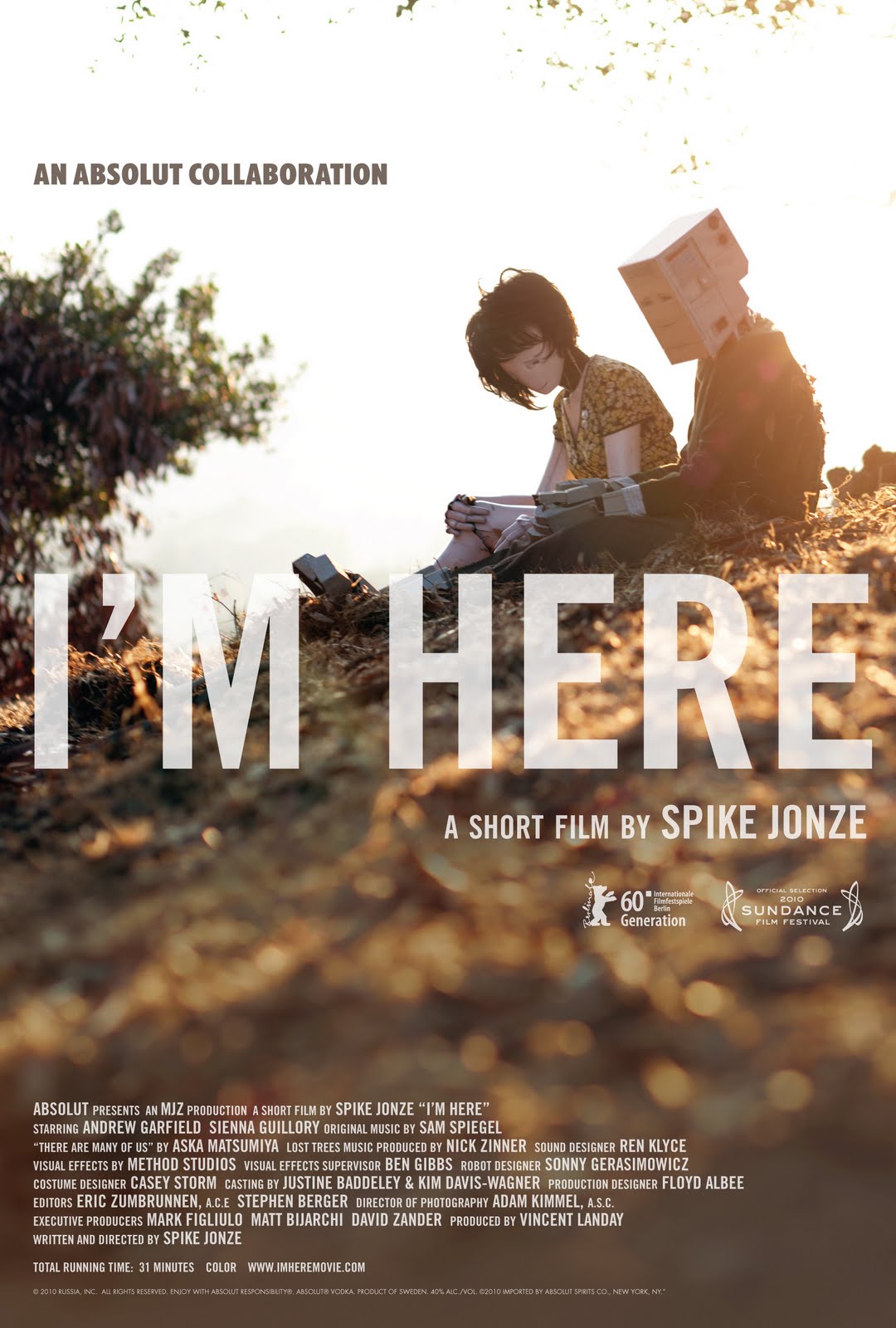
After directing scripts by Charlie Kaufman for Being John Malkovich and Adaptation and then collaborating with Dave Eggers to write Where the Wild Things Are, Spike Jonze went solo to pen the script for his most recent feature Her and promptly won numerous awards for his effort, including the Oscar for original screenplay. Aside from studying the script for Her, I also recommend checking out this far less known short that Jonze made in 2010, I’m Here, which is a bit of a thematic and stylistic warmup for issues explored in Her. Also, you can check out the links with each movie above for screenwriting perspectives and discussions with Kaufman, Eggers, and Jonze.
Besides the clear applications to Chapter 7 of Moving Images (From Page to Screen), I’m Here also prompts topics explored in Chapter 5 — Personal Expression and Studio Production — by provoking questions of “Who made this? / Why did they make it?” and related inquiries. In this case, Jonze, who has worked on music videos and commercials throughout his career, creates here a “commercial” that is 30 minutes instead of 30 seconds. And that is not truly a commercial. Well, it’s really a (long-ish) short funded by Absolut for production studio credit and some cachet, it appears. “Merchants of Cool,” indeed.
What exactly is that movie?
Posted in Chapter 5, tagged Abstract, Associational, Buffalo, Cadillac 2014 CTS Sedan, Categorical, Commercials, Energie!, Fantasia, Gaz Coombes, Jonathan Glazer, Microsoft Empowering, Non-narrative, Olympics Celebrate with a Bite, Rhetorical, Ryan Thomas Andersen, Thomas Fleisch, Time Machine on February 9, 2014| 4 Comments »
As a follow-up to the previous post about the Sochi Winter Olympics and media literacy — from the sporting events to the biographical portraits to the commercials — here is a follow-up that can provide more food for thought about motion picture communicative forms. In particular, what are the ways in which sequences of images are communicating to us? This is one of the main topics of Chapter 5 of Moving Images: the development of an understanding of narrative and non-narrative forms, and an articulation of types of non-narrative communication structures.
Taking that challenging topic as our point of focus, here are some recent examples from commercials that can be used to illustrate this concept. If you have watched much American television recently, you may have seen some of these ads. Here we go!

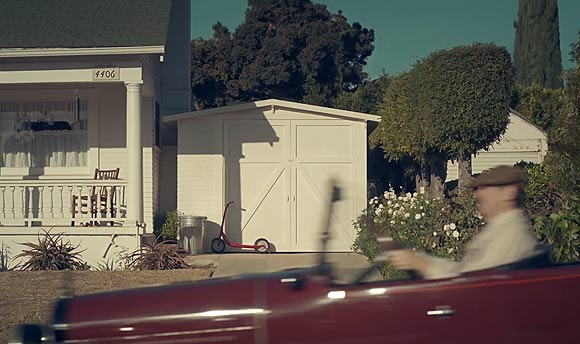
For movie sequences that are non-narrative in structure — which are those that “do not contain a narrative of events linked by cause and effect stemming from continuity of time and space” — in Chapter 5 of Moving Images four types of communication are discussed. These methods are all defined in the glossary in Chapter 5 of Moving Images (pages 203-205). For an example of a Categorical sequence (“Non-narrative films or sequences whose structure is based around images grouped into categories,” p. 203), check out the commercial Garages for the Cadillac 2014 CTS Sedan.
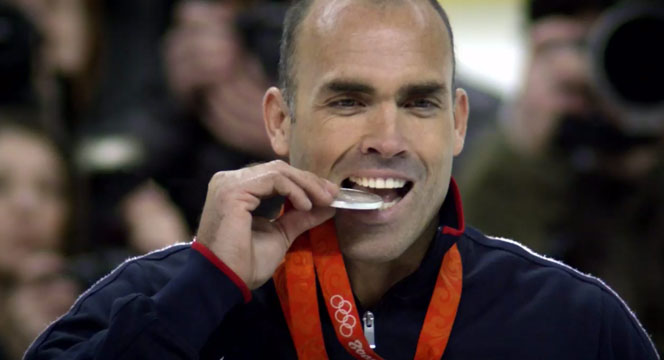
For an Associational sequence (“..films or sequences in which juxtaposed shots are linked by themes and shared references in order to evoke emotions or make a statement about the topic of the motion picture” p. 203), this spot by McDonald’s produced to run during the current Olympics is quite apt: Olympics: Celebrate with a Bite. Interestingly, our Chapter 3 Close-Up interviewee, advertising copywriter Kevin Goff, discussed such an approach for an ad in our interview for Chapter 3 of Moving Images.
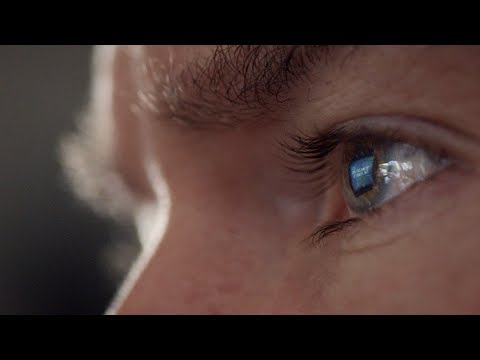
Moving on to Rhetorical, which may seem to be more difficult to find in a commercial due to its potentially more complex goals — (“non-narrative motion pictures that present evidence to support or debate their premises, common to documentaries because of their organized presentation and analysis of a topic,” p. 204) — examine Microsoft’s commercial Empowering that debuted during the Superbowl.
For the last category of Abstract non-narrative sequences, this commercial directed by Jonathan Glazer takes some cues from that category: Paint for Sony Bravia. For a pure example of abstract filmmaking, Energie! by Thorsten Fleisch is a contemporary example of a short that won a number of experimental film awards in festivals around the world. The director describes it as “an uncontrolled high voltage discharge of 30,000 volts exposed on multiple sheets of photographic paper which are then arranged in time to create new visual systems of electron organization.” Or, of course, you can just turn to Disney’s Fantasia or masters like Norman McLaren. Finally, here is a recent candidate for discussion: the video for the song Buffalo by Gaz Coombes, edited by Gaz and brother Charly Coombes.

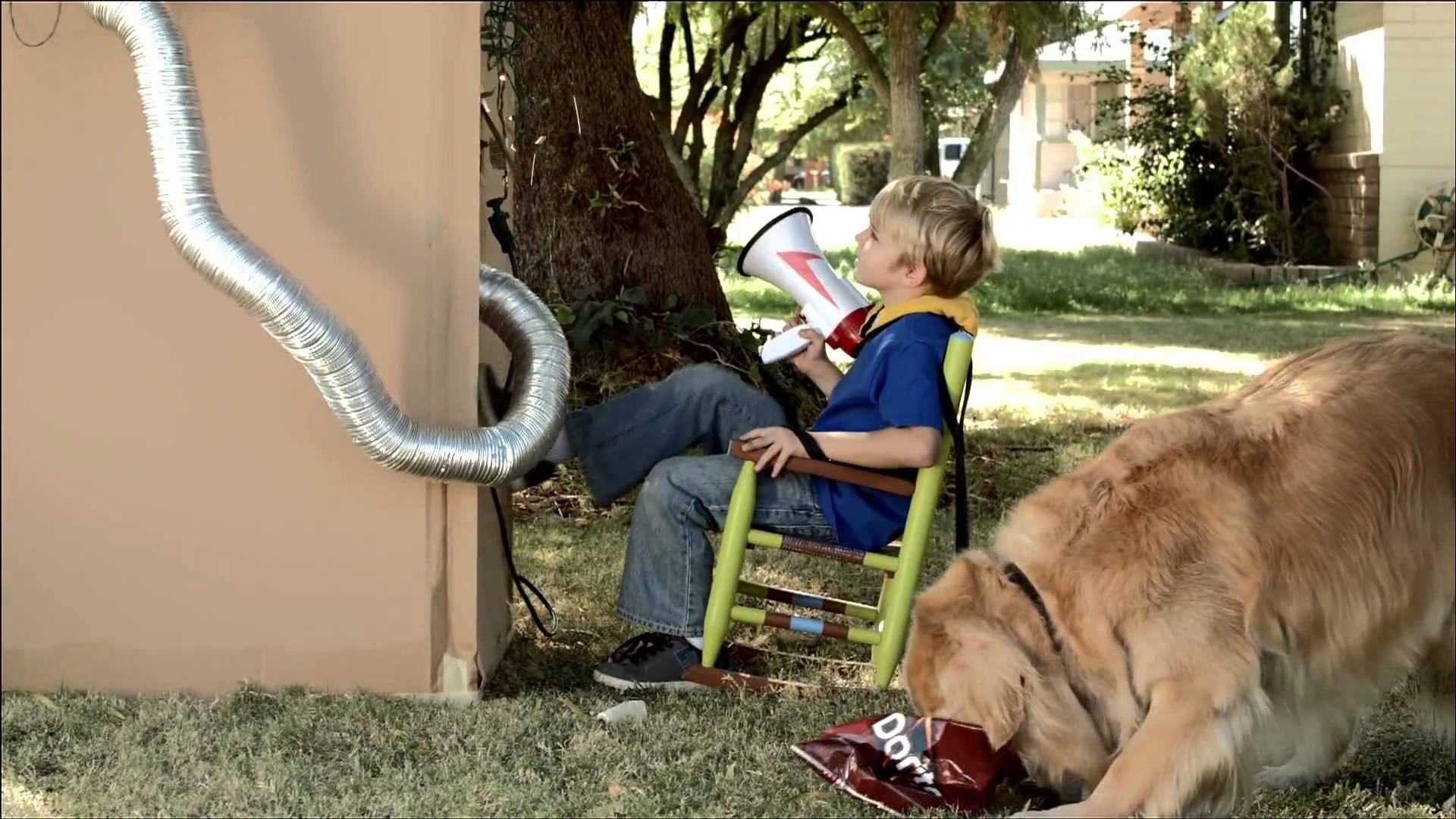
As a final note, for an example of narrative filmmaking in commercials, a particularly strong candidate in a recent commercial was the winner of the Doritos Superbowl competition, Time Machine (directed by Ryan Thomas Andersen and co-written by Raj Suri).
The Winter Olympics and Media Literacy
Posted in Chapter 5, Resources, tagged Andrei Tarkovsky, Hedgehog in the Fog, Mark McMorris, media literacy, Monty Python's The Meaning of Life, New York Times Video, Olympic Games, Sochi, Winter Olympics 2014 on February 7, 2014| 1 Comment »
Sochi 2014 is here! There are so many topics to discuss, whether concerning cultural perspectives, world languages, geography, human rights and equality, world history and international relations, and, of course, sports, among many other angles. For media literacy perspectives on the Games, I am posting right here a new lesson activity that works with Chapter 5 of Moving Images: Critical Notebook 5b. This exercise encourages students to apply principles of media literacy to the images that they see as they watch the Olympics – from the personal interest pieces to direct sports coverage to commercials to power outages.
As we discuss or write about how we “experience” these Winter Olympics (or any similar event) from afar, it is particularly useful to raise questions about concepts that are at the core of the Olympics themselves: how does one interpret these events differently in another country or through contrasting media sources and visual traditions? Students should be encouraged to seek out media from across the globe in relation to coverage of specific sporting events or ceremonies, sports figures, and commercial interests. It can be highly enlightening to discover new perspectives on familiar institutions, events, or phenomena. Including commercials.
I also recommend the continuously evolving video resources of the New York Times, which include a piece on snowboarder Mark McMorris that might be a big hit with high schoolers.
P.S.: I have to add that, on a personal note, whenever I watch an Olympics opening ceremony in the USA (and I have seen them from the vantage point of other countries, where the coverage is so very different), I am reminded of the lines from the Grim Reaper in Monty Python’s The Meaning of Life: “Shut up… You always talk, you Americans. You talk and you talk and say ‘let me tell you something’ and ‘I just wanna say this’.” Couldn’t we ever just watch the actual ceremony in America with its actual soundtrack? Do the commentators really need to be blabbing on about whatever comes into their heads while these amazing images from out of Tarkovsky and Hedgehog in the Fog are gorgeously floating by on the screen? It’s really maddening at times.