Feeds:
Posts
Comments

Archive for the ‘Chapter 2’ Category

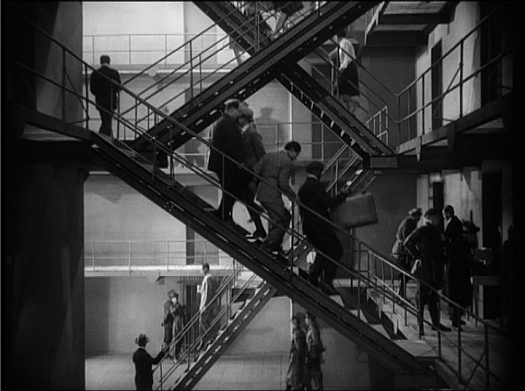
“Spies” directed by Fritz Lang, 1928

When we teach, we are constantly discovering (and hopefully those who are learning are constantly discovering too!).  Some lessons work, some fall flat.  We need to renew, to reinvent, to challenge ourselves and our students to dig deep into the themes and problems that we face in our studies and to invigorate our skills through these explorations.

In an earlier blog post, I discussed the particular challenges in developing students’ skills as visual communicators and the benefits of studying early motion picture history and non-dialogue moviemaking.  Recently, as my class was working on this unit, I decided to do something new.  One of the skill-building class activities I have done with this unit is a short project – produced in just a couple of class periods – in which students face the same challenge that filmmakers did for the Lumière and Company project.  This one-minute, one shot movie is offered as one of the extra projects that teachers can use with Moving Images (this one is Class Activity 2).  While I do find that this project can be instructive and offers a distinctive test to students, I thought it was about time to try something new.  I wanted to give them a task that could connect with other events going on in our school and could tie into learning in upcoming units.
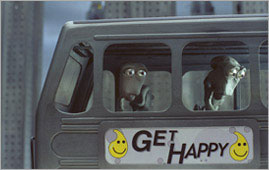
“More” an animated short by Mark Osborne

So this is the intro to the exercise:  In this unit, you study the invention of moving images and the advances made in visual communication by early moviemakers. For this class exercise, you will explore possibilities of motion picture storytelling through the creation of a short movie designed to communicate a simple idea to an audience. For this project, you will determine a topic appropriate for a message at your school. This may be a public service announcement, a promotional piece for a school group, club, or team, or a commercial for a school enterprise. Along with studying examples from the early years of cinema, from Lumière and Méliès shorts and The Great Train Robbery to more advanced silents including selections from Fritz Lang’s The Spieswe also study contemporary examples of non-dialogue movies, such as Mark Osborne’s More (which is on the Moving Images DVD) and Mark Gustafson‘s Mr. Resistor.  Since this project had to meet the distinct needs of commercials or PSAs (in our case, to last between one and two minutes), we also watched previous standout student work in this vein in addition to commercials such as Volkswagen’s “The Force” (which premiered during the 2011 Super Bowl).

I decided that I would let students select their collaborators, and they dived right into the task.  As it turned out, the class ended up in four groups, and the projects they did turned out very well.  In fact, every completed PSA turned out to be quite worthy and appropriate to show on the school-wide morning announcements.  They were clearly the best set of rapidly produced shorts in this course that I have taught for over a decade.

This activity has already been added to the teacher materials for Chapter 2 – it is titled “Class Activity 2b” – and it has been uploaded to the Cengage textbook site for instructors and students.

Read Full Post »

A page from Winsor McCay’s comic “Little Nemo”

Today’s Google Doodle celebrates the work of groundbreaking artist Winsor McCay, whose creations are ripe for investigation when exploring the material of Inventions and Origins in Moving Images.  McCay’s explorations of motion picture language and the ways that one can play with frames and sequences in films such as Gertie the Dinosaur reflect the sense of discovery and invention that one sees in recent transitions during our own digital age, and they can initiate fruitful discussion and inspiration in the classroom.  Moreover, Little Nemo‘s visual storytelling and intricate artistry serves as one of the best and most beautiful examples of sequential art that one can find.  For further information on McCay, John Canemaker‘s biography is excellent (as usual; his writings on the Disney studios, such as Nine Old Men, are also highly recommended) and here is an interesting blog page on this innovative and very interesting creator.  (And definitely check out the full animation of the Little Nemo doodle — it’s superb and quite worthy of the artist and vaudevillian McCay; in further celebrations of moving images, last month’s Google Doodle for the 46th anniversary of Star Trek was a real winner too!)      

Read Full Post »

Rachel McAdams in production still from Brian De Palma’s “Passion” shot in 35mm, victim of a digital mishap at 2012 NYFF

Catastrophe at the 50th New York Film Festival: for a gala opening of Brian De Palma’s Passion, just as the screening was about to begin, the digitally based copy … wouldn’t play.  The projectionists frantically tried to get the Digital Cinema Package (DCP) to work – it had functioned earlier in the day – but it just would not run.  They did not solve the problem, and the movie was not seen, which was disastrous for the festival and a major letdown for those in attendance, notably director Brian De Palma.

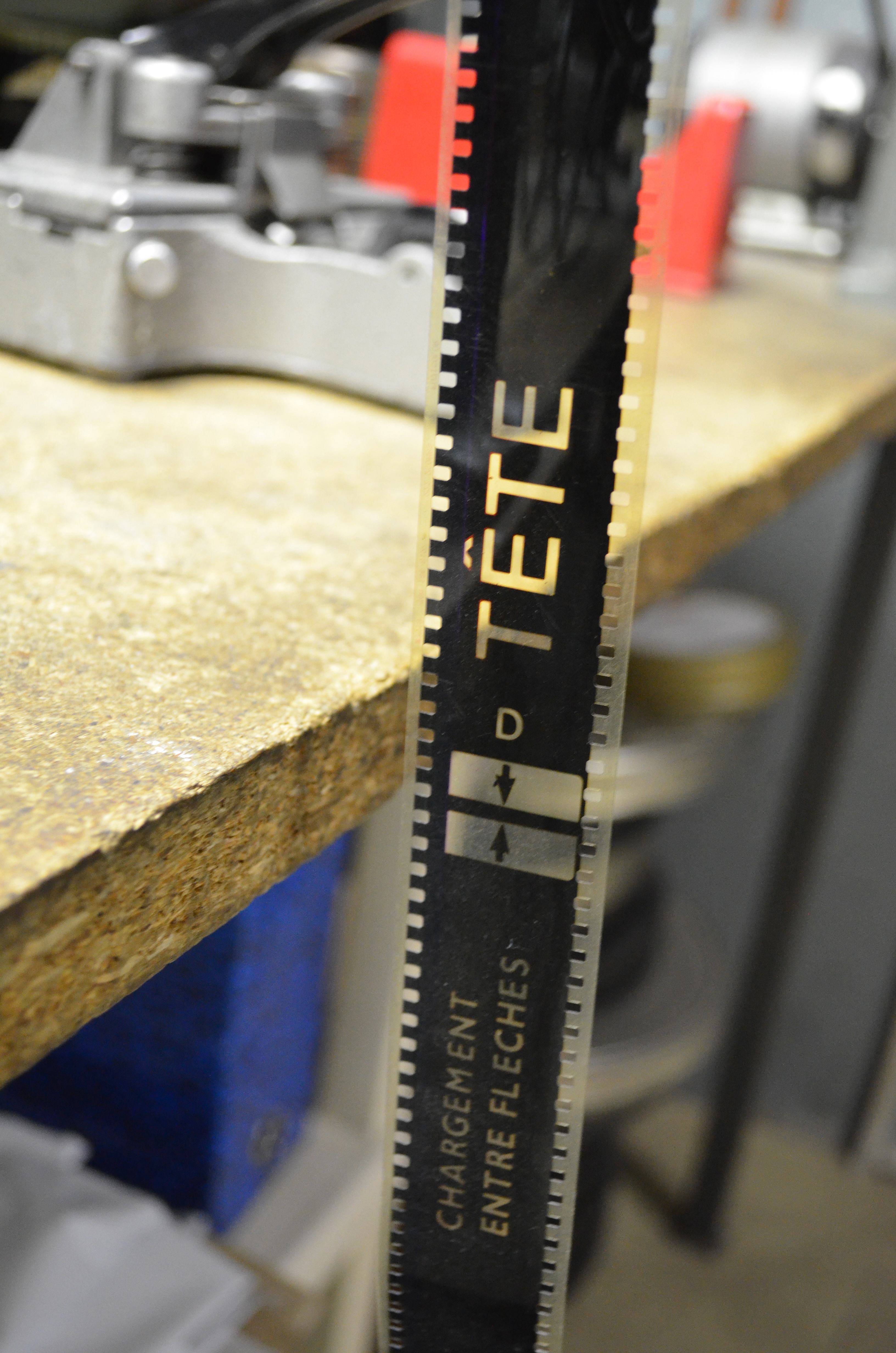
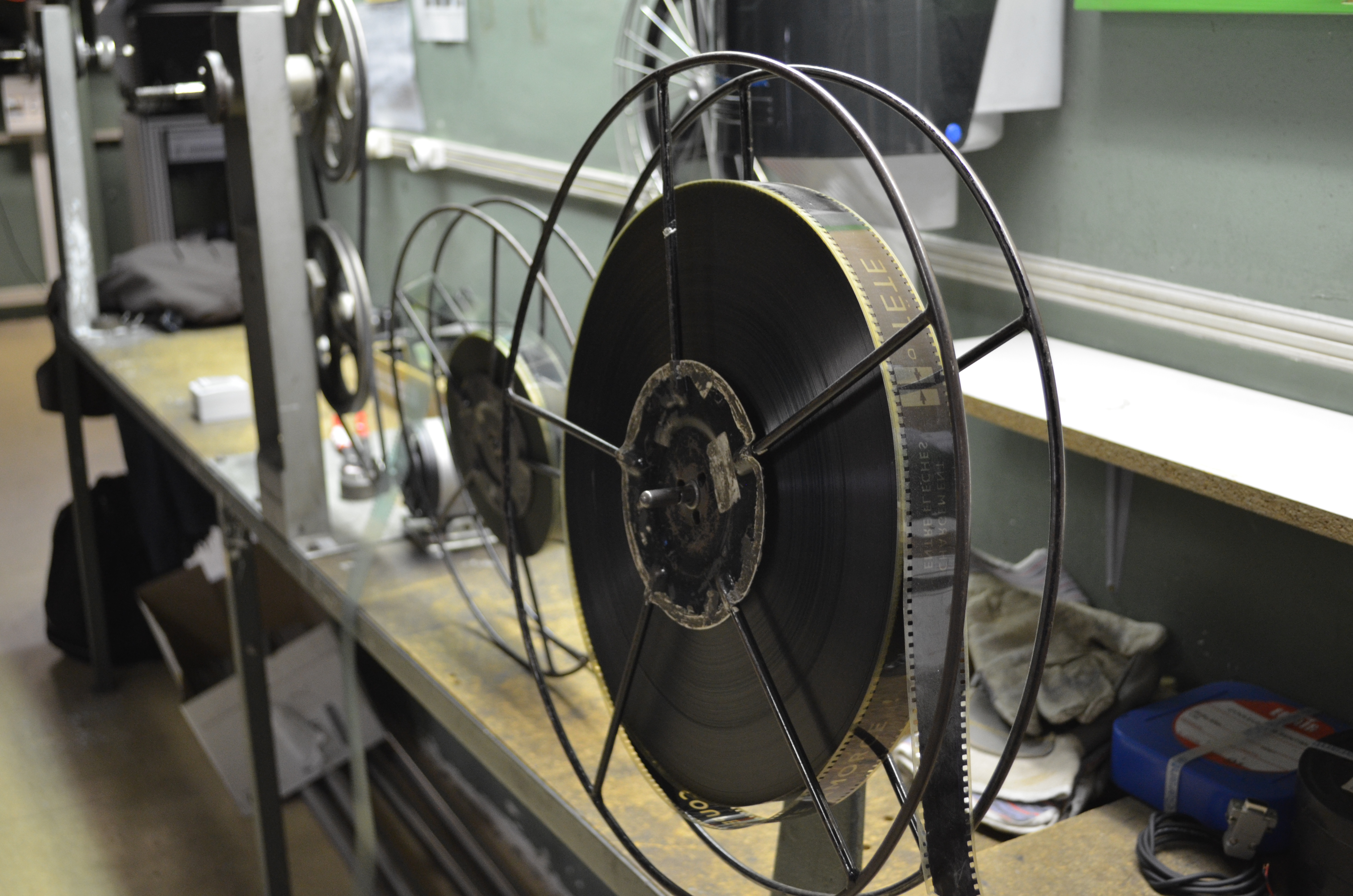
Stills from Studio Cinemas in Tours, France (photos Carl Casinghino)

In earlier posts, I have discussed the recent flurry of articles, movies, and general discussion about the enormous changes in media creation through the shift to digital moviemaking and projection; in particular, declarations of “film is dead.”  (I recommend this discussion between Manohla Dargis and A.O. Scott from the New York Times.)   In fact, when I looked up information on the Passion premiere debacle, I ended up on message boards of digital projectionists and obsessives who were all dismissive of the failure at the NYFF and saying, essentially, “oh, so what” and in any case…”film” pretty much doesn’t exist any more.

One point I have not seen raised anywhere is the fact that the key to this entire discussion is linguistic.  At the time of Edison’s Kinetoscope and the Lumière Brothers’ Cinematograph, the word in English used for a transparent, supple, thin strip of celluloid (later polyester) coated with a light-sensitive emulsion was “film.”  When moviemakers took that material and recorded moving images on these bands of “film,” and then began cutting up these strips of celluloid and repasting them together, they were producing something new.

What to call it?  Well, in English, one of the words was “film.”  They simply used the same word to describe a motion picture generally intended as an attraction for theatrical distribution, whether a short or feature.  They did not make up a new word, although others have been used such as the phrases “motion pictures” and “moving pictures,” shortened to “movies.”  But the foremost word that stuck was “film” for these two things.    

So, now since in English we settled on the same word for these two distinctly different concepts, there is a debate about the end of seeing “a film” because you are not watching it “on film.”  But what if the words were not the same?  Well, they are not in some other languages.  In French, the actual roll of film is called “la pellicule” while the thing you watch is “un film”;  it is essentially the same in Italian and Spanish.  Let us remember what we are debating.  The specifics of this argument hinge completely on a linguistic distinction; if there had been another word for this different thing, we would not be having this particular debate, at least not in these terms.

I did face this issue when I wrote Moving Images.  I decided generally to call what we are watching “moving images” or “movies” or “motion pictures.”  But whatever the case I’ll still sometimes say I’m going to watch a film when I’m going to the cinema; even if it has been shot digitally and is being projected digitally, what I am going to see is at its core the same thing as what people have described as “a film” for over a century.

Digital technicians repair and update equipment at an independent cinema

I would also like to add thanks to Studio Cinémas in Tours, France (soon celebrating their 50th anniversary) for their hospitality and generosity to me during a visit last summer in which I met with Tarik Roukba and Jérémie Monmarché to discuss the role of independent cinemas in France regarding media education and public schools.  It was also enjoyable to discuss many topics concerning issues facing independent cinemas in France and throughout the world, including the conversion to digital projection and the archiving of films in the 21st century.  I chuckled when I read about the issues experienced at this year’s New York Film Festival, particularly with respect to “disappearing subtitles” for the Mexican film Here and There, which is a problem Studio Cinémas has encountered along with other digital mishaps that plague projections today.  Previously, their projectionist could repair equipment and deal with nearly all the technical problems they would face; now they must have technicians come to the cinema to deal with the glitches and breakdowns occurring in the bytes that form our moving images.

Read Full Post »

From Boxes, by Brendan Kirschbaum

Here are two shorts by Brendan Kirschbaum, a student in my media literacy and digital production classes from this past school year.  The first, Boxes, was his final for the fall semester, and the second, Zom, was his final project for the advanced class.  They won awards for Animation and Editing at our 12th Annual Film and Video Festival this past June. Both can be very interesting to use for Chapter 2, Inventions and Origins, for their use of non-dialogue visual communication (or a number of other lessons in Moving Images as well!).

Read Full Post »

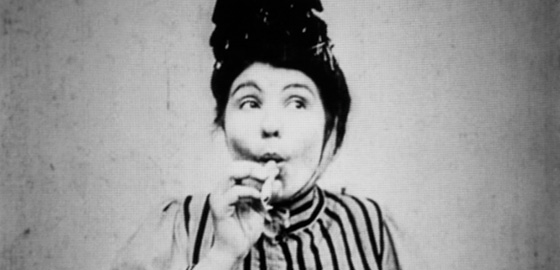
A still from Alice Guy Blaché’s groundbreaking short “Madame Has Her Cravings”

In the late 1980’s, I studied at the Sorbonne Nouvelle in Paris while completing research on French director Marcel Carné for my senior thesis at Princeton University.  There, in a course taught by French film scholar Michel Marie, I was particularly interested by a story that I had never heard of in any of the film histories I had read until then: the cinematic legacy and amazing life of director Alice Guy Blaché.  Since then, major biographies (most significantly, Alison McMahan‘s Alice Guy Blaché: Lost Visionary of the Cinema) and articles have been published on this inspiring pioneer, and evidence of her work has been unearthed in film archives and dusty attics from around the world, allowing for more thorough investigation of her achievements.  At the last Directors Guild of America Awards ceremony in New York City, the DGA offered a posthumous award to Alice Guy Blaché presented by Martin Scorsese.  Currently, her feature The Ocean Waif is available on DVD in partial form along with another feature directed by a woman, Ruth Ann Baldwin‘s 49-17.  For Guy Blaché’s short films, there is a Gaumont Treasures DVD set that features a number of her French movies from 1897-1907.  Online, many of her shorts are available streaming such as Falling Leaves, a 1912 movie produced by her own Solax Studios in New Jersey.

Director and actress Julie Delpy’s followup to 2 Days in Paris

Study of Alice Guy Blaché in the classroom can involve many interesting topics for students.  These include the development of visual storytelling (see Chapter 7 of Moving Images for the “alcoholic mattress” example from the work of Guy Blaché), the prominence of independent studios in film history such as Guy Blaché’s Solax Studios in New Jersey, and the changing roles of women in movie production, particularly the entrenchment of a “males only” world of film production in Hollywood studios after the first decades of the cinema.  Today, France has many active female directors, including Julie Delpy, Agnès Jaoui, Claire Denis, Noémie Lvovsky, Tonie Marshall, Danièle Thompson, and pioneer Agnès Varda who is among the featured directors of Chapter 5 of Moving Images.  

Read Full Post »

« Newer Posts - Older Posts »