Feeds:
Posts
Comments

Posts Tagged ‘media literacy’

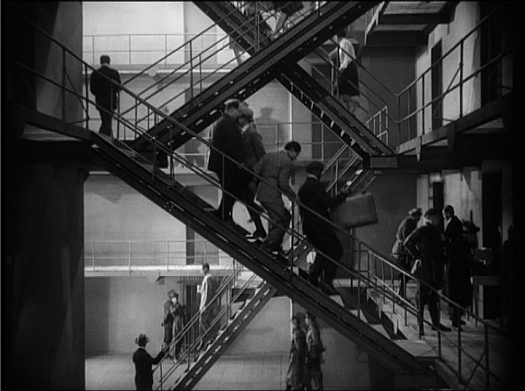
“Spies” directed by Fritz Lang, 1928

When we teach, we are constantly discovering (and hopefully those who are learning are constantly discovering too!).  Some lessons work, some fall flat.  We need to renew, to reinvent, to challenge ourselves and our students to dig deep into the themes and problems that we face in our studies and to invigorate our skills through these explorations.

In an earlier blog post, I discussed the particular challenges in developing students’ skills as visual communicators and the benefits of studying early motion picture history and non-dialogue moviemaking.  Recently, as my class was working on this unit, I decided to do something new.  One of the skill-building class activities I have done with this unit is a short project – produced in just a couple of class periods – in which students face the same challenge that filmmakers did for the Lumière and Company project.  This one-minute, one shot movie is offered as one of the extra projects that teachers can use with Moving Images (this one is Class Activity 2).  While I do find that this project can be instructive and offers a distinctive test to students, I thought it was about time to try something new.  I wanted to give them a task that could connect with other events going on in our school and could tie into learning in upcoming units.

“More” an animated short by Mark Osborne

So this is the intro to the exercise:  In this unit, you study the invention of moving images and the advances made in visual communication by early moviemakers. For this class exercise, you will explore possibilities of motion picture storytelling through the creation of a short movie designed to communicate a simple idea to an audience. For this project, you will determine a topic appropriate for a message at your school. This may be a public service announcement, a promotional piece for a school group, club, or team, or a commercial for a school enterprise. Along with studying examples from the early years of cinema, from Lumière and Méliès shorts and The Great Train Robbery to more advanced silents including selections from Fritz Lang’s The Spieswe also study contemporary examples of non-dialogue movies, such as Mark Osborne’s More (which is on the Moving Images DVD) and Mark Gustafson‘s Mr. Resistor.  Since this project had to meet the distinct needs of commercials or PSAs (in our case, to last between one and two minutes), we also watched previous standout student work in this vein in addition to commercials such as Volkswagen’s “The Force” (which premiered during the 2011 Super Bowl).

I decided that I would let students select their collaborators, and they dived right into the task.  As it turned out, the class ended up in four groups, and the projects they did turned out very well.  In fact, every completed PSA turned out to be quite worthy and appropriate to show on the school-wide morning announcements.  They were clearly the best set of rapidly produced shorts in this course that I have taught for over a decade.

This activity has already been added to the teacher materials for Chapter 2 – it is titled “Class Activity 2b” – and it has been uploaded to the Cengage textbook site for instructors and students.

Read Full Post »

As a follow-up to my recent blog post on Satire, Politics, and Media, here is the second part of the excellent interview of Frank W. Baker by Peter Gutierrez in which they discuss politics and media.  And here is a pertinent quote by Baker for media literacy educators: “Media literacy teaches us, among other things, that media are businesses designed to make a profit. This is a huge point that should be taught. Ask students who benefits when candidates purchase time for their messages, and they may not think to answer: the broadcasters themselves.”

Gutierrez’s blog – Connect the Pop – is highly recommended.  It is full of many useful and compelling posts, including this recent one on the Spider-Man reboot.  And with Christopher Nolan’s The Dark Knight Rises about to come out, here is a piece on a recent book about Batman’s creation by Bob Kane and the uncredited Bill Finger (Bill the Boy Wonder).   In the interview, author Marc Tyler Nobleman says: “One of the biggest takeaways from my Siegel/Shuster/Finger research is that the Internet does not have all the answers. Most of the big discoveries I made researching these books came from either interviewing people (most of whom are elderly and some of whom have since passed away) or combing through archives that were not online.  When searching for information, even young people know how to google. The value of librarians is that they know how to do a lot of the rest—direct you to city records books, photo archives, and other non-digitized resources.”

Read Full Post »

One of the logos for the group responsible for the Kony 2012 Viral Campaign and 11 short films over the past decade.

Earlier this week, while my media class was working in groups on an upcoming project, one student turned to me and said, “Kony 2012.  You’ve got to check this out.  A major event is happening right now in how media works.  I’m not saying it’s good, but you should check it out.” Later during that same period, other students started talking about it; some had shared it from Facebook, some were talking about celebrity posts on Twitter, some were thinking about doing something in response to this piece.  The next day, I even heard 7th graders talking about it in a Middle School class that I teach.

Indeed, this week, a phenomenon burst into the scenes of social media, non-fiction moviemaking, and how moving images are functioning in our world today.  I would recommend for teachers and students to look at the Kony 2012 movie using the questions for Chapter 6, “Recording and Presenting Reality,” on pages 237-238 of Moving Images.  Notable subjects for discussion of this media document are the presence of director Jason Russell in the voiceover and images; the use of his young son as one of the primary figures in the images; the digital techniques used in the movie; and marketing methods employed by the filmmakers and this group.  Here is an excellent article from the New York Times on the phenomenon of the Kony Video going viral.  In addition, here is a one of the rare news pieces appearing in major media – in this case from Democracy Now – about the deployment of troops to Uganda by the Obama administration in October 2011.

Read Full Post »

Logo for the European Charter for Media Literacy

Earlier, I posted a link to an article by Cary Bazalgette in the British newspaper The Guardian about the need to teach media literacy and communications skills in the educational system.  Last week, an article appeared in The Telegraph about a government report that highlights a pressing need to integrate studies of motion picture media in British schools.  I would also encourage educators or anyone else to read the Preface to Moving Images as well.

Read Full Post »

One of many major websites protesting SOPA

At virtually every corner these days, teachers are exhorted to use technology – and media-driven technology in particular – to engage students; sometimes we educators might feel that unless we’re interfacing with students primarily with a screen or two between us, we’re not really “reaching them.”  Years from now, it will certainly be interesting to see how people look back at these transitional days for new media interfaces and the world of Internet culture.  To highlight the ongoing debate about SOPA and PIPA – which quite prevalently involve widespread trends in media use – I’ve found a sample page that presents common approaches by educators.  Here is a link to that article – “Free Social Media Tools for Teachers.”  It is notable that many of the uses of the Internet recommended in educational blogs and articles on current pedagogical trends (like the one above and countless others I have seen) involve, at least in part, what would fall under copyright infringement and thus would become fair game for shutdown under this legislation.  Of course, the variety of these platforms has increased since this posting but remains quite similar.

Some media outlets, such as the MPAA, see this legislation as a protection of their copyrights

On a personal note, I am very happy to report that one of the most prominent current voices in the national debate about legal issues dealing with digital news standards, social media, and related domains is a former student of mine (not in media studies or digital moviemaking but French class!), Trevor Timm, who is a lawyer currently writing for Electronic Frontier Foundation.

Read Full Post »

« Newer Posts - Older Posts »