 In a post from this past spring, I provided information to support a presentation I made at the 11th Annual Northeast Media Literacy Conference, in which one of the topics I discussed was the development of collaborative skills in the classroom, both as a means and as a goal of learning. This has prompted me to share a few further thoughts about collaborative processes.
A story from this past school year offers an illustration of the importance of developing a flexible yet rigorous process when completing cooperative tasks in the classroom.
 One of my media literacy classes was producing PSAs on the theme of safe driving for teens and the students were placed into groups that I selected. Often I designate groups for projects, and at other times I allow students to choose their collaborators. I feel that allowing for both arrangements is beneficial because it forces students to work with a variety of peers while also giving them outlets for independent choice. These arrangements mirror either work situations when people are inserted into groups or those creative or business opportunities when we can choose our teammates.

 Each member of the class had to write a proposal for the 30-second PSA, which could be in the form of a script or a storyboard with shot list and description of the content. The members had to pitch their ideas to their designated group and then they had to come to a decision on which PSA would be made. In fact, these clips are so short that it is quite possible for a group to produce two of the proposals, and one group finished their first one quickly and did just that. As was often the case during this year, a number of the students could not produce a viable complete script for the PSA; this was a class that struggled greatly throughout the year with generating narratives and expressing written concepts or ideas, and this assignment was no exception.
For some of the groups, the students swiftly came to a decision because there was only one viable proposal on the table. For other groups, there were no concepts that anyone was confident with, so they decided to initiate brainstorming sessions to come up with ideas and then see if they could flesh them out. In the end, this is how almost half of the groups settled on a story or idea for their PSAs.
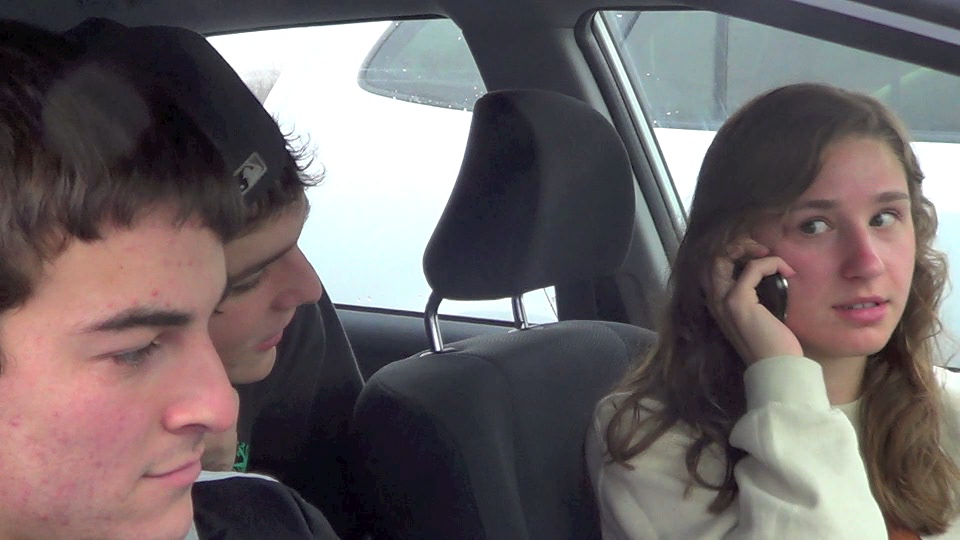
 For one of the groups with a student who had written a detailed script that she felt confident about, they decided right away to produce her idea. It centered on a student driver who agrees to give a ride to a friend (which is illegal for beginning drivers), then answers a call when she begins to drive. It is ended with a third person peeking forward from the back seat to deliver the message of “Are you in?” in relation to good decision-making on the part of teen drivers. The narrative was a single uncomplicated scene in one location, so they rapidly proceeded to production. They shot the scene and edited it within a brief time. From their point of view, they were done.
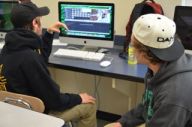 I watched the “completed” movie and talked about it with them. Like many projects I have seen in introductory media literacy courses, the concept of “finished” for some students actually amounts to a rough cut. Occasionally, an entire class will screen their projects on the due date and every single one will be in rough cut form. That is why for major projects I always have a buffer for “extra time” so that students can learn what it means to tighten or refine a movie into one that resembles a true final cut.
 In this case, the weaknesses of the initial script combined with lack of focus in the directing resulted in a piece that was nearly incomprehensible. It was hard to follow the dialogue, and the poor writing choice of having another character suddenly appear made for even more confusion (while this had also been pointed out at the script stage). We talked about the editing, and, after some evaluation, it was agreed that they did not have the footage to make it much better. What to do? In this case, they were fortunate that they had shot so quickly, because they had the time for a complete reshoot. This allowed us more time to talk about how they could more effectively communicate their idea. They replicated the initial shots with some improvements on composition, timing, and performance, and they also added ideas such as a last shot with a character pointing to the viewer saying “Are You In?” punctuated by a snazzy graphic of the message on the screen. They reshot, edited, and completed a far more successful PSA.
There are many daunting challenges when facing collaborative learning situations: fairness in assessment, delineation of tasks, group dynamics, power struggles, among many factors. However, one of the most significant tests for project-based learning in the media literacy classroom is the ability to get to the finish line. Often, students do not know exactly where the finish line is, and it generally takes organization, determination, and tenacity to develop the skills and strength to be able to see projects completely through to fruition. It is one of the most challenging tasks for an educator to provide the contexts and support to enable students to strengthen their abilities in creative problem solving and cooperative ventures. These skills can be enormously beneficial to them in fostering critical thinking, strong writing proficiency, and the ability to meet the diverse professional and personal challenges they will meet in their lives.
Many of these messages are reflected in the interview with copywriter Kevin Goff in Chapter 3 of Moving Images and through the projects for commercials and PSAs with that chapter and in other lessons of the textbook.
Read Full Post »
 Right now a dynamic example of this ever-evolving mediascape can be examined through the multi-faceted work of Janelle Monáe and her newest release, The Electric Lady, along with its tendrils of storytelling through twitter, tumblr, jpegs, and, of course, music, whether streamed, downloaded, or on disc. In the course of her earlier works, she developed the persona of Cindi Mayweather, an android from the future and “cybersoul superstar.” Currently, through a network of texts and videos and paintings, she and her Wondaland Arts Society collaborators have furthered this story directly through user-directed social media. Like most recording artists today, her music videos are available through YouTube – such as Q.U.E.E.N and Dance Apocalyptic – while she and her collaborators have gone several steps further by crafting mysterious, provocative short movies that build on the picture-snapping, web-surfing construct-a-story habits of 21st century media natives.
 These pieces – Ministry of the Droids, the very funny Atomic Bowtie, and quirkily suspenseful Q.U.E.E.N Chaser – can provide for interesting discussion of new modes of storytelling that walk lines between advertising, communal message sharing, and visual poetry. They are also full of savvy moviemaking lessons, and all three are great to consult and critique for students working on material in the sci-fi genre, particularly promos or montage sequences. The clips are also posted on a single tumblr page for The Electric Lady that also includes texts about the paintings by Sam Spratt for the album, all of which continue to advance the narrative and themes associated with the Cindi Mayweather persona.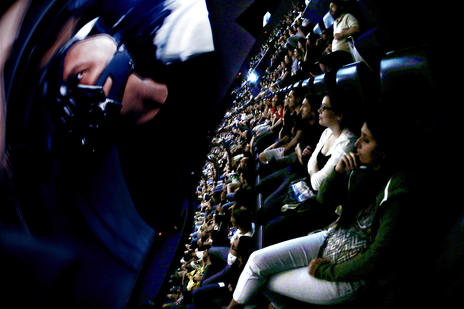




 mediateacherdotnet