 As a follow-up to concepts in the previous post — Getting all Black and Blue over Media Literacy — here is an excerpt from an interview with filmmaker Errol Morris (The Thin Blue Line, Fog of War, Standard Operating Procedure, among others) in which he discusses seeking authenticity and truth in documentaries. Morris also wrote an article about this topic in the Boston Globe.
Posts Tagged ‘Errol Morris’
Civil Rights, Media, and Poignant Storytelling in “Booker’s Place: A Mississippi Story”
Posted in Chapter 6, Directors, Women Mediamakers, tagged African American History, Barbara Kopple, Booker Wright, Booker's Place: A Mississippi Story, Cross Curricular Lesson, Errol Morris, Frank De Felitta, Raymond De Felitta, Tribeca Film Festival, Yvette Johnson on May 6, 2012| Leave a Comment »
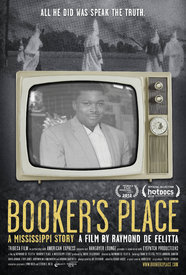
Booker’s Place: A Mississippi Story by Raymond De Felitta
The documentary Booker’s Place: A Mississippi Story opened recently at the Tribeca Film Festival to very strong reviews. This movie directed by Raymond De Felitta concerns another movie made during the 1960’s by the director’s father, Frank De Felitta. The elder De Felitta traveled to Mississippi in 1966 to make Mississippi: A Self Portrait for NBC about the ongoing story of the Civil Rights Movement. On his travels for this piece, he crossed paths with Booker Wright, a man whose life was changed irrevocably by his televised appearance in which he talks about his feelings as a victim of discrimination and racism in the Deep South.
For a critical perspective on the movie, this review of Booker’s Place: A Mississippi Story is representative of criticism that has appeared on the movie, and it is quite thorough and eloquent. Also, Democracy Now broadcast a feature story on the content of the movie, and it highlights the moving dialogue between Raymond De Felitta and Yvette Johnson, the granddaughter of Booker Wright, who met because of De Felitta’s initiation of this project. Finally, here is a story from the New York Times that discusses the family tales that intersected in the narrative of this movie.
This documentary can serve as an excellent source of study for themes in Chapter 6 of Moving Images, and it is extremely well suited to cross-curricular lessons with social studies courses. The layers of story and the impact of media on history, society, and individual lives are rich with possibilities of investigation for educators and learners. This includes issues of responsibility and the effects of media on the lives of subjects of non-fiction movies as well as those who make them, as discussed in the cases of Barbara Kopple’s Harlan County, USA and Errol Morris’s The Thin Blue Line.
 mediateacherdotnet