Feeds:
Posts
Comments

Peter O’Toole and Omar Sharif in David Lean’s newly restored classic “Lawrence of Arabia”

Just a couple of weeks ago, a newly restored version of David Lean‘s classic film Lawrence of Arabia was released on BluRay.  Here is an excellent article on the highly instructive story of its restoration.  This topic provides excellent examples and insights into the relationship of traditional celluloid-based moviemaking and digital media.

Here are some useful links on the topic of film preservation: National Film Preservation Foundation, Martin Scorsese’s Film Foundation (which always has wonderfully produced and informative clips streaming on their site), a Kodak page on movie archiving, and here is a clearinghouse page with lots of links to topics associated with film preservation and motion picture history.

Where is the truth and what does media communicate to us? Ben Affleck standing in center with the real-life inspirations for “Argo,” including his character, CIA agent Tony Mendez, on far left (Keegan Bursaw/Embassy of Canada)

In earlier posts, I have discussed possibilities of cross-curricular work with social studies courses and this fall has offered countless examples of further opportunities to use media literacy to enhance learning in social studies classrooms.  Here are related pages from the newseum siteEdutopia, and Frank Baker’s Media Literacy Clearinghouse.  For the media literacy classroom, one of the most interesting aspects of this election was the creation of videos outside of the two campaigns and their dissemination through the Internet, such as the lip-dub treatments of the debates and other comedy pieces such as the gangnam-style parody with a Mitt Romney imitator done for the College Humor site.  At my own school, social studies teacher Mike Barile had his Civics students make their own videos for fictional campaigns (no, not comedy parodies but ones that suggest new approaches to official campaign ads) and they used them for comparison and analysis with current media and historical examples from American presidential races.

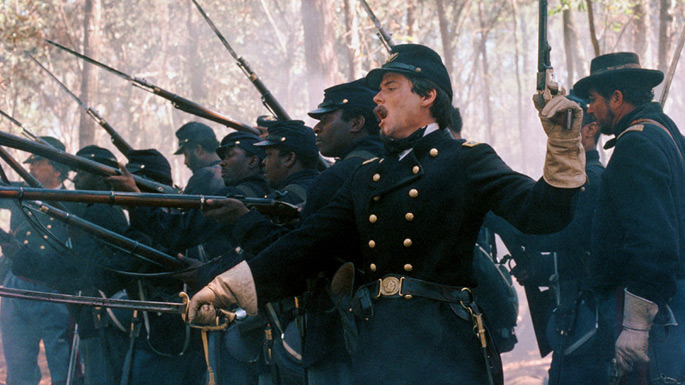
Still from Edward Zwick’s 1989 movie “Glory,” from which certain scenes can provide interesting comparison and contrast to “Lincoln”

Among current movies, two releases may provide for interesting discussion and study in either American history or International Studies curricula.  Steven Spielberg’s Lincoln joins the rich trove of Civil War movies that can be used in the classroom, while Ben Affleck’s Argo can be used in relation to studies of the history of Iran and its relations with the United States during the 20th century.  Here is an excellent counterpoint piece written by radio journalist Jian Ghomeshi in response to the depiction of Iranians and the political context of Iran in Argo, while here is a Washington Post article on the real people behind the story of this movie.  For Lincoln, there is an iPad book for the movie that may be useful for teachers.

Speaking about iBooks, in an earlier post about Tim Burton, I talked about his recent movie Frankenweenie.  Disney has released a free iBook for the movie, which is highly recommended.

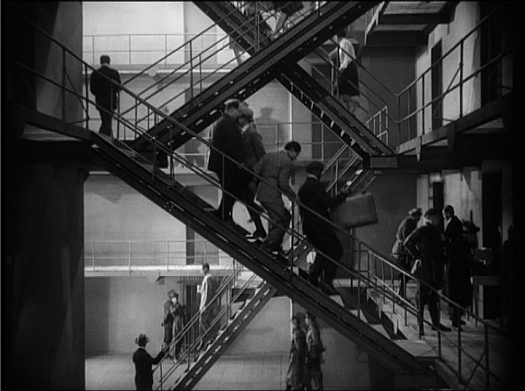
“Spies” directed by Fritz Lang, 1928

When we teach, we are constantly discovering (and hopefully those who are learning are constantly discovering too!).  Some lessons work, some fall flat.  We need to renew, to reinvent, to challenge ourselves and our students to dig deep into the themes and problems that we face in our studies and to invigorate our skills through these explorations.

In an earlier blog post, I discussed the particular challenges in developing students’ skills as visual communicators and the benefits of studying early motion picture history and non-dialogue moviemaking.  Recently, as my class was working on this unit, I decided to do something new.  One of the skill-building class activities I have done with this unit is a short project – produced in just a couple of class periods – in which students face the same challenge that filmmakers did for the Lumière and Company project.  This one-minute, one shot movie is offered as one of the extra projects that teachers can use with Moving Images (this one is Class Activity 2).  While I do find that this project can be instructive and offers a distinctive test to students, I thought it was about time to try something new.  I wanted to give them a task that could connect with other events going on in our school and could tie into learning in upcoming units.

“More” an animated short by Mark Osborne

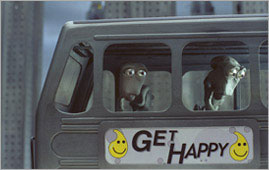
So this is the intro to the exercise:  In this unit, you study the invention of moving images and the advances made in visual communication by early moviemakers. For this class exercise, you will explore possibilities of motion picture storytelling through the creation of a short movie designed to communicate a simple idea to an audience. For this project, you will determine a topic appropriate for a message at your school. This may be a public service announcement, a promotional piece for a school group, club, or team, or a commercial for a school enterprise. Along with studying examples from the early years of cinema, from Lumière and Méliès shorts and The Great Train Robbery to more advanced silents including selections from Fritz Lang’s The Spieswe also study contemporary examples of non-dialogue movies, such as Mark Osborne’s More (which is on the Moving Images DVD) and Mark Gustafson‘s Mr. Resistor.  Since this project had to meet the distinct needs of commercials or PSAs (in our case, to last between one and two minutes), we also watched previous standout student work in this vein in addition to commercials such as Volkswagen’s “The Force” (which premiered during the 2011 Super Bowl).

I decided that I would let students select their collaborators, and they dived right into the task.  As it turned out, the class ended up in four groups, and the projects they did turned out very well.  In fact, every completed PSA turned out to be quite worthy and appropriate to show on the school-wide morning announcements.  They were clearly the best set of rapidly produced shorts in this course that I have taught for over a decade.

This activity has already been added to the teacher materials for Chapter 2 – it is titled “Class Activity 2b” – and it has been uploaded to the Cengage textbook site for instructors and students.

A page from Winsor McCay’s comic “Little Nemo”

Today’s Google Doodle celebrates the work of groundbreaking artist Winsor McCay, whose creations are ripe for investigation when exploring the material of Inventions and Origins in Moving Images.  McCay’s explorations of motion picture language and the ways that one can play with frames and sequences in films such as Gertie the Dinosaur reflect the sense of discovery and invention that one sees in recent transitions during our own digital age, and they can initiate fruitful discussion and inspiration in the classroom.  Moreover, Little Nemo‘s visual storytelling and intricate artistry serves as one of the best and most beautiful examples of sequential art that one can find.  For further information on McCay, John Canemaker‘s biography is excellent (as usual; his writings on the Disney studios, such as Nine Old Men, are also highly recommended) and here is an interesting blog page on this innovative and very interesting creator.  (And definitely check out the full animation of the Little Nemo doodle — it’s superb and quite worthy of the artist and vaudevillian McCay; in further celebrations of moving images, last month’s Google Doodle for the 46th anniversary of Star Trek was a real winner too!)      

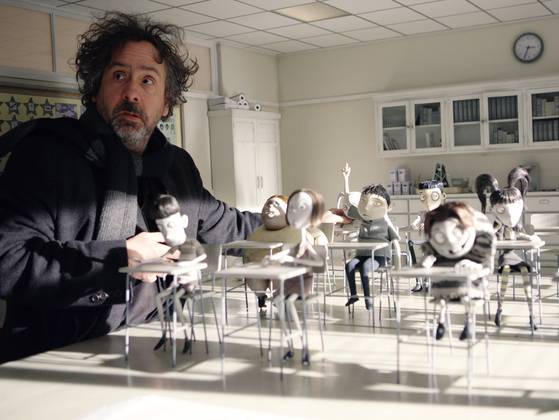
Tim Burton with stop-motion characters from Frankenweenie

If teens have opportunities to research moviemakers and deliver reports on their bodies of work, who would be the most popular choice?  Steven Spielberg?  Quentin Tarantino?  Spike Lee?  Well, in my experience, the decision is not even close: it’s Tim Burton.   I have been teaching media literacy and digital production courses for a decade and a half, and during that time Burton has been the one consistent choice when students can explore personal interests in movies through an independently-researched presentation on the career and work of an individual moviemaker (this assignment is part of the Instructor’s Resources package of Moving Images).

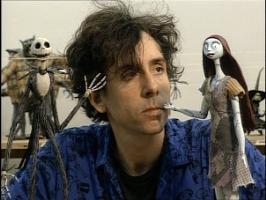
Burton with early creations Jack Skellington and Sally

Over the years, interest in different directors rises and falls intermittently – for example, Tarantino will be quite popular for a couple years (most notably during the Kill Bill period), then there will be no interest at all for a while; the same goes for M. Night Shyamalan, James Cameron, and many others – but Tim Burton is always selected.  Clearly, his work connects with certain young people growing up in America.  This recent New York Times interview with Tim Burton helps to highlight some of the reasons for this resonance with viewers.

Mr. Rzykruski voiced by Martin Landau

Burton’s stop-motion feature Frankenweenie came out last week, and at its best – particularly the opening fifteen minutes or so of the movie and the scenes with science teacher Mr. Rzykruski (voiced by Martin Landau, who won a well-deserved Best Supporting Actor Oscar as Bela Lugosi in Burton’s Ed Wood) – it has passages that resonate among Tim Burton’s most compelling and personal work (those two things tend to go hand in hand for him, such as in his early classics Edward Scissorhands, Ed Wood, The Nightmare Before Christmas directed by Henry Selick, and arguably Batman Returns).

I think that those first minutes of Frankenweenie should be quite useful and popular for media literacy teachers when they explore the history of moviemaking in class (and in Chapter 2 of Moving Images).  In fact, I have used the original short live-action version of Frankenweenie a number of times in class over the years, whether for issues of black and white cinematography, storytelling, or reanimating dead pets.   

By the way, who would take the number two position?  Again, in terms of my own classes, it’s definitely John Hughes.  His movies have actually grown in status over the years, and of all of them The Breakfast Club is an undisputed classic.  As opposed to most movies from that time, it continues to connect with kids today.