Feeds:
Posts
Comments

Casinghino NCTE 1Don’t they love their acronyms!  American public education is following the examples of the business world and bureaucratic government circles in adopting an acronym for every initiative that is launched these days.

So, as I mentioned in an earlier post, this weekend I will be participating in a panel with authors Frank Baker and William Kist to discuss Film: A 21st Century Common Core Literacy.  For my presentation, I will be addressing the value of incorporating media literacy education principles as a support of the guidelines and objectives of the Common Core, and I will share specific examples that I have created for media literacy classrooms which dovetail well with high school ELA curricula.  In particular, I will discuss a comprehensive instructional resource that I have prepared for Homer’s The Odyssey and the film O Brother Where Art Thou? by the Coen Brothers.  In addition, I will share conceptual ideas behind a complete set of modules that I have developed in which I link principles of media literacy development in the chapters and featured motion pictures of Moving Images to exemplar texts of the Common Core.

CasinghIno NCTE 2For each of these text/movie thematic pairings, there will be performance tasks, project-based learning opportunities, and questions for use in SBAC-type assessments.  Hope to see some of you at the 2013 NCTE Annual Conference! — and for those who can’t make it, stay tuned for all of the materials that I’ve described here!
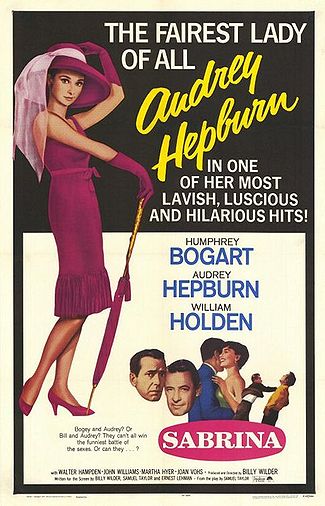
 

Sabrina_1954_film_posterToday there was an elegantly designed Google Doodle about one of the most celebrated costume designers in moviemaking history: Edith Head.  Here is an article from the Christian Science Monitor that features an excellent embedded video in which Edith Head discusses her work with Audrey Hepburn, one of the most stylish actresses of Hollywood history.  Edith Head’s story provides intensely interesting insights into the workings of the studio system — in her case, it was primarily at Paramount Studios (including numerous Hitchcock pictures).  In fact, to check out her work at Paramount, I would recommend to go right to one example of a black and white movie and another in color.  For B&W, check out the delightful Sabrina, directed by Billy Wilder and starring Hepburn, Humprey Bogart, and William Holden, and in color, the s’wonderful Funny Face, directed by Stanley Donen and starring Hepburn and Fred Astaire.

It should also be noted that Edith Head was certainly one of the inspirations for the unforgettable Edna Mode from The Incredibles, directed by Brad Bird (and who also voiced Ms. Mode).  She is quite an appropriate character all about design in a movie that is so seamlessly designed while brimming with the energy and spontaneity of the best creations that Hollywood craftspeople labor to bring to life.

Annual13At this year’s National Council of Teachers of English annual convention in Boston, I will be taking part in a panel presentation and discussion with media literacy scholars Frank Baker (Media Literacy in the K-12 Classroom) and William Kist (The Global School and The Socially Networked Classroom: Teaching in the New Media Age).  The session on Saturday, November 23 is titled Film: A 21st Century Common Core Literacy, and in it we will be engaging participants in an investigation that places media literacy in the context of core 21st century literacy.  Film has been integrated into the English classroom over the last century, and this session builds on that work; including multiple lesson ideas and examples that situate motion picture communications squarely in the center of what it means to be an effective reader and writer within a screen-based society.  

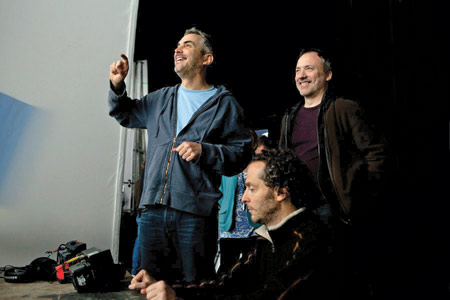
Cuarón (left) and Lubezki (center) working with digital techniques on Gravity set

Cuarón (left) and Lubezki (center) working with digital techniques on Gravity set

In an earlier post, I highlighted the work of cinematographer Emmanuel Lubezki and director Alfonso Cuarón, featured artists in Moving Images, whose collaboration has generated many of the most powerful and provocative movies of recent decades.  Their current film, Gravity, is sure to offer strong opportunities for studies of the art of moviemaking, as it weaves together technology, visual communication, storytelling, and the artistry of directing, acting, sound design, and many other departments to craft its narrative and build its thematic and emotional resonance.  A number of thorough and insightful pieces on this movie and Cuarón’s career have appeared in recent weeks.  I highly recommend this article from the Directors Guild of America.  In addition, if you have not visited the DGA site, you will find that it is an unequaled resource, particularly for its extensive interviews with dozens of directors.  Also, New York Magazine published a superb piece by Dan P. Lee – The Camera’s Cusp: Alfonso Cuarón Takes Filmmaking to a New Extreme with Gravity in its September 22 issue.    

George Clooney, Sandra Bullock, and Alfonso Cuarón making Gravity

George Clooney, Sandra Bullock, and Alfonso Cuarón making Gravity

For an initial investigation into some of the science in Gravity, here is a video in which Cuarón and space.com’s @DavidSkyBrody discuss scientific aspects of the creation of this movie.

It is my plan to return to this post with more links to lessons associated with this movie or material that emerges once it is released.  Stay tuned.  And maybe I’ll see you at the movies on the day of its release.

How can we tell our stories in new multimedia landscapes?  How do we experience tales both old and new?  Do we read them?  Hear them?  See them?  Play them?  A little bit of each?

cindi mayweather fugitiveRight now a dynamic example of this ever-evolving mediascape can be examined through the multi-faceted work of Janelle Monáe and her newest release, The Electric Lady, along with its tendrils of storytelling through twitter, tumblr, jpegs, and, of course, music, whether streamed, downloaded, or on disc.  In the course of her earlier works, she developed the persona of Cindi Mayweather, an android from the future and “cybersoul superstar.”   Currently, through a network of texts and videos and paintings, she and her Wondaland Arts Society collaborators have furthered this story directly through user-directed social media.  Like most recording artists today, her music videos are available through YouTube – such as Q.U.E.E.N and Dance Apocalyptic – while she and her collaborators have gone several steps further by crafting mysterious, provocative short movies that build on the picture-snapping, web-surfing construct-a-story habits of 21st century media natives.

queen chaserThese pieces – Ministry of the Droids, the very funny Atomic Bowtie, and quirkily suspenseful Q.U.E.E.N Chaser – can provide for interesting discussion of new modes of storytelling that walk lines between advertising, communal message sharing, and visual poetry.  They are also full of savvy moviemaking lessons, and all three are great to consult and critique for students working on material in the sci-fi genre, particularly promos or montage sequences.  The clips are also posted on a single tumblr page for The Electric Lady that also includes texts about the paintings by Sam Spratt for the album, all of which continue to advance the narrative and themes associated with the Cindi Mayweather persona.

In the meantime, Monáe is also a songwriter and singer, and her media persona is further developed through performances that exist in the nexus of the Internet, such as the two show-stoppers she has delivered on the Late Show with David Letterman: first Tightrope, then Dance Apocalyptic.  If the short films and albums mentioned earlier might compel the viewer to explore links with the work of director Fritz Lang (and particularly Metropolisand photographer and filmmaker William Klein (and Qui êtes-vous, Polly Magoo?), then in these performances Monáe’s lineage to James Brown and Prince should be quite clear, as Letterman echoed when he called her “the hardest working woman in show business.”