 Or is it white and gold? A few weeks ago, a new viral event entered the lexicon: So, is the dress in that picture white & gold or blue & black? And an intense debate ensued. I first was asked about it by a student in my Advanced Media Literacy & Production class, and I laughed because kids, being kids, were quickly getting furious about the different opinions being expressed and whether or not one was a “white/gold” or “blue/black” person. And they were also quite sure that what they were talking about was the color of a dress. I told them that what they were looking at, and debating, was a picture of a dress, and that what they were disputing was how they perceived the visual information in the picture. If they were well trained in media literacy, they might be able to address a few key issues at hand: first, the lighting in the picture is clearly problematic and we tend to interpret that visual information relative to many perceptions we have related to light and color. I guessed “white/gold” because the bluish tint to the white I instinctively dismissed to the overexposed highlights while the darker tone certainly did not look black to me. (Do it right now with the picture here: cover everything else except for a patch of the dark bands on the dress: is that black to you?) This also brings up another issue that is important to consider: by giving the choice of blue/black or white/gold, there is already a setup for the viewer, we are already given a bias or a set of parameters that will skew our reactions to what we see. We may even see things that aren’t necessarily there or it may limit our reactions by design. These issues are discussed in Chapter 4 of Moving Images: in order to master Storytelling with Light, one must understand light. And that includes the concept of white balance, which clearly was not in play with this photo. For anyone interested in further exploration of these issues related to light and color, I highly recommend the episode Seeing is Believing from the excellent series Brain Games. The lesson related to our perception of color is also in this BBC article – scroll down to the example Cube Illusion – within moments, you will probably be thinking “I can’t believe my eyes! No way!”

Another American marksman: director Clint Eastwood in Unforgiven
Another major media event from this year that makes me think of these issues is the enormous success of the movie American Sniper, directed by Clint Eastwood, which may become a media document used in our schools throughout the years to come. For many young people, both the movie and its source autobiography are already regarded as a core historical text in the “War on Terror” and a rather faithful document of recent American history, as I have witnessed on numerous occasions in conversation and text. This movie is a treasure trove of lessons in media literacy, through which one can delve into the messages being communicated visually and constructed for audiences, from the editorial links between the events of 9/11 and Iraq; to depictions of Iraqis as “savages” (to quote the author and subject of American Sniper, Chris Kyle) and black-clad villains of the American Western transplanted from the sandy vistas of cowboys to the desert lands of the Middle East; and to the use of actual documentary footage from Kyle’s funeral in Texas to conclude the film, cementing its message to audiences as a historical document. In discussing the topic of the understanding of history through movies, Jeffrey M. Zacks writes in Why Movie ‘Facts’ Prevail (New York Times,February 13, 2015): “You might think: Does it really matter? Can’t we keep the film world separate from the real world? Unfortunately, the answer is no. Studies show that if you watch a film — even one concerning historical events about which you are informed — your beliefs may be reshaped by ‘facts’ that are not factual.”

“Mustafa” – truth or fiction? Be media literate and do the research!
Issues of authenticity, distortion of historical truths or outright inaccuracy, acceptable or inappropriate license taken in the depiction of historical events or figures are all core issues faced by countless media creators working in both fiction and non-fiction. They are core topics of Chapters 5 and 6 of Moving Images. This past year, many valid points have been raised about controversial choices relative to the visual communication and dialogue in a number of historically-based movies, particularly American Sniper, The Imitation Game, and Selma. Educators must continue to encourage vigorous debate and to develop students’ abilities to interpret, question, and assess the media messages with which they regularly interact.
If you are looking for a good analytical piece on American Sniper, I think this article by Noah Gittell is one of the best; he provides a brief but excellent visual and thematic analysis of the movie and appropriately contextualizes the opposing poles observed in reactions to the film.
Read Full Post »
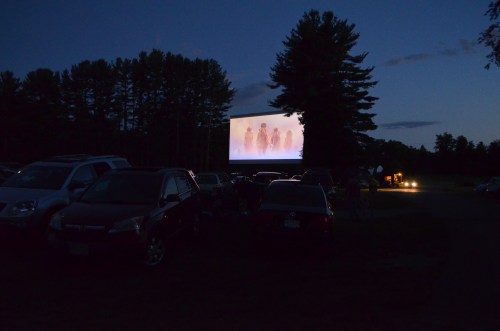
 A while back, there was a mediateacher.net post about a tradition of American moviegoing that combines many of the cultural values of the United States: cars and mobility, family entertainment, take-out food, and entrepreneurship: the Drive-In. Despite what many predictions forecast, there are still independently run theaters all across the country, at least those that have been able to navigate the conversion to digital projection. Depicted through these images is a visit to one for a recent family outing to see Zootopia and Finding Dory. The story of the Northfield Drive-In (which straddles Massachusetts and New Hampshire) is a very interesting tale of media economics, technology, and moviegoing. Right here and now, the story of a Friday night at the drive-in will be told in pictures.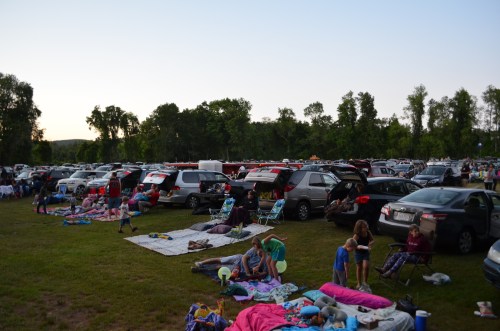








 mediateacherdotnet