Feeds:
Posts
Comments

Archive for the ‘Media Literacy’ Category

Will they be clinking their glasses at the Oscars?

Will they clink their glasses at the Oscars?

Earlier, I discussed the movies Argo and Lincoln in relation to cross-curricular connections that can be explored through analyses of movies and history.  Since then, there have been many provocative developments that add to the angles to be scrutinized with Argo (including its many major awards and Academy Award nominations).  Some of the most interesting include comparisons of the historical record to the narrative of the movie as well as recent commentary that has been recorded in the press from figures who were involved in the actual events.  Of particular significance are the complete fictions in the movie, such as the chase scene through the airport and while the plane takes off, and the depiction of the roles of the Canadians who sheltered the Americans that had escaped from the embassy in Tehran.

Victor Garber as Ken Taylor and Ben Affleck as Tony Mendez

Victor Garber as Ken Taylor and Ben Affleck as Tony Mendez

Let’s ask ourselves as media investigators: why were these choices made?  Are they valid?  Do the distortions or invented events constitute fraudulence on the part of the filmmakers?  Take into consideration a variety of storytelling and aesthetic decisions in the film – and one I suggest is from the closing credits in which director Ben Affleck and his collaborators inserted historical photos in comparison to images from the movie.  I also recommend recent interviews and reports that feature reactions from the Canadian ambassador, Ken Taylor, and the American President at the time, Jimmy Carter, including these articles from the Associated Press and E!Online.

In my initial blog post, I referenced Canadian journalist Jian Ghomeshi’s article about the depiction of Iran and Iranians in the film, and here is another piece related to Ghomeshi and Argo: an interview with actor Victor Garber who plays Canadian ambassador Ken Taylor.

Read Full Post »

Taking a step outside (photo Carl Casinghino)

Taking a step outside
(photo Carl Casinghino)

In a rough stretch of winter, it’s time to recharge the batteries!  Right about now a new semester is arriving across the land, so I’ll be posting some helpful links for educators — they might be reminders to refresh our perspectives or could offer some excellent resources that are a new discovery.  For our start today, here is a set of Internet pages that many teachers have looked to regularly for the past few years: Frank Baker‘s Media Literacy Clearinghouse.  Baker has recently published the book Media Literacy in the K-12 Classroom, and he maintains many Internet platforms that can be exceptionally helpful to educators working in fields associated with media literacy.

To add to one of his pages I had referenced earlier in a blog post related to Social Studies, here are some extremely useful spots to start: Language of Film, which has numerous sections that are highly practical and extensive, from cinematography to criticism to film history to screenwriting and many points in between; For Your Consideration, which focuses more specifically on topics related to awards news; and his official blog linked to the NCTE.

Read Full Post »

President Obama being sworn in for second term with wife Michelle Obama holding bibles of Lincoln and King

President Obama being sworn in for second term with wife Michelle Obama holding Bibles of Lincoln and King

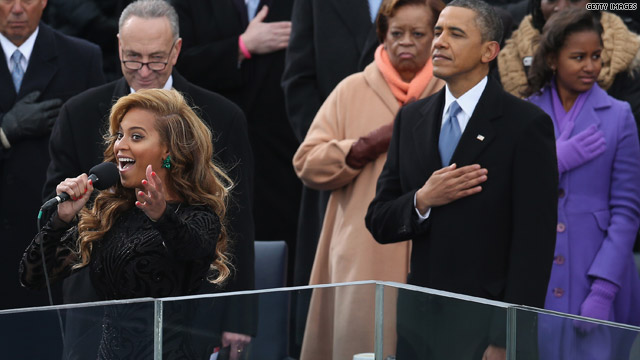
Today President Barack Obama was inaugurated for a second term, and many people around the world experienced this event through a wide range of images.  As always, there are many angles to consider.  Have you ever switched between different channels covering the same occasion to see how different each can look, even when they are showing almost the same exact image?  Even without changing the source, note how colors, skin tones, and effects of light can change when cutting from a wide shot to a close-up.  It certainly helps to understand cinematography to comprehend how the choices made during production affect what we see and how we interpret it.  Now, the images that record this ceremony are available to be seen immediately on the Internet, and the different aspects of the event are instantly being further scrutinized, dissected, and evaluated, from President Obama’s speech to Richard Blanco’s poem to Beyoncé’s rousing rendition of the national anthem to Michelle Obama’s new hairstyle.

Here are some links that are interesting to check out: first, an ABC interview with poet Richard Blanco.  The interview should also be looked at by scrutinizing the total content of the image: that in addition to the interview with Blanco we are looking at a screen made up of many things going on at once.  Why?  How does that affect our understanding of the information, our processing of the visuals, and its aesthetic impact?  Of course, there is also Beyoncé singing the national anthem.  Finally, considering one of the key moments of President Obama’s speech when he made reference to the legacy of Dr. Martin Luther King, Jr. on his holiday, here is a link to Dr. Martin Luther King. Jr.’s August 28, 1963 “I Have a Dream” speech in Washington.

beyonce.inaugurationPostscript: Okay, so the Marines spilt the beans: Beyoncé was lip-syncing.  Good old pitch adjusters.  So does anyone else want any more “Wizard of Oz” moments here or lessons in “what you think you see is not necessarily what you get?”

Read Full Post »

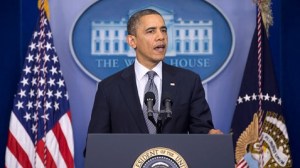
President Obama addressing the nation about the Newtown shooting (AP/Carolyn Kaster)

President Obama addressing the nation about the Newtown shooting (AP/Carolyn Kaster)

As educators wrestle to deal in their classrooms with the issues presented by the profoundly tragic attack on Sandy Hook Elementary School in Newtown, Connecticut, it is important to focus on methods to evaluate emotionally potent media sources effectively.  At this point, it is clear that the media lessons to be gleaned from rapid, weakly substantiated early-developing news reports can provide solid lessons for teachers across the disciplines.  In this case, the quick dissemination of information led to a disturbing level of misinformation regarding this assault, and as educators decide on strategies to process and understand this tragedy, one possible area of learning and higher order thinking skills that can be addressed is the examination of news media in the hours and days that followed the attack.  One online source that can initiate classroom dialogue is CNN’s Students News, where they feature questions as part of their Daily Discussion page.

In the sensitive days, weeks, and months following any tragedy that affects school life, the most important resources for any educator are those that provide guidance for reasonable and compassionate dialogue with and between one’s students.  Among those that have been provided recently, I would suggest the following links: Talking to Children about ViolenceEmotional Reactions to Traumatic Events; and educational resources and lesson plans provided by the NCTE.

Read Full Post »

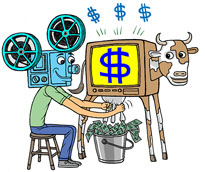
Hollywood EconomicsGetting down about financial prospects these days?  Times are tough all over, aren’t they?  Or at least for some.  Of course, if you believe Hollywood, they’re always struggling just to break even (yeah, sure).  Well, in the development of Media Literacy coursework, one of the richest veins of cross-collaborative planning is definitely with business courses, whether related to various fields of economics, finance, or career planning.

This recent article from the New York Times from a series on the use of tax breaks and financial incentives in the United States to spur business activity – titled “United States of Subsidies” – provides excellent examples for areas of inquiry in business and media literacy classrooms.  This particular story takes place in Pontiac, Michigan, where, as they way in the article, “happy endings do not usually come Hollywood-style.”

Real Art Ways, one of the primary independent venues for movies in Connecticut

Real Art Ways, one of the primary independent venues for movies in Connecticut

To provide another example, in Connecticut – the state in which I teach (and home of ESPN) – the business sectors of government have worked diligently to draw movie production to the state, as one can see in this site from the Department of Economic and Community Development and another page offering specific links for information and documents on tax breaks and incentives.  Wherever one is located, there are sure to be rich avenues of investigation for economics studies related to motion picture media.

Earlier, I put up a post on current prospects for movie production students, and things certainly have not changed much since then.  In addition, I also commented on topics for media and business classes related to independent cinemas (and also traditions of drive-in theaters).

Read Full Post »

« Newer Posts - Older Posts »