 Sick of it all already?? Feeling “been – BOOM! – there, CRASH! – done – BANG! – that,” yet? Feel somehow assaulted leaving the theater? Okay, check out this great New York Times interactive feature about the “tent pole” phenomenon. This piece can be used as a starter for class discussion or for creating pitches and trailers to explore “how media works these days” — at least in the world of mega-budget, brain-squelching funtertainment. So, how many Hollywood execs are thinking that now they’ll actually make the Times’s fictitious Red, White, and Blood? And, as producer Linda Obst advises in her comments for this concept, “End on the sexy young thieves and not on the old guy. That’s going to set up your sequel. Duh!”
Archive for the ‘Media Literacy’ Category
Summer Extravaganza Pitchalooza!!!!
Posted in Chapter 5, Media Literacy, tagged Linda Obst, New York Times, Pitch session, Red White and Blood on June 29, 2013| 2 Comments »
In the Domain of Teens: Zombieland !
Posted in Chapter 8, Media Literacy, tagged Connect the Pop, Florian Bertmer, Marc Forster, Max Brooks, Mondo, Night of the Living Dead, Peter Gutierrez, World War Z on June 28, 2013| Leave a Comment »

World War Z, White House Down, Olympus has Fallen: Happy movie world these days, isn’t it?
When visiting my local public library recently, the librarians were quite excited to tell me about a new program that they had subscribed to through which patrons will be able to stream films. That led to us talking about film programs that I will be putting together with them, and the head librarian joked that we need to feature the topic that everyone seems to be talking about to get teens to read and engage with storytelling: zombies! Meanwhile, integrating any horror movies into the classroom poses numerous challenges to find school appropriate material that passes the litmus test of the gore-skeptical average teen and that will also be interesting enough thematically.
Well, World War Z, here we come! Yes, here is a mainstream, PG-13 movie that raises some interesting questions and offers lots of avenues for media literacy lessons, including a source novel by Max Brooks that has been an enormous hit with readers. I highly recommend this very thorough set of questions and prompts that Peter Gutierrez posted on his superb blog Connect the Pop (referenced earlier on a mediateacher.net post about super-heroes).

Poster by Florian Bertmer for Mondo
And here is an interview with director Marc Forster (World War Z, Kite Runner, Quantum of Solace, Finding Neverland).
Finally, I have to add that one of the most fun and successful commercials made by my students last school year was for a fall theatrical production of Night of the Living Dead. They hunger…
The Iron Screen
Posted in Media Literacy, tagged Iron Man 3, J. J. Abrams, Manohla Dargis, New York Times, San Francisco Film Festival, Star Trek Into Darkness, Steven Soderbergh on May 5, 2013| 3 Comments »
 As the school year winds down, it can be fun to open up discussion a bit to “big picture” topics. And one doesn’t get much bigger than the summer blockbusters that have been booming across our screens and into our ears in recent years, or that implode (at least at the box office, when compared to the truckloads of money that were spent on them); whatever the case, we tend to love debating what’s hot, what’s not, and what there is to discover. Right now, of course, the biggie is Iron Man 3, which opened to a relatively predictable huge first weekend. I highly recommend this superbly written New York Times review by Manohla Dargis for what could be a lively discussion about the state of the movies — and the state of the nation — because it reads at least as much as an editorial or an impassioned “state of the cinematic arts” mission statement as anything else. She skillfully integrates Steven Soderbergh’s inspiring talk at the San Francisco Film Festival from a week ago into the review and provides many provocative angles for students and teachers to consider about this movie. In the meantime, J.J. Abrams‘s Star Trek Into Darkness is right around the corner…
Of Commercials and Common Cores at the 11th Northeast Media Literacy Conference
Posted in Chapter 3, Chapter 5, Media Literacy, tagged 11th Northeast Media Literacy Conference, Common Core State Standards, Digital Nation, Killing Us Softly, Media Education Foundation, Media Literacy Clearinghouse, Merchants of Cool, PBS, The Bro Code on April 19, 2013| 7 Comments »

Admongo: Deconstructing Commercial Messages
As mentioned earlier in this blog, at the 11th Annual Northeast Media Literacy Conference at UConn I am presenting a talk titled “CCSS and Media Literacy in the Classroom: Communications and Critical Thinking through Promotional and Public Service Messages.” As a service to those attending the conference and to followers of this blog and the Moving Images textbook, here are notes and links included in my presentation.
First, it is important to review principles of media literacy: here are the essentials at the NAMLE website.
Then, on to what educators face as principal challenges in curriculum development today: the Common Core State Standards. For media literacy professionals, the following descriptions are the essentials. For Reading Literature: Analyze the representation of a subject or key scene in two different artistic mediums (RL/9-10:7); Analyze multiple interpretations of a story, drama, or poem (RL/11-12:7). For Reading Informational Texts: Analyze various accounts of a subject told in different mediums (incl. multimedia).. (RI/9-10:7); also, integrate and evaluate multiple sources of information presented in different media or formats (e.g. visually, quantitatively) as well as in words in order to address a question or solve a problem (RI/11-12:7). For Speaking and Listening, students must make strategic use of digital media (incl. audio, visual, and interactive elements) in presentations to enhance understanding of findings, reasoning, and evidence and to add interest. (SL/9-12:5) Finally, in History/Social Studies and Science/Technical Subjects, learners have to make strategic use of digital media (incl. audio, visual, and interactive elements) in presentations to enhance understanding of findings, reasoning, and evidence and to add interest. (SL/9-12:5)
 For resources specific to the investigation of commercials, one of the best places to begin is at Frank Baker’s Media Literacy Clearinghouse, where there is a homepage for materials on critical thinking about advertising. For educators of elementary and middle grades, there is the Federal Trade Commission resource Admongo, which features many exercises and lessons. From my own materials related to Moving Images, there is an extended interview on this blog with advertising copywriter Kevin Goff, and links to commercials can be found. These can be evaluated using such models as those of the Instructor’s Resources with Moving Images or this lesson from the MLC pages: Deconstructing a TV ad. Recent ads have come under quite a bit of scrutiny, such as the commercials during this year’s Super Bowl.
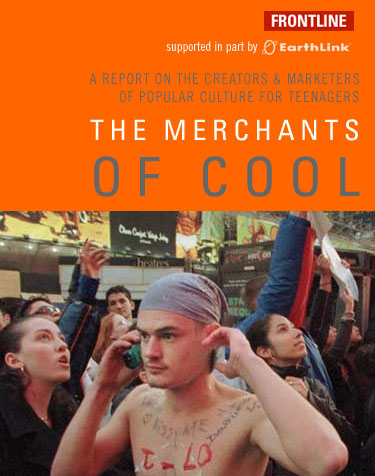
Other examples used during the presentation are for investigative work done by students using such exposes as PBS’s Merchants of Cool and Digital Nation and Media Education Foundation’s Killing Us Softly and The Bro Code . Using selected parts of these media reports as a basis, students must research topics offered by their teachers and create presentations based on the media questions that are most appropriate. The attached Unit Activity Guide – Critical Analysis 5b Lesson Plan – was drafted for work with Merchants of Cool and Digital Nation in conjunction with Chapter 5 of Moving Images.
As for examples from my classes that are shared during the presentation, those are for attendees – so I look forward to seeing some of you media literacy educators there!
CCSS and Media Literacy using PSAs & Commercials
Posted in Media Literacy, tagged 11th Annual Northeast Media Literacy Conference, Common Core State Standards, media literacy, University of Connecticut on February 27, 2013| 1 Comment »
 I will be delivering a presentation at the 11th Annual Northeast Media Literacy Conference at the University of Connecticut on April 19. This presentation – titled Common Core State Standards and Media Literacy in the Classroom: Communications and Critical Thinking for Promotional and Public Service Messages – will provide useful, dynamic examples of curriculum and lesson development for media literacy connected to the CCSS. Such units benefit the school community and foster evaluative, collaborative, and communicative skills; in this case, advertising and public service messages will be assessed using classroom cases. Last year, the conference provided an interesting forum for international perspectives on media literacy – I wrote a piece for this blog on some of the highlights – and this year’s event will feature similar opportunities.
 mediateacherdotnet