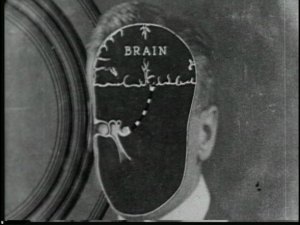
 In the What Exactly is that Movie? post on mediateacher.net, you can read about tricky-to-categorize media messages that have evolved over the past 120 years or so. Recently, an extensive and very unique archive of very diverse movies was opened to the public: the Prelinger Archives. This incredible media archive is “a collection of over 60,000 ‘ephemeral’ (advertising, educational, industrial, and amateur) films [which holds] approximately 11,000 digitized and videotape titles (all originally derived from film) and a large collection of home movies, amateur and industrial films acquired since 2002” (from Prelinger Archives “About” page). The media material here can provide a wide range of uses for the development of editing or vfx skills and as a treasure-trove of footage for use in original projects of all sorts. Here is an article about the archive from Open Culture, or you can go directly to the Prelinger Archives.
Archive for the ‘Chapter 5’ Category
Prelinger Archives
Posted in Chapter 5, Resources, tagged Archival Footage, Open Culture, Prelinger Archives, Public Domain on May 5, 2018| Leave a Comment »
Black History Month Interactive Media Resource
Posted in Chapter 5, Directors, Social Studies, tagged A.O. Scott, Black History Month, Charles Burnett, Killer of Sheep, Manohla Dargis, New York Times, Oscar Micheaux, Spike Lee on February 7, 2018| Leave a Comment »

Still from Charles Burnett’s classic Killer of Sheep
For Black History Month, film critics Manohla Dargis and A.O. Scott of the New York Times have compiled an interactive list of culturally, artistically, and historically important motion pictures. This resource is quite valuable and can also serve as a springboard for interesting discussion. Along with the movies they have chosen — one per day for the month of February — there are many others noted in their comments and footnotes. Many directors and other figures from film history who are featured in Moving Images, such as Oscar Micheaux, Spike Lee, and Charles Burnett, are highlighted among the selections.
Here’s to Eisenstein!
Posted in Chapter 1, Chapter 5, Directors, tagged Folding Ideas, Google Doodle, Kuleshov Effect, October, Peter Bradshaw, Sergei Eisenstein, The Battleship Potemkin, The Guardian on January 22, 2018| Leave a Comment »
 Today’s Google Doodle is dedicated to one of the true pioneers and master directors of cinema: Sergei Eisenstein. In fact, the splash page illustration of Chapter 1 of Moving Images is inspired from one of Eisenstein’s most famous films, The Battleship Potemkin. Funny enough, you can look to the last post on mediateacher.net to see a reference to the core of one of the key aspects of Eisenstein’s work and the innovations in editing that he and his peers were establishing in their work, montage style of editing and the meanings that can be forged through the relationships and juxtapositions of shots. The example used there is expressed in the idea known as the Kuleshov Effect. For more, here is a fine recent article on Eisenstein and another of his celebrated films, October, by Peter Bradshaw of The Guardian.
And for a YouTube essay on the function and form of the Kuleshov Effect, check out this video by Folding Ideas.
Directing and Editing Masterclass with Jackie Chan
Posted in Chapter 1, Chapter 5, Directors, tagged Cinema of Hong Kong, Every Frame a Painting, Jackie Chan, Martial Arts, Taylor Ramos, Tony Zhou on November 1, 2017| 1 Comment »
 Are you in the process of working on developing blocking for action scenes? Comedy? What about both? This excellent video from the YouTube channel Every Frame a Painting (by Tony Zhou and Taylor Ramos) focuses on the work of master filmmaker Jackie Chan, and it features some very revealing insights about his working process and unique approaches to directing and editing (and martial arts choreography, of course). Of particular note are ways in which he creates scenes in his earlier work produced in Asia versus movies made in Hollywood. A very fun and enlightening movie for film students.
Talking Stories, Engaging Debates: An Essay by Sarah Polley
Posted in Chapter 5, Directors, Women Mediamakers, tagged Director, Harvey Weinstein, Sarah Polley, The Men You Meet Making Movies, The Stories We Tell on October 15, 2017| Leave a Comment »
 Among the very necessary debates and amidst the range of fallout that mediamakers have seen and are still to see from the New York Times investigative report on Harvey Weinstein and his subsequent fall from power as a movie studio executive, media students, educators, and professionals must sift through many perspectives and viewpoints. I would like to highlight this op-ed by Sarah Polley that appeared today, The Men You Meet Making Movies. Ms. Polley was the subject of an earlier post in mediateacher.net’s series on Women Mediamakers, Talking Stories: Portraits with Sarah Polley, which readers may wish to check out for further information on this important multi-talented creator.
 mediateacherdotnet