Feeds:
Posts
Comments

Archive for the ‘Chapter 4’ Category

Peter O’Toole and Omar Sharif in David Lean’s newly restored classic “Lawrence of Arabia”

Just a couple of weeks ago, a newly restored version of David Lean‘s classic film Lawrence of Arabia was released on BluRay.  Here is an excellent article on the highly instructive story of its restoration.  This topic provides excellent examples and insights into the relationship of traditional celluloid-based moviemaking and digital media.

Here are some useful links on the topic of film preservation: National Film Preservation Foundation, Martin Scorsese’s Film Foundation (which always has wonderfully produced and informative clips streaming on their site), a Kodak page on movie archiving, and here is a clearinghouse page with lots of links to topics associated with film preservation and motion picture history.

Read Full Post »

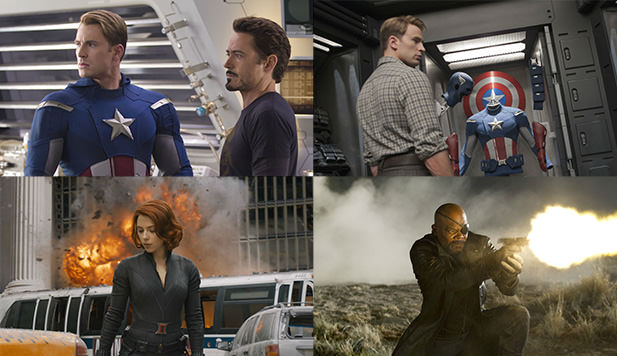
Stills from The Avengers with cinematography by Seamus McGarvey

Right now, the memeisphere seems to be abuzz with folks talking about where we are at with the state of the actual stuff called “film” and how media industries have become a digital game overall.  Here is a discussion (“Film is Dead?  Long Live Movies”) between the two chief movie critics for the New York Times, A.O. Scott and Manohla Dargis about what has been gained, what could be lost, and where things stand between practicality, economics, creativity, and other factors nestled between the pixels and emulsion of moving images.

In this interview, Irish cinematographer Seamus McGarvey talks about his work on the biggest hit of this moviegoing year, The Avengers.  He discusses shooting digitally, including significant use of greenscreen, and there are excellent perspectives on the use of 3D, particularly its limitations.  He has mentioned elsewhere that some shots in the movie were recorded with an iPhone 4.

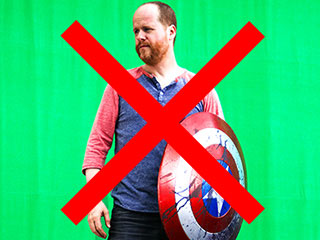
Joss Whedon, Captain Avenger (Image credit: Zade Rosenthal)

Speaking of inventive use of the new landscapes of our fluxing world of moving images, here is where you can find some of the most recent mischief of the director of The Avengers, Joss Whedon (along with Ira Glass of This American Life and Mike Birbiglia, the star of Sleepwalk with Me).  As usual, great fun – and inspiration too – can be had when exploring Joss Whedon’s work as he messes around with genres and platforms and finds new ways to explore character, story, emotions, and creative expression in the rapidly evolving worlds of contemporary media (from Buffy the Vampire Slayer to Firefly to Dr. Horrible’s Sing-Along Blog – and its inventive DVD – to, of course, The Avengers).  And here is a revealing perspective from Samuel L. Jackson about his work with Whedon on The Avengers.  

One last note: yes, it’s the start of a new school year!  So, fellow teachers, here’s a promise: I will be back SOON with new support and ideas concerning Chapter 1 of Moving Images.  

Read Full Post »

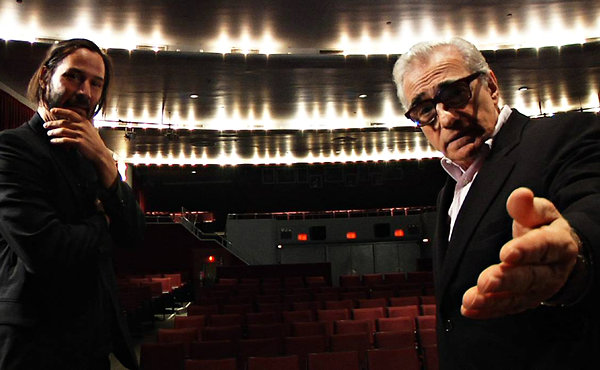
Keanu Reeves and Martin Scorsese contemplate the moving image in Side by Side, directed by Chris Kenneally

The movie Side by Side is opening now, and this will provide a very informative and provocative source of debate, contemplation, and reference for people interested in media arts and the state of creative platforms at this moment in time.  Check out the trailer and seek out further info on this movie directed by Chris Kenneally, produced and narrated by Keanu Reeves, and featuring appearances by numerous acclaimed filmmakers including Martin Scorsese, Steven Soderbergh, Christopher Nolan, James Cameron, and David Fincher.

When creating Moving Images, one of the most challenging areas to consider was how to treat contemporary issues of cinematography and conceptions of light and its capture.  As I mentioned in an earlier post focusing on the work of cinematographer Emmanuel Lubezki, in the years since the development of this textbook, the majority of Academy Award nominees in cinematography each year have been shot on film.  No matter what the platform for cinematography, the understanding and control of light and color continue to be among the most important skills and concepts for anyone working in movies, whether through digital processes or celluloid.

I can add one personal point: I remain unconvinced by the proclaimed “reign of 3D” by Mr. Cameron and various movie execs during the past few years (and I remember a speech by a Jeffrey Katzenberg a few years ago in which he declared that “all movies will be 3D a decade from now”).  I have found it interesting the degree to which young people — at least the ones I work with — scoff at 3D and time and again tell me that it is rare that they have any desire to see movies in 3D.  Here is a blog from Kristin Thompson and David Bordwell about the topic; as usual, it is engrossing and quite informative.

I will have more to say about these topics in upcoming blogs.

Read Full Post »

Emmanuel “Chivo” Lubezki measuring light on the set of Terrence Malick’s “The Tree of Life”

I was amused to see the picture accompanying one of the most recent in-depth interviews with Emmanuel Lubezki, a featured cinematographer in Chapter 4 of Moving Images (titled “Storytelling with Light”).  This photo from the shoot of Terrence Malick’s Tree of Life shows Lubezki measuring light.  When I was in the process of completing the work for Chapter 4 of Moving Images, which focuses on cinematography and compels students to understand and reflect on the capture and use of light and its impact on visual storytelling, I found an image that showed a famous cinematographer using a light meter.  I thought it would serve as a good illustration of a director of photography at work and bring home the basic idea that light is something that can be measured and manipulated in order to create the images that one wishes to use to tell a story in moving image media.  I contacted him to request permission to use the image.  He responded with a thoughtful response, but he forthrightly declined, making a variety of comments that amounted to “these devices are stuck resolutely in the past” and offering phrases of the “manufacturing a buggy whip after the invention of the car” variety.  I moved on and was graciously offered an image gratis from independent filmmaker William Farley.

Interestingly, since then, there has not been a single year yet in which the majority of Oscar nominees for cinematography have shot digitally.  Although that year is sure to come, it is clear to me that it is in any student’s interest to have a fundamental comprehension of key concepts of light and photography, whether for digital sensors or through celluloid.  To establish an understanding that one can measure light, that it makes a difference how and with what tools one captures light, and that the ways light is used by a creator to tell a story help to form the basis of what we view as moving images, whether in feature films, TV shows, commercials, local PSAs, music videos, YouTube streams, and everything in between and beyond — that is what educators must convey when introducing “Storytelling with Light.”
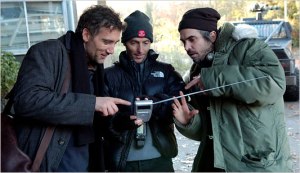
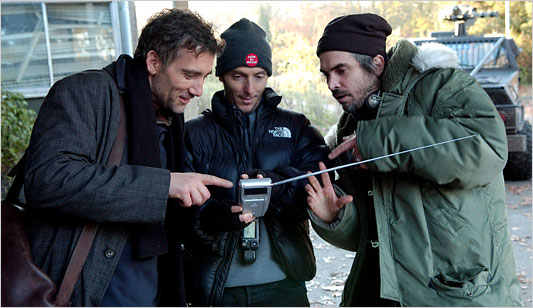
Clive Owen, Emmanuel Lubezki, and Alfonso Cuarón during the making of “Children of Men”

The cinematography of Emmanuel Lubezki offers some of the most powerful contemporary examples of the expressive possibilities of moving images, particularly his work with Alfonso Cuarón, such as the awe-inspiring Children of Men and A Little Princess (see Fig 4-14, Moving Images); with Terrence Malick (including the Oscar-nominated The Tree of Life); and in Tim Burton’s Sleepy Hollow.  And here is a commercial directed by Lubezki for broadcast during the recent London Olympics.  

For more thoughts on issues about working in digital or celluloid-based media, here is an interview with cinematographer Janusz Kaminski, Steven Spielberg’s long-time collaborator and DP on War Horse and many other features.  In the accompanying article they announce that Kaminski would be shooting Harmony Korine’s Spring Breakers, but the cinematographer of Saving Private Ryan didn’t seem to have what it takes to make the cut since Benoît Debie ended up as DP.  In 35.  Go figure.

Read Full Post »

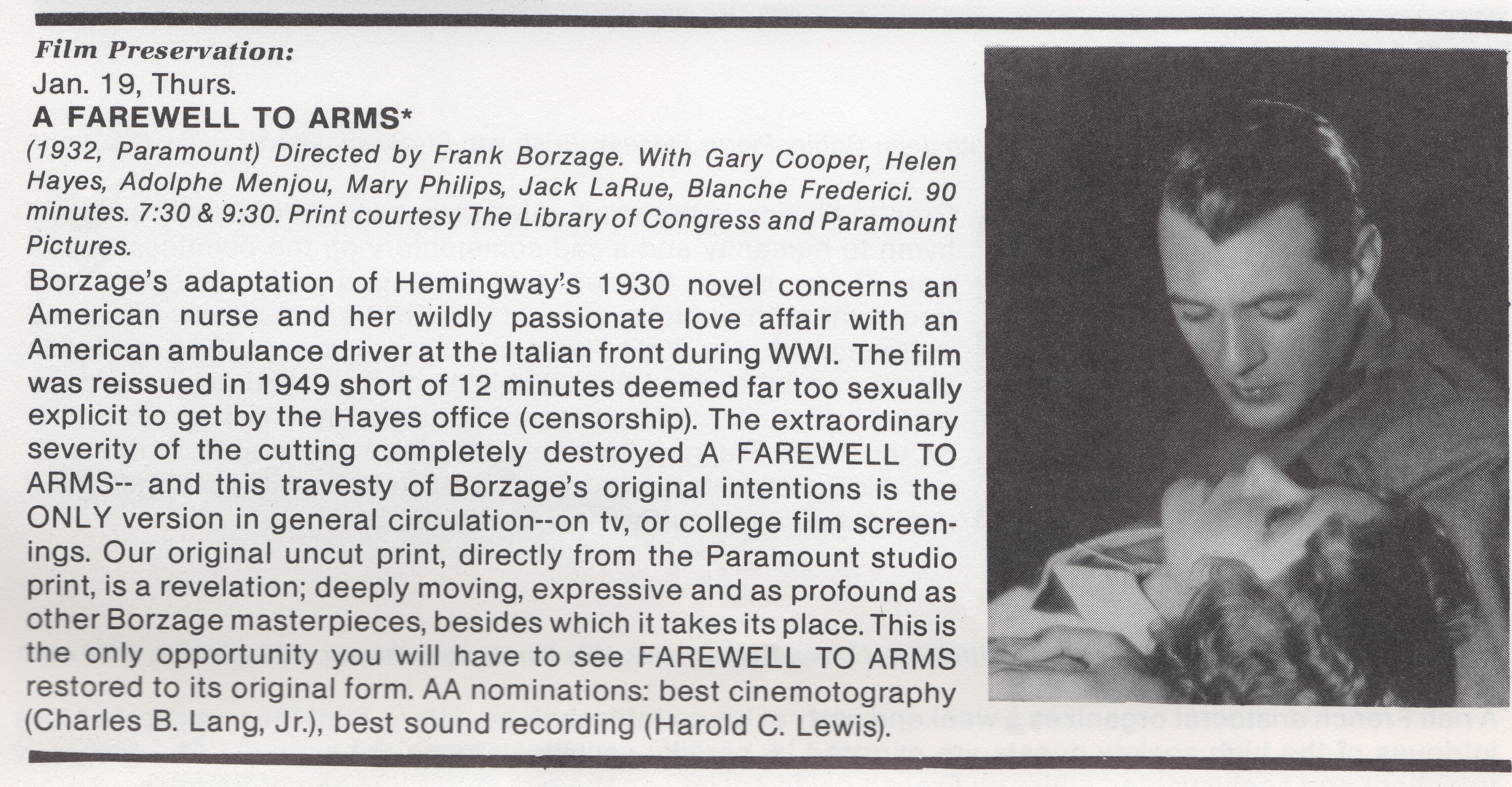
This fall, I was overjoyed to see the news that Frank Borzage’s 1932 film A Farewell to Arms would be released by Kino in a full, restored version on DVD and BluRay.  For me, this release holds special significance because it was during an amazing run of movies shown at the Wadsworth Atheneum in the 1980’s that I discovered the films of Borzage — relatively forgotten to the moviegoing public at that time, even cinephiles — along with so many other classics in programs curated by University of Connecticut lecturer Robert Smith.  Below is a excerpt of the program — Smith’s preface is a perfect introduction to the story of this version of A Farewell to Arms in the context of film preservation. Borzage films are highlighted in figures 4-21 and 4-22 of Moving Images  (“Storytelling with Light”) and I use A Farewell to Arms as an example in Chapter 5: Personal Expression and Studio Production.  Frank Borzage was a member of a large, close-knit Italian immigrant family and his films show consistent dedication to the ties that bind couples together and to roots in family and place. He began working in Hollywood as an actor and throughout his directorial career actors lauded his passionate support of their craft and his attention to their interaction.  Borzage was one of the most highly regarded directors of early Hollywood, and his works offer some of the richest examples of visual storytelling in the period of transition from late silent films to early sound.   While Borzage is certainly known for the deep romanticism of his films, I have found that the weaving of his tales of passionate love through finely detailed places and amidst contexts of everyday life and economic or familial struggles gives his stories more depth and grounding than they are generally given credit for.  In the 1990’s, the discovery and subsequent release of the silent film Lucky Star was a particular revelation (currently available in the beautiful box set Murnau, Borzage, and Fox); I was fortunate enough to see it at the Film Forum with live music and an enthusiastic audience.  Among Borzage’s sound films, I would highly recommend his movies Three ComradesThe Mortal Storm, and Moonriseand Joe McElheney’s article on Borzage is the finest recent scholarship on the director I have read.  Or perhaps some time before or after going to see the new 3-D release of Titanic, it would be a revelation to see Borzage’s History is Made at Night from 1937 — now that’s a movie about the Titanic that really gets the heart stirred! Here are the program notes from 1984, written by Robert Smith, for a double bill with Little Man, What Now? :  History is Made at Night is the Borzage film for everyone, with enough material for three ordinary movies.  Jean Arthur is absolutely radiant, transfigured by Borzage’s genius and his commitment to a redemptive vision of the world.  Mad love, insane jealousy, murder, and a giant ocean liner racing through the ice-bound darkness provide the mortal trial through which Jean and Charles (like all great Borzagian protagonists) demonstrate their spiritual and moral greatness.  Soon after their first meeting, Jean Arthur and Charles Boyer dance the Tango of the Roses in a deserted Parisian nightclub.  Arthur is dressed in a lace nightgown, and the image of Arthur’s exquisite naked feet peeking out from that swirling lace nighty as they tango in the darkness will haunt you the rest of your days – now that’s romance!”  … okay, does this sound familiar to anyone?  James Cameron, eat your heart out!

Read Full Post »

« Newer Posts - Older Posts »