Feeds:
Posts
Comments

Archive for the ‘Chapter 4’ Category

Director Francis Lawrence measures up a shot with Jennifer Lawrence on Catching Fire

Director Francis Lawrence measures up a shot with Jennifer Lawrence on Catching Fire

This week, there was a post on Yahoo News comparing the Hunger Games movies and offering an explanation as to “why Catching Fire is superior to the first Hunger Games movie”— which is that it was shot in 35mm. with “old lenses!”  (I have to add that I have been astonished at the degree to which it has become a meme that the second Hunger Games movie is infinitely superior; literally every adolescent that I’ve heard talk about the movies says this, and some then go on to describe the first movie as if it were shot by a detoxing wedding videographer with a Fisher-Price handycam.)

jennifer-Lawrence-on-fire-in-New-Hunger-Games-Catching-Fire-TrailerSince issues concerning evolving platforms for image capture (both digital and celluloid-based) are addressed in Chapter 4 of Moving Images and a few of my mediateacher.net blog posts, I had to laugh when I read this article and thought, “It’s nice to see this much passion about cinematography in a Yahoo article!”  At the same time, I remarked, “Hmmm, the writer needs a few lessons — after all, the first Hunger Games movie was shot in 35 as well!”  This is why an understanding of Storytelling with Light from Moving Images can be so beneficial: One must look at all the decisions being made by director, cinematographer, and the lighting and art direction personnel on the movie that craft its look (and vfx too!).  It’s how you create and work with the light and all of the things that it’s bouncing off of.  In the meantime, I highly recommend checking out the clip from the Catching Fire Blu-Ray: it includes many interesting observations by cinematographer Jo Willems and director Francis Lawrence about visual communication, including selecting aspect ratio, working with film negative, devising approaches to shot selection through choice of lenses (such as the effect of using wider lenses on a project), and going “old school” in general.
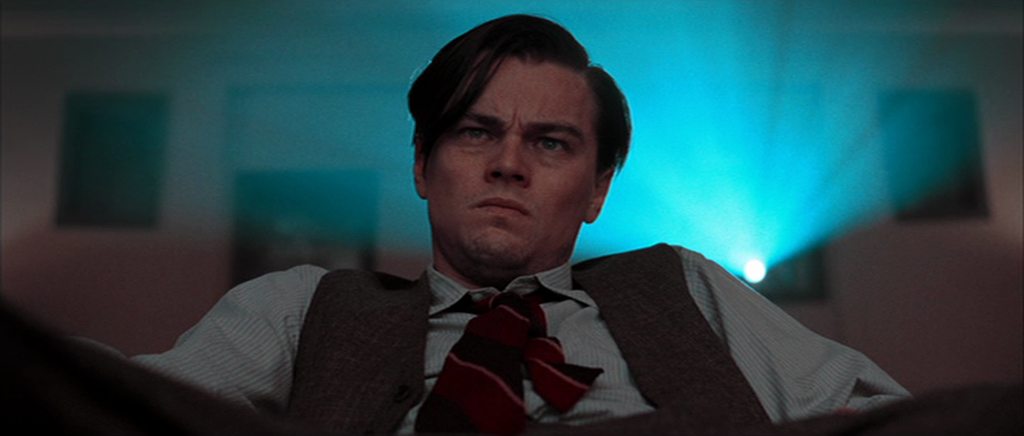
aviatorAs an additional note, for those interested in the craft of acting, there was a superb piece on Hunger Games star Jennifer Lawrence by Manohla Dargis in this past Sunday’s New York Times, while for fans of Leonardo DiCaprio, a paired article by A.O. Scott was just as compelling.  Both essays from the Times “Awards Season” series provide excellent discussion points for thoughtful debates about contemporary movies and American culture.
Read Full Post »

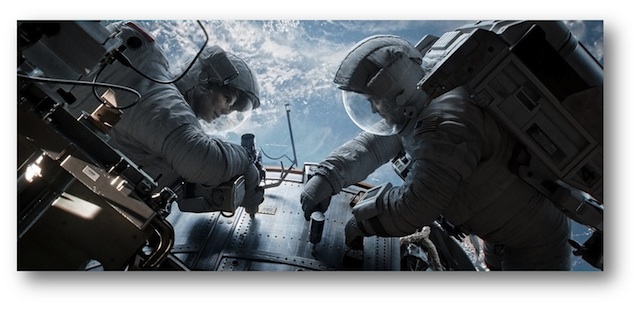
Understanding the effect of aspect ratio is vital for filmmakers, such as in this year's "Gravity"

Understanding the effect of aspect ratio is vital for filmmakers, such as in this year’s “Gravity”

In Chapter 4 of Moving ImagesStorytelling with Light — the primary topic is the investigation of the core principles that one must consider as a cinematographer, whether in digital image capture or celluloid-based film.  A key issue to examine is the aspect ratio of the movie, which links back to earlier explorations of composition starting in Chapter 1.   For educators working on this unit, here is an overview of aspect ratio in motion picture history from the Filmmaker IQ website.  I was led to this page after reading an excellent essay on aspect ratios by Tyler Lavoie, who is one of my former students.  On the subject of cinematography, let me remind readers of my earlier post discussing the movie Side by Side (directed by Chris Kenneally and hosted by Keanu Reeves), which is superb to use in tandem with the work in Chapter 4.

Read Full Post »

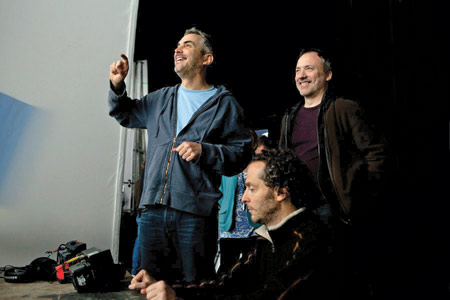
Cuarón (left) and Lubezki (center) working with digital techniques on Gravity set

Cuarón (left) and Lubezki (center) working with digital techniques on Gravity set

In an earlier post, I highlighted the work of cinematographer Emmanuel Lubezki and director Alfonso Cuarón, featured artists in Moving Images, whose collaboration has generated many of the most powerful and provocative movies of recent decades.  Their current film, Gravity, is sure to offer strong opportunities for studies of the art of moviemaking, as it weaves together technology, visual communication, storytelling, and the artistry of directing, acting, sound design, and many other departments to craft its narrative and build its thematic and emotional resonance.  A number of thorough and insightful pieces on this movie and Cuarón’s career have appeared in recent weeks.  I highly recommend this article from the Directors Guild of America.  In addition, if you have not visited the DGA site, you will find that it is an unequaled resource, particularly for its extensive interviews with dozens of directors.  Also, New York Magazine published a superb piece by Dan P. Lee – The Camera’s Cusp: Alfonso Cuarón Takes Filmmaking to a New Extreme with Gravity in its September 22 issue.    

George Clooney, Sandra Bullock, and Alfonso Cuarón making Gravity

George Clooney, Sandra Bullock, and Alfonso Cuarón making Gravity

For an initial investigation into some of the science in Gravity, here is a video in which Cuarón and space.com’s @DavidSkyBrody discuss scientific aspects of the creation of this movie.

It is my plan to return to this post with more links to lessons associated with this movie or material that emerges once it is released.  Stay tuned.  And maybe I’ll see you at the movies on the day of its release.

Read Full Post »

much-ado-about-nothing-whedonEnglish teachers can move on from Baz Luhrmann (whichever frantic, begging adaptation) or excerpts from the 70’s Shakespeare movies or Gibson’s Hamlet or Branagh’s grand stuff because this is a very exciting new moment for Shakespeare stagings for the screen in many hues of silver.

Another little Whedon side project from Joss the writer

Another little Joss side project

Joss Whedon’s Much Ado About Nothing has arrived and I highly recommend this excellent interview about the striking tale of this project that grew out of his work on The Avengers.   His “Anatomy of a Scene” video featuring the “blanky-cam” is good for students to think about drama and its interpretation, and for more info, there is also the surprisingly rare case of a well done official site set up for the movie.  Great for Chapter 4 of Moving Images: contemporary b&w cinematography at the filmmaker’s home; working with actors and crew to discover “where do I go, how do I say this, what will give our choices meaning?”  (Mr. Whedon was featured in an earlier blog entry; that’s why these are “more surprises” with this filmmaker who is full of them; he would have been doing just fine with those miracles known as Buffy and Firefly. )

Read Full Post »

MUDJeff Nichols’s Mud is arriving in theaters in the United States, and it provides rich points of discussion for the classroom, starting with its ties to American literary traditions of the South, including The Adventures of Huckleberry Finn.  And for high school teachers, here is some big news: it’s PG-13!  (Which – as many educators certainly know – is often not the case with movies that delve into complex themes and develop multi-faceted characters …just start looking through lists year after year of award-winning movies!)

Jeff Nichols Directs "Mud"

Jeff Nichols Directs “Mud”

One particularly enlightening video for classroom use to discuss Mud is from the “Anatomy of a Scene” series by the New York Times.  Screenwriter and director Jeff Nichols provides excellent insight into the decision-making process of a filmmaker – particularly in relation to cinematography choices – which can stimulate very interesting group discussion.  In this interview with Jack Giroux of filmschoolrejects.com, Nichols discusses the writing process and inspirations for this movie, among other topics.  Also, here is a video interview of Nichols on firstshowing.net and a text interview from crave online that focuses primarily on “how to get it made” (and in which the journalist ends up by centering the discussion on the fact that he will be going to the Cannes festival this year!).  For those interested in pursuing information about collaboration between directors and actors, there are many interviews with star Matthew McConaughy (for whom Nichols created the role) while Jeff Nichols talks about highlights of his work with Reese Witherspoon, Sam Shepard, and others in the interviews linked above.

Read Full Post »

« Newer Posts - Older Posts »