Feeds:
Posts
Comments

Archive for the ‘Chapter 2’ Category

Yes, the title of the movie being projected here is "Cock of the Air," a rediscovered Howard Hughes production from 1932. (Photo: Emily Berl for The New York Times)

Yes, the title of the movie being projected here is “Cock of the Air,” a rediscovered Howard Hughes production from 1932. (Photo: Emily Berl for The New York Times)

In a series of articles on mediateacher.net, the importance of how, where, and why media artifacts are accessed and preserved has been discussed from a variety of angles, not only in terms of films from the early years of cinema (or more recent examples like Lawrence of Arabia or the efforts of Christopher Nolan) but also related to students today and their own productions.  An article in today’s New York Times —The Race to Save the Films We Loveprovides a current update by Manohla Dargis on the state of film preservation, which includes topics related to economics, sound recording, chemistry, digital technologies, and a variety of other issues.
Read Full Post »

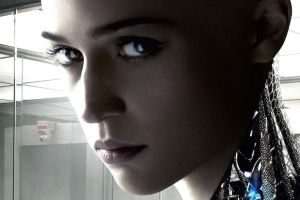
Why_8216Ex_Machina8217_Visual_Effects-f994b1c7599c0e19a8ce686a5f0dcce5Here’s a follow-up to a recent post, Uncanny Expectations.  This piece from Vulture by Logan Hill has a slide show and video which illustrate the illusive depths of digital manipulation to the human form that create warped realities and new expectations for the human face, figure, and all else.     

Read Full Post »

lumiereThat’s not really what they say in French to begin a take, but it will work on this occasion.  In fact, the “cinématographe” was the groundbreaking device invented by Louis Lumière, working with his brother Auguste, over 120 years ago.  To mark this 120th anniversary of the birth of projected movies and the inventions, innovations, and visions of the Lumière brothers, the Institut Lumière based in Lyon, France has partnered with the Grand Palais in Paris to create an exhibition “dedicated to the flagship inventions of the Lyon-based pioneers of cinema, Louis and Auguste Lumière.”

Grand Palais LumiereRachel Donadio, writing in the New York Times, states “Back before Instagram and selfies, before home movies and Kodachrome — and long before the obsessive documentation and online sharing of every moment of our waking lives — there were two brothers from Lyon whose innovations opened the door to the future.”  It is appropriate that this exhibit is in Paris, where the brothers held the first paid public screening of their movies on December 28, 1895 at the Grand Café, and where they screened large-format 75mm films at the Universal Exhibition of 1900.  Check out this thorough article from the New York Times for an introduction to these inspiring filmmakers, or of course consult the pages in Chapter 2 of Moving Images that describe their place in moving image history.

Read Full Post »

MediaComposerIn an earlier post regarding editing resources, I discussed a variety of editing programs used by a wide variety of professionals and educators, and here is an update for filmmakers interested in Media Composer by Avid.  Cengage Learning offers a number of titles designed to teach use of Avid Media Composer and its editing, effects, and sound programs.  These include: Media Composer 6: Professional Picture and Sound Editing by Woody Lidstone, Media Composer 6: Professional Effects and Compositing by David East, Media Composer 6: Part 1 – Editing Essentials by Mary PlummerMedia Composer 6: Part 2 Effects Essentials and Color Grading with Media Composer and Symphony 6.  

Another update since that previous post about editing, in which Oscar award-winning editors Kirk Baxter and Angus Wall are discussed, is that the most recent Academy Award winners for editing are Alfonso Cuarón and Mark Sanger, who used Avid Media Composer to edit the film Gravity.  Here are two excellent interviews with Mark Sanger concerning his work on Gravity: one from Pro Video Coalition in which he specifically discusses working with Media Composer and an interview with Moviescope where he talks about the development of his career and his work with Cuarón.

Read Full Post »

kirstenleporemountain

Kirsten Lepore making Move Mountain

In earlier posts, unique animators like PES and Norman McLaren (and Tim Burton too) have been featured, and here is something new to check out: the work of Kirsten Lepore.  As with many independant stop-motion filmmakers, a great deal of her work is in commercials.  Great lessons in non-dialogue storytelling, editing, and sound design are to be found in her shorts Bottle (a distinctly poignant love story between sand and snow) and Move Mountain (which the director describes as “a story about illness, perseverance, and our connection to everything around us”).  Along with lessons in frame-by-frame moviemaking, of course.  Both also have respective making of pieces: Making of Move Mountain and Making of Bottle.

If you are interested in more information on the topic, check out Cengage Learning’s title The Advanced Art of Stop-Motion Animation (by Ken Priebe).  While we are on this topic, you might be interested in turning to two of the masters of the form: Jan Švankmajer and Brothers Quay.  And in a few months, the very promising-looking The Boxtrolls from Laika studios will be arriving…

Update: Here’s a great interview by Girls at Library with Kirsten Lepore (who by now has also written and directed an episode of Adventure Time: Bad Jubiesabout reading and books.

Read Full Post »

« Newer Posts - Older Posts »