 This article by Google (about their own initiative) highlights interesting work in technology applications used to study and evaluate gender roles onscreen in film and to use data to analyze screen time by gender in a variety of movies. This resource can be of value in media literacy work that explores gender bias and social implications of media messages. For further research, there are many resources available through the Geena Davis Institute on Gender in Media.
Archive for the ‘Social Studies’ Category
Language and Literacy: Case 2 – The Troll
Posted in Media Literacy, Social Studies, tagged bullying, false statement, harmful behavior, legal responsibility, media literacy educator, President Trump, professional responsibility, Sweden, troll on February 20, 2017| 1 Comment »
Continuing in a series of posts about the importance of language in the work of media literacy, it is clear that the proper use of words will continue to be a topic of utmost importance to educators today. In the previous post, the use — and more importantly, egregious misuse — of the term “fake news” was discussed. Today, we investigate those greedy, fearsome creatures hiding under bridges in wait for all of the Internet’s unsuspecting billy goats, threatening to “gobble them up!” — the hideous Troll!
Regularly, many websites and public posts use terms to describe behaviors that evolved out of the use of digital social media: in this case, the verb “to troll” and the related personal description of “the troll.” According to the Merriam-Webster dictionary, a troll is “a person who intentionally antagonizes others online by posting inflammatory, irrelevant, or offensive comments or other disruptive content” and to troll is “to antagonize (others) online by deliberately posting inflammatory, irrelevant, or offensive comments or other disruptive content.” And, regularly, this behavior is done anonymously. For teachers, these definitions are also important because these terms and the behavior they describe work with strong parallels to bullying, which is a topic of significant implications of professional and legal responsibility to educators.
 However, as with a wide range of terms to describe behaviors that reflect the aggressive, damaging, and purposefully hurtful exchanges commonly viewed in web-based communicative platforms, the use of vocabulary can become twisted to minimize or distort the original meaning so that it becomes a hollow, warped, or virtually meaningless version of its original sense. In practice, a word can just turn into a big joke.
On numerous recent occasions, I have witnessed the word “troll” used in this way. Just this past weekend, President Donald Trump erroneously referred to “what’s happening last night in Sweden,” as if there had been a terrorist attack in this Scandinavian country. Elected officials and media outlets in Europe — and in America — reacted with a mixture of bafflement, corrections, and derision. Nonetheless, here is a follow-up headline from Yahoo News, echoed by many Internet sources: “Trump Trolled Over Remark About Sweden.” In the articles that appeared with this description, the evidence given was typically that various public figures around the world made posts that corrected, questioned, or made light of the statement. And that, somehow, the President of the United States was now “a victim.”
When any attempt at correction of a falsehood, personal or cultural attack, or distortion of factual evidence — or even any satiric message that is in response to falsehoods communicated to the general public — is described as “trolling,” this is quite problematic. Particularly when the figure or group or entity responsible for the original false statement, message, or attack is in a place of power. Yet again, it is clear that media literacy requires knowing our vocabulary and using it correctly. And, moreover, being able to communicate effectively and understand clearly are at the heart of schools and communities and governments that are based on ideals of freedom, equality, and justice.
And remember, if students are as wise as our friends the Three Billy Goats Gruff, they can get away to enjoy the beautiful, bountiful fields on the other side of the bridge.
Language and Literacy: Case 1 – “Fake” News
Posted in Chapter 6, Media Literacy, Social Studies, tagged Authenticity, Cameron Harris, Fake News, Free Press, Language, Macedonia, media literacy, Park Row, Sam Fuller, Scott Shane, Thomas Jefferson on January 19, 2017| 2 Comments »
Across countless societies throughout history, teachers have regularly occupied highly scrutinized positions relative to their impact on young people and the expectations of their roles in terms of what they can and cannot say to their students.
Among the issues that define our relation to each other, language is undoubtedly one of the most important. It is vital that words are used appropriately and precisely. The study of cultures and societies often can revolve around the use and impact of words to describe human behavior and social currents.
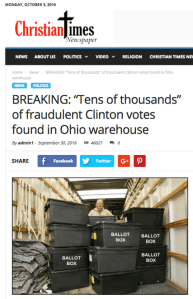
Fake = Fabricated, Intentionally Fictitious
During the past year, a notable phenomenon has arisen that has some history in print journalism but has taken on new meanings and uses in the age of the Internet and digital social media: “fake news.” The basic definition of this practice as it quickly evolved in recent times is that stories and articles would be fabricated and posted through fictional, anonymous, or proxy web entities. The content is completely fictional in nature. Made up. Quite often based on the talking points, trending topics, and attack ads of the moment. By now, this has been a highly documented practice, sometimes from blighted enclaves in Macedonia or from “Cameron Harris, a new college graduate with a fervent interest in Maryland Republican politics and a need for cash,” as reported by actual journalist Scott Shane.
To be literate means to understand vehicles of communication – linguistic, visual, mathematical, and much more. When methods of communication are twisted and used to distort or blind to the truth or the search for truth, this is quite serious and potentially extremely damaging. As history has shown us, it can, indeed, be fatal. When one’s leaders twist, misuse, or distort words, and particularly those that describe vital topics of the day, this can also be lethal to societies and to democracy.

A Free Press Classic by Sam Fuller
As Thomas Jefferson said, “The basis of our governments being the opinion of the people, the very first object should be to keep that right; and were it left to me to decide whether we should have a government without newspapers or newspapers without a government, I should not hesitate a moment to prefer the latter. But I should mean that every man should receive those papers and be capable of reading them.”
Language, words, and visual communication are very important, and so is our ability to interpret the various messages that are on the pages and various sized screens in front of us. This is at the heart of what we call media literacy. Teachers must continue to strive to enable our students to scrutinize the statements of those who represent us, of those with whom we engage in discussion and debate, and of those who research and report the stories that depict, interpret, and impact the world that we inhabit.
Black Mirror, the performance piece
Posted in Media Literacy, Social Studies, tagged #blackmirrorUSA2016, Black Mirror, Charlie Brooker, George Orwell, Hated in the Nation, Kurt Vonnegut, Nosedive, Presidential Election, Shut Up and Dance on November 14, 2016| 1 Comment »
 Mediateacher.net has the inside scoop: Through the American presidential election and its aftermath, we are currently living in a nationwide performance piece that is the seventh, unreleased episode of the newest season of Black Mirror (being followed by a binge-watching worldwide viewership). After such standout episodes as Nosedive, Shut Up and Dance, and Hated in the Nation, the innovative British series created by Charlie Brooker has upped the ante substantially by involving the general public in a surreal creation that lives up to the promise of a Twilight Zone for the digital age. And our English teachers should have fun with some cross-curricular doses of Vonnegut or Orwell.

I promise, everything will be all right.
Know your media literacy, travelers! (See #4 here.)
Media Literacy Week Pledge
Posted in Media Literacy, Social Studies, tagged Media Literacy Week, Michelle Ciulla Lipkin, NAMLE, politico.com on November 2, 2016| Leave a Comment »
 It’s national Media Literacy Week hosted by our professional association NAMLE! Sign the pledge to be media literate! And here you can check out NAMLE Executive Director Michelle Ciulla Lipkin talking about Giving Kids A Voice During Election Season on politico.com.
 mediateacherdotnet