 These “Don’t Buy It!” pages from the PBS Kids site are designed for younger folks, but they’re pretty fun for anybody — and there are potential applications and ideas for high school teachers, some jumping off points here, including for cross-curricular work with health classes. There are interactive questions and games for critical thinking about advertising, entertainment-related issues, and lots more, as well as excellent media literacy resources for teachers offered by PBS. And in putting up this post, I just had to include this image from PBS’s media savvy creation “WordGirl,” featuring narration by Chris Parnell (of the classic “Lazy Sunday” digital shorts with Andy Samberg) and many other great voice talents.
Archive for the ‘Media Literacy’ Category
Fun Stuff for Developing Media Literacy with PBS
Posted in Media Literacy, tagged Andy Samberg, Chris Parnell, Critical Thinking about Advertising, Lazy Sunday, PBS Media Literacy, pbslearningmedia, Word Girl on November 30, 2012| Leave a Comment »
Media Literacy and Social Studies in the Classroom
Posted in Media Literacy, Social Studies, tagged Argo, Ben Affleck, College Humor, Edward Zwick, Frankenweenie iBook, Glory, Jian Ghomeshi, Lincoln, Media Literacy and Social Studies, Mitt Romney Style, Newseum, Presidential Campaign Ads, Steven Spielberg, Tim Burton, Tony Mendez on November 25, 2012| 4 Comments »

Where is the truth and what does media communicate to us? Ben Affleck standing in center with the real-life inspirations for “Argo,” including his character, CIA agent Tony Mendez, on far left (Keegan Bursaw/Embassy of Canada)
In earlier posts, I have discussed possibilities of cross-curricular work with social studies courses and this fall has offered countless examples of further opportunities to use media literacy to enhance learning in social studies classrooms. Here are related pages from the newseum site, Edutopia, and Frank Baker’s Media Literacy Clearinghouse. For the media literacy classroom, one of the most interesting aspects of this election was the creation of videos outside of the two campaigns and their dissemination through the Internet, such as the lip-dub treatments of the debates and other comedy pieces such as the gangnam-style parody with a Mitt Romney imitator done for the College Humor site. At my own school, social studies teacher Mike Barile had his Civics students make their own videos for fictional campaigns (no, not comedy parodies but ones that suggest new approaches to official campaign ads) and they used them for comparison and analysis with current media and historical examples from American presidential races.
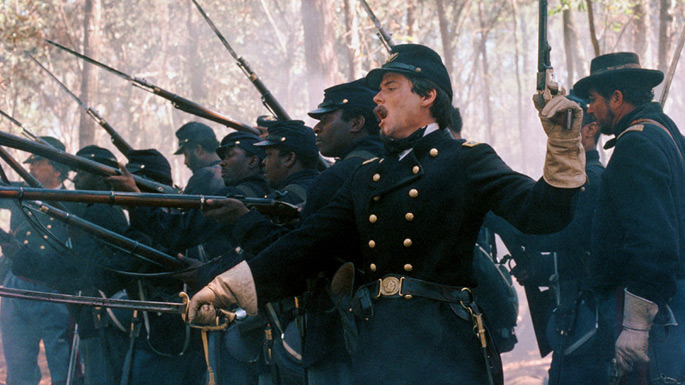
Still from Edward Zwick’s 1989 movie “Glory,” from which certain scenes can provide interesting comparison and contrast to “Lincoln”
Among current movies, two releases may provide for interesting discussion and study in either American history or International Studies curricula. Steven Spielberg’s Lincoln joins the rich trove of Civil War movies that can be used in the classroom, while Ben Affleck’s Argo can be used in relation to studies of the history of Iran and its relations with the United States during the 20th century. Here is an excellent counterpoint piece written by radio journalist Jian Ghomeshi in response to the depiction of Iranians and the political context of Iran in Argo, while here is a Washington Post article on the real people behind the story of this movie. For Lincoln, there is an iPad book for the movie that may be useful for teachers.
Speaking about iBooks, in an earlier post about Tim Burton, I talked about his recent movie Frankenweenie. Disney has released a free iBook for the movie, which is highly recommended.
Media Literacy Skills & Twitter
Posted in Media Literacy, tagged Critical Thinking, Elie Semoun, London Olympics 2012, Media Literacy Education, NBC, olympics and free speech, Paul McCartney, Teaching Internet Skills, Trevor Timm, Twitter, Voula Papachristou on July 31, 2012| Leave a Comment »

Greek triple jumper Voula Papachristou, dismissed from the Olympics for a racist tweet
One of the most important – and complex – developments regarding media and the Olympics has undoubtedly been the integration of the Internet in the diffusion of information, images, and analyses. Of particular note this year has been the place of Twitter in this evolving landscape. Greek and Swiss athletes have been dismissed from the 2012 London Olympics because of Twitter posts, while a journalist has had his Twitter account blocked because of his repeated criticism of NBC, which has had its own negative impact on Twitter (among other stories). And here is an article by legal journalist Trevor Timm on free speech issues generated by all this Twitter activity.
Currently, educators are capitalizing on the communicative possibilities of social media for their uses in the classroom, while they also wrestle with the challenges posed by the use of these types of Internet platforms in schools. It is clear that the critical thinking skills that are at the core of media literacy education have become more vital than ever. An earlier event from this summer demonstrated this clearly to me. In France, a Twitter trending topic generated a rather humorous response from French comic Elie Semoun (who had already developed a rather thorny, and not funny, history with Twitter): “I confirm my death,” he responded from his Twitter account after the “story” of his death became a “news item” for a number of hours, having been stirred up by a flurry of Twitter posts. This has happened to other celebrities, such as Paul McCartney, but this response by the “dead man” was particularly original. All it required was a small dose of media literacy skills to figure out this was not news and certainly not reliable – and, as it turns, out, not true. The importance of our abilities in analyzing, evaluating, and properly using media resources has been one of the key lessons of this Twitter-filled summer.
Politics & Media 2 (some super-heroes too)
Posted in Media Literacy, Social Studies, tagged Batman, Bill Finger, Bill the Boy Wonder, Christopher Nolan, Connect the Pop, Frank W. Baker, Marc Tyler Nobleman, media literacy, Peter Gutierrez, The Amazing Spider-Man, The Dark Knight Rises on July 5, 2012| 4 Comments »
 As a follow-up to my recent blog post on Satire, Politics, and Media, here is the second part of the excellent interview of Frank W. Baker by Peter Gutierrez in which they discuss politics and media. And here is a pertinent quote by Baker for media literacy educators: “Media literacy teaches us, among other things, that media are businesses designed to make a profit. This is a huge point that should be taught. Ask students who benefits when candidates purchase time for their messages, and they may not think to answer: the broadcasters themselves.”
Gutierrez’s blog – Connect the Pop – is highly recommended. It is full of many useful and compelling posts, including this recent one on the Spider-Man reboot. And with Christopher Nolan’s The Dark Knight Rises about to come out, here is a piece on a recent book about Batman’s creation by Bob Kane and the uncredited Bill Finger (Bill the Boy Wonder). In the interview, author Marc Tyler Nobleman says: “One of the biggest takeaways from my Siegel/Shuster/Finger research is that the Internet does not have all the answers. Most of the big discoveries I made researching these books came from either interviewing people (most of whom are elderly and some of whom have since passed away) or combing through archives that were not online. When searching for information, even young people know how to google. The value of librarians is that they know how to do a lot of the rest—direct you to city records books, photo archives, and other non-digitized resources.”
Politics, Satire, and Media
Posted in Chapter 6, Media Literacy, Social Studies, tagged Amy Poehler, Colbert Report, Frank W. Baker, Media Literacy Education, Museum of the Moving Image, Political Campaigns and Political Advertising, Political Satire, Sarah Palin, Saturday Night Live, The Living Room Candidate on June 30, 2012| 1 Comment »
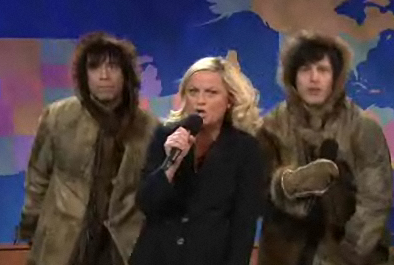
Political satire with Amy Poehler on SNL
In an earlier post, I highlighted an interview of Neal Gabler by Bill Moyers about politics and movies. As the American presidential elections heat up, it is a good time to return to this topic with a few interesting links and ideas.
One of the most interesting sites concerning politics and the media available for students and educators is on the Museum of the Moving Image site: the Living Room Candidate. These pages that contain presidential ads from their first appearance on television are a treasure trove for Media Literacy and Social Studies teachers and can serve as an invaluable resource for curriculum development. A good place to start is to have students work in collaborative teams – which can combine media and history classes – to develop analyses of media messages seen through historical and communicative contexts and to create their own politically-oriented media messages.
How do young people get their news? How do they interpret media messages?
One of the most prevalent manners in which media addresses young people is through satire (often, it’s the only way that youth have any connection to current events). Here is an example of a Learning Blog lesson plan from the nytimes.com website. For this series of lessons, students can develop analyses of satire in which they compare and contrast news pieces from mainstream text media and parallel satiric pieces from motion picture media. Chris Kennedy, a journalism teacher and colleague at my high school, shared with me the following two examples he has used: (1) the debate on Paul Revere’s ride initiated by the comments of Sarah Palin, as viewed on The Colbert Report and through interviews with Palin; and (2) satiric commentary on the role of the vice presidency and contemporary issues such as gay rights. The Saturday Night Live piece on Vice-President Biden works very well, and can be used with a number of other historic SNL pieces, such as the infamous Amy Poehler rap delivered during the news segment with then-candidate Sarah Palin.
It is also very interesting to note that, in my experience, unless required to produce a piece that deals with political issues, students tend to avoid “serious topics” completely in their media creations. I can also add that it has been noted that students in our school tend to use a satiric approach in virtually all of the commercials they produce for school events. At the end of the 2011-2012 school year, a report was produced by students for this unit in which they demonstrated that 100% of the short commercials and PSAs produced by students and shown during the morning announcements at school that year were of a mocking or satiric nature in regards to the event or topic.
Thanks also to my Social Studies department colleagues Katie McGurn and Tim Shea for sharing ideas and working together on lessons.
For some final thoughts about politics and media, check out this interview with media literacy guru Frank W. Baker, who is the author of Political Campaigns and Political Advertising: A Media Literacy Guide, among other titles.
 mediateacherdotnet