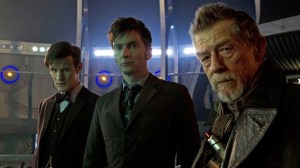
 This year saw the landmark 50th anniversary of Dr. Who, the British science fiction show that has seen an astonishing resurgence of popularity during the past decade after being canceled for a decade and a half (with a TV-movie in the midst of the hiatus). Recently, the show celebrated another notable achievement with the widest distribution simulcast in history to date (for “The Day of the Doctor”), combining the possibilities of various digital technologies (including rapid distribution to theaters and RealD-3D) along with the communal experience of projected moving images.

Back from when prime-time dramas were generally not serials but episodic narratives
In the past two decades, another remarkable shift has taken place in relation to critical appreciation of fiction writing for movies on big screens and small: namely, that some of the most notable, well-crafted, and culturally and narratively significant storytelling taking place is happening through the medium of television. Naturally, this is a long tale that can take many volumes to satisfactorily discuss, but it is widely acknowledged that building on earlier examples in genre-setting and -defying dramas such as Hill Street Blues to E.R. to The X-Files, television is clearly reaching new levels of character development and narrative complexity with such shows as The Sopranos, Battlestar Galactica, Mad Men, and Game of Thrones, among many other passionately followed and hotly debated series. (Related, but very different, evolutions can be traced in the world of comedy.)
However, there has been something of a critical backlash amidst the high acclaim of many of these series: in numerous analyses, they have been compared to soap-opera. For example, in Douglas Rushkoff‘s Present Shock (which I very highly recommend for media teachers – or any educators or parents for that matter), he describes “soap-opera like series” such as The Sopranos and The Wire that feature “no drama, no insight,” as compared to storytelling featuring classical dramatic narrative. I raise this topic because it relates directly to issues discussed in Moving Images: how do we describe storytelling values, narrative structures, and tone and style throughout media platforms? In Chapter 5, Personal Expression and Studio Production, I discuss the definition of serials and their impact on moviemaking practices throughout the 20th century, from the development of the star system to Saturday matinees to television shows.
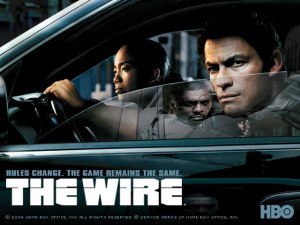 However, when critics use terms like “soap opera” to describe shows, what do they really mean? What do readers understand from the term soap opera? Personally, I think that the interpretation of that description is as much about poor lighting, oddly stylized editing, static blocking, and heavy handed plots twists as it is about open-ended, endlessly spiraling narrative structure (or lack thereof). Yet the term is consistently used solely for that last reason while it conjures up the poor qualities of all of those attributes ascribed to soap operas. When investigating, analyzing, evaluating, and learning from new developments in narrative traditions in television series, it is important to distinguish: how do narrative structures evolve within and throughout episodes? How can we distinguish between different methods and recognize distinctive qualities or values in particular series? What are the particular lessons of shows like Lost (whose past/present structure was particularly rich in innovation for a few seasons) or Breaking Bad (whose characters arcs of Walt and Jesse are rich troves of investigation in both psychological and moral arenas, while its stylistic range remains relatively unexplored) or The Wire (justifiably lauded for its jaw-droppingly complex, and, yes, satisfyingly constructed character- and thematically-driven narratives that reached levels of classic tragedy in virtually every season) or many others that may be appropriate for either university or high school classrooms? How do we understand and process the stories that we encounter, how can they create messages and meanings of value, how can they frustrate us with their weaknesses or do they lead us to enlightenment and inspiration?
Read Full Post »
 Among the nominees at the upcoming 2014 Academy Awards ceremony, Dirty Wars, directed by Rick Rowley and featuring journalist Jeremy Scahill, was co-written and co-edited by David Riker, who is the featured Close-Up interviewee of Chapter 5 of Moving Images. The issues raised when investigating this movie and Mr. Riker’s work in it are highly compelling when examining the themes and objectives of Chapters 5 (Studio Production and Personal Expression) and 6 (Recording and Presenting Reality) of Moving Images.
 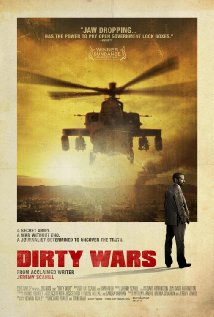 In these chapters of Moving Images, questions about media formats and communicative methods are scrutinized, as well as a wide range of issues familiar to non-fiction filmmakers and writers, including authenticity, rhetorical and narrative structures, ethical considerations, and platforms. Mr. Riker, whose work began in documentary but then shifted to fiction, is a seasoned screenwriter (including The Girl starring Abbie Cornish, Sleep Dealer, and the award-winning La Ciudad), and he brought his dual perspectives of documentary photography and fiction screenwriting to his work with Scahill and Rowley, saying, “Dirty Wars was an interesting balance because while it is absolutely a documentary… to really tell the story the three of us were frequently looking to the tradition of fiction filmmaking as a way of structuring Jeremy’s research so that it conveys some of the tension and the drama that … was part of their experience.” I highly recommend this interview with David Riker from the blog Truth Scout.


 mediateacherdotnet