
One of most fun and versatile formats to utilize for prompts with video projects is that of the movie trailer. Over the years, I have found that using the vehicle of the movie trailer as a starting place for students can provide very fruitful and engaging options for source material and assignments related to various topics or skills, whether exploring cinematography, establishing particular storytelling values, or working as a team to communicate promotional messages.*
In ongoing discussions of sound design and music in media creation, earlier this month there was a very interesting piece on current trends in creating music and soundscapes for movie trailers. Ever notice that the song or instruments you are hearing in that new movie trailer isn’t quite what you remember from the original recording but it’s also sort of like it? It very well might be the result of work from people like composer, musician, and producer David James Rosen (seen above with guitar).
Want to find out more about why some of those sounds you are hearing in trailers sound kind of familiar but then again also not, such as for M3gan, Ant-Man and the Wasp: Quantumania, or Black Panther: Wakanda Forever? This artist’s work and that of re-imaginers (and re-shapers) of sound like him are discussed in the article Movie Trailers Keep Tweaking Well-Known Songs. The Tactic is Working(by Eric Ducker for the New York Times). The issues and media creation concepts addressed in the article could be fertile ground for classroom discussion, while the creative outlets it describes can also provide some interesting areas for students to explore in assignments involving sound design and use of music in video production.
“*P.S.: I have to add that I often provide options to using strictly a movie trailer as the model or inspiration for projects, and in recent years I have found that when title sequences for episodic series (along with openings to scenes) are offered as alternatives to feature trailers as reference points in assignments, students pretty consistently opt for episodic series’ title sequences. Episodic series tend to be where they’re at.
 In the Journal for Media Literacy Education, I published a piece titled
 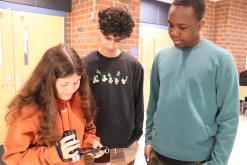 A regular component of the work in video production courses that I teach has been the completion of projects that respond to actual needs of our school community. An obvious recent example was the need for
  At the end of this past semester, my Advanced Video Production class engaged in a complex production that involved the entire class in an extensive collaborative task. This project required intricate planning and organization through all phases from development through post-production. The genesis of the project came about as a result of a request by our school system central administration for pictures or videos of various school activities in order to share with the school board and community during the budget adoption process.
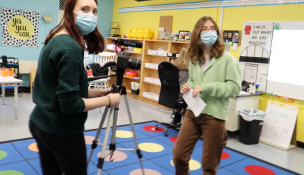 Following that request, I proposed that our media production students work to create a cohesive statement about some of the exceptional learning taking place throughout our schools. The pitch was greenlit, and work was immediately underway. (We had to move fast to make the deadline.)
 This project was the last in-class exercise (before the final course project, which are shorts made independently by each student and turned in as part of the final exam), so students had already completed several motion pictures in which they employ collaborative techniques to set objectives, evaluate effective approaches related to the contexts or demands of the project, and implement a team-based structure to complete the work through production and post-production.
  And
And 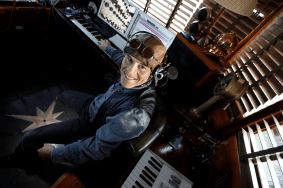 In the ever-evolving landscapes of education for the era of digital-streaming-and-all-in-between with music, sound design, and current audio evolutions, here are some pieces featuring sound pioneer Thomas Dolby and his current work and perspectives on sound in media — a

 mediateacherdotnet